Your EV is an 8x Home Battery Powerhouse: UCI, Kia, and Wallbox Prove V2H Tech is Ready for Prime Time
The dream of using your electric vehicle as a giant backup battery for your home has officially moved from theoretical laboratory tests into real-worl...
Editorial Team
World Of EV
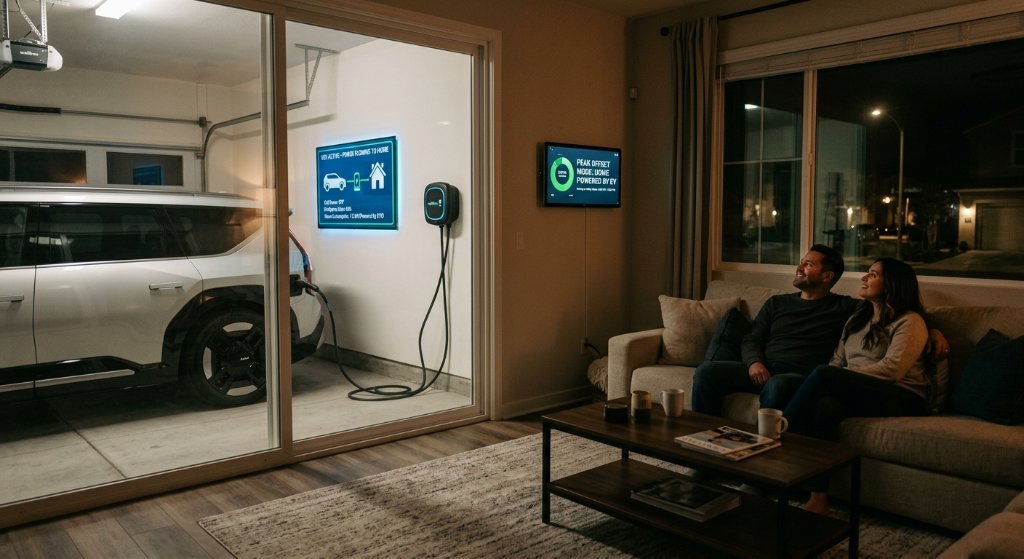
The dream of using your electric vehicle as a giant backup battery for your home has officially moved from theoretical laboratory tests into real-world driveways. In a pioneering vehicle-to-home (V2H) pilot program in Menifee, California, researchers from the University of California, Irvine (UCI) have partnered with Kia and charging expert Wallbox to demonstrate how an EV can completely redefine domestic energy security. For years, bidirectional charging was a niche novelty restricted to older standards like CHAdeMO on the Nissan Leaf. This real-world deployment, however, proves that mass-market, CCS-compatible bidirectional technology is finally ready for prime time.
The implications are staggering: a single electric SUV like the Kia EV9 parked in your garage possesses roughly eight times the energy capacity of a standard, expensive stationary home battery. This is not just a technical victory; it is a fundamental shift in how we think about vehicle ownership, household economics, and grid resilience.
Real-World Resilience in Menifee
The pilot program outfitted six homes in a sustainable-energy community in Menifee, California, with Wallbox Quasar 2 bidirectional chargers paired with the Kia EV9. Rather than merely drawing power from the grid, these electric SUVs served as dynamic residential power plants. Over the course of the study, they successfully powered homes during blackouts and offset daily peak-hour utility rates.
Key takeaways and specifications from the UC Irvine study include:
- The 8x Power Advantage: The Kia EV9's massive 99.8 kWh battery pack provides approximately eight times the total energy capacity of a standard 13.5 kWh stationary home battery, such as the Tesla Powerwall.
- Peak-Hour Offsetting: By discharging stored vehicle energy back to the home during high-demand peak utility windows (typically between 4:00 p.m. and 10:00 p.m.), homeowners can completely bypass the most expensive electricity rates of the day.
- Multi-Day Blackout Survival: When paired with Wallbox's Power Recovery Unit, the EV9 can supply power to critical household loads for up to three full days during an outage.
- Preserving Battery Health: Crucially, the pilot program proved that participating in bidirectional V2H programs does not void the vehicle's battery warranty, addressing a major buyer anxiety regarding battery degradation.
Bridging the Gap to Commercial Scalability
Historically, bidirectional charging in the U.S. has been plagued by regulatory hurdles and a lack of hardware integration. Most early EV models lacked the onboard software to reverse power flow, and bidirectional chargers were prohibitively expensive or unavailable. The Menifee study represents a massive leap forward because it utilizes two purpose-built commercial products: the V2H-enabled Kia EV9 and the Wallbox Quasar 2.
By taking data from controlled laboratory environments at UCI's Advanced Power and Energy Program (APEP) and applying it to real families living in California's volatile energy market, the program provides a blueprint for nationwide adoption. The data gathered will help utilities understand how to integrate fleets of 'batteries on wheels' to stabilize local grids during extreme weather events.
Why This Matters:
This is a watershed moment for both the automotive and clean energy sectors. For the prospective EV buyer, the financial math of electric vehicle ownership changes overnight. When you buy a V2H-capable EV, you are not just purchasing a state-of-the-art family hauler; you are effectively acquiring an industrial-grade home battery backup system for free. Purchasing equivalent stationary storage would cost upwards of $40,000 in hardware and installation alone.
Furthermore, this signals a massive win for forward-thinking automakers like Kia and charging manufacturers like Wallbox, who are cementing an early lead in the V2X ecosystem. Conversely, it puts traditional stationary battery manufacturers on notice. If consumers realize their driveway holds eight times the energy capacity of a wall-mounted unit, the market demand for dedicated home batteries could sharply decline, forcing companies like Tesla to rethink their pricing strategies for the Powerwall.
This pilot also serves as a critical warning to utility companies. If they do not quickly adapt and create regulatory frameworks to compensate EV owners for grid stabilization, they risk driving consumers toward total energy independence and grid defection.
The Road Ahead
Ultimately, the UC Irvine, Kia, and Wallbox study proves that the modern electric vehicle is far more than a clean alternative to the internal combustion engine. It is a vital component of a decentralized, resilient energy future. As V2H systems transition from pilot programs to mainstream dealership options, bidirectional capability will fast become a must-have feature, transforming EVs from mere transit machines into the very heart of the modern home's infrastructure.