Why 94% of EV Owners Refuse to Go Back to Gas—And the Charging 'Life Hack' Redefining Ownership
Mainstream media headlines have spent the last two years pushing a narrative of 'EV fatigue' and cooling consumer demand. Yet, the hard data from actu...
Editorial Team
World Of EV
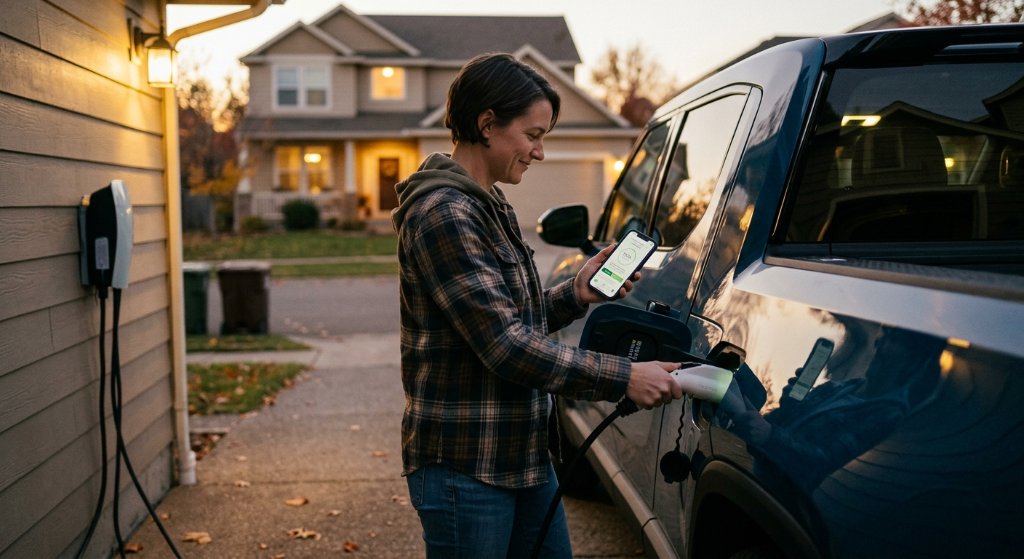
Mainstream media headlines have spent the last two years pushing a narrative of 'EV fatigue' and cooling consumer demand. Yet, the hard data from actual drivers tells a completely different story. The newly released 2026 EV Driver Survey from the non-profit organization Plug In America reveals that once consumers make the switch to electric, they almost never look back. A staggering 94.3% of EV owners state they plan to purchase another electric vehicle for their next acquisition, dealing a massive blow to critics who predicted early adopters would return to internal combustion engines (ICE).
This high rate of customer retention highlights a crucial market reality: the EV transition is a one-way street. In the early days of modern EVs, early vehicles like the first-generation Nissan Leaf or the compliance-car Mazda MX-30 left buyers frustrated by meager range and primitive battery thermal management. Today, those hurdles have been thoroughly cleared. Modern EVs are no longer fragile tech experiments; they are highly efficient, daily-drivable machines that offer undeniable economic and lifestyle benefits over gas-powered vehicles.
The Hard Math: Home Charging Rules Supreme
The financial argument for electric vehicles has never been stronger, and the 2026 survey highlights exactly where owners are pocketing their savings. For the vast majority of EV drivers, the convenience of refueling at home has transformed their monthly budgets.
- 91% Home Savings: An overwhelming 91% of respondents report saving significant money by charging their vehicles at home rather than relying on public infrastructure.
- 95% Cheaper Fueling: Nearly 95% of drivers state that fueling their EV is substantially cheaper than running a gasoline-powered alternative.
- Powertrain Loyalty: The 94.3% retention rate signals that the core EV ownership experience is highly satisfying, disproving theories of widespread buyer's remorse.
The Death of Daily Charging Anxiety
Perhaps the most fascinating trend emerging from the 2026 data is a shifting consumer behavior pattern—a new ownership 'life hack' that highlights how much battery technology has matured. In the past, 'range anxiety' forced drivers to obsessively plug in their cars every single night to ensure they wouldn't get stranded.
Today, that anxiety is dead. Because modern EVs routinely offer ranges exceeding 250 to 300 miles, drivers no longer feel the need to charge daily. Instead, they are successfully spacing out their charging sessions over multiple days of typical commuting. By treating their cars more like smartphones—charging only when the battery actually runs low—owners are reducing wear on their charging ports, simplifying their daily routines, and proving that mainstream buyers can easily integrate EVs into their lives without constant charging management.
Why This Matters:
This survey carries profound implications for the entire automotive landscape. First, the legacy automakers lagging in electrification are the clear losers here. When 94.3% of EV buyers refuse to return to gas, it means that every time an OEM like Toyota, Mazda, or Subaru loses a customer to an EV brand, that customer is likely gone forever. The market is not experiencing a temporary fad; it is experiencing a permanent migration.
Second, the 'life hack' of multi-day charging intervals signals that the industry is ready for the next phase of mass adoption. If drivers do not need to charge daily, the strain on local electrical grids is naturally diversified, debunking the common anti-EV argument that charging demands will collapse the utility grid. Furthermore, this shifting behavior reduces the immediate pressure on public charging infrastructure, giving networks more time to expand and improve reliability.
For prospective buyers, the message is clear: the financial and practical benefits of EV ownership are not theoretical. They are proven, highly repeatable realities experienced by nearly every driver who makes the switch.