Volvo’s Tiny Rocket Fizzles: Why the 2026 EX30’s Pocket-Size Appeal Couldn’t Outrun Its Price Tag
The 2026 Volvo EX30 is a tragic masterclass in brilliant engineering colliding with brutal market realities. When Geely-backed Volvo first announced t...
Editorial Team
World Of EV
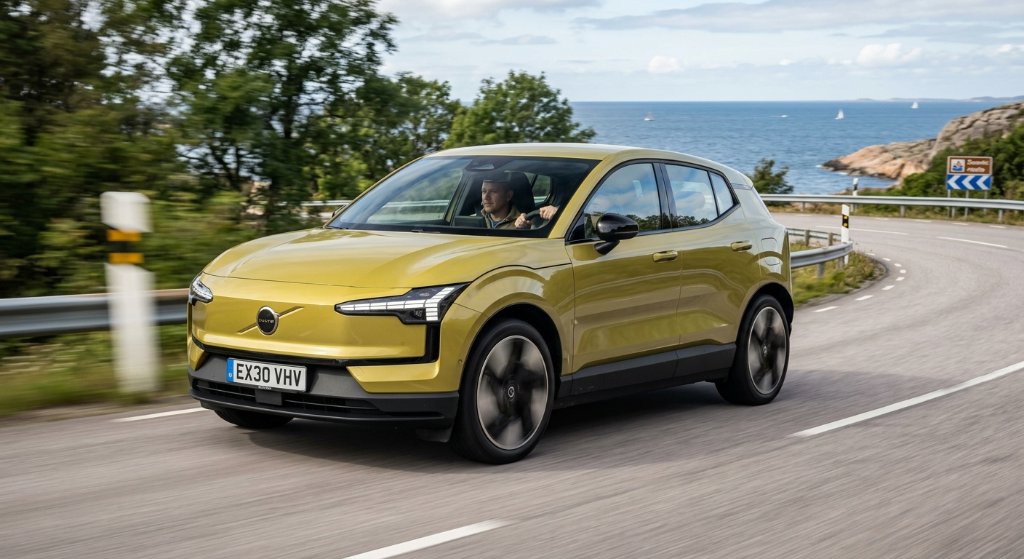
The 2026 Volvo EX30 is a tragic masterclass in brilliant engineering colliding with brutal market realities. When Geely-backed Volvo first announced this micro-SUV, it promised a disruptive $35,000 entry point into premium Scandinavian electrification. However, a chaotic geopolitical chess match of trade policies forced Volvo to shift production from China to Ghent, Belgium, causing the base price in the US to swell past $40,000. Now, a fresh wave of consumer feedback is highlighting a harsh truth: with its budget-friendly price tag completely erased, the EX30's physical compromises are harder than ever to ignore.
A newly published consumer review of the 2026 Volvo EX30 sheds light on this exact dilemma. While test drivers are still swooning over the EV’s blistering straight-line performance and agile, urban-friendly dynamics, the vehicle’s severely cramped cabin is raising serious red flags. As Volvo winds down US sales of the EX30 at the end of the 2026 model year, the vehicle stands as a warning to the entire industry that raw speed cannot compensate for a lack of everyday utility.
Pocket-Rocket Performance, Pint-Sized Practicality
The EX30 remains a dynamic marvel, delivering driving excitement that punches far above its weight class. Its straight-tall stance provides a commanding view of the road, while its tight wheelbase translates into incredibly sharp, go-kart-like handling in congested city centers. Opt for the Twin Motor Performance variant, and you get a staggering 422 horsepower that rockets the car from 0-60 mph in a supercar-shaming 3.4 seconds. Yet, once you step inside, the fairy tale quickly unravels into a claustrophobic reality.
The interior design leans so heavily into hyper-minimalism that it actively hurts the passenger experience. Behind the front seats, the cabin space is so severely restricted that the back row is virtually uninhabitable for adults, and the rear cargo area offers a measly 12.4 cubic feet—less space than a conventional Toyota Corolla trunk. Key takeaways of the vehicle's package include:
- Brutal Acceleration: A staggering 3.4-second 0-60 mph sprint on dual-motor specs, transforming the crossover into an absolute pocket rocket.
- Go-Kart Agility: Precise steering and a short wheelbase make navigating tight urban environments effortless.
- Cramped Rear Quarters: Legroom and headroom in the back are deeply compromised, making the second row fit only for small children or luggage.
- Extravagant Minimalism: Moving almost all physical controls to the central 12.3-inch screen saves cost but frustrates drivers looking for basic tactile switchgear.
The Value Paradox: EX30 vs. Toyota bZ4X
When the EX30 was positioned as a sub-$35,000 gateway drug to luxury EVs, buyers were willing to forgive its tiny footprint. But at its current, tariff-inflated price point of over $40,000, it faces a value crisis. It is now forced to compete directly against larger, more practical mass-market crossovers like the Toyota bZ4X.
While the bZ4X cannot touch the Volvo’s straight-line speed or premium design cred, the Toyota offers actual backseat legroom, a functional cargo hold, and a much more conventional cabin layout. For the average consumer looking to make the electric transition, the bZ4X presents a much more logical, high-value package, leaving the cramped EX30 looking like an overpriced novelty in comparison.
Why This Matters:
The struggles—and subsequent US discontinuation—of the Volvo EX30 signal a critical turning point for the EV market.
First, it proves that size matters. The passenger car market is highly sensitive to price-to-utility ratios. While Europe and Asia embrace ultra-compact city cars, American buyers demand versatility. When external trade policies forced the EX30's price into the mid-$40,000 bracket, it was stripped of its "affordable EV" armor, exposing its lack of cabin space as a fatal flaw.
Second, the legacy automakers win this round. By failing to deliver the EX30 at its promised price point, Volvo leaves a massive vacuum in the entry-level premium market. Competitors like Hyundai, Kia, and Toyota—who have secured local production or offered far more space-per-dollar—are poised to capture these buyers. This highlights a do-die reality for premium brands: if you cannot build a spacious, affordable EV locally to dodge tariff wars, you are effectively locked out of the volume game.
Conclusion
Ultimately, the 2026 Volvo EX30 will go down as a brilliant "what if" of the early EV era. It remains an incredibly fun, stylish, and agile runabout that will undoubtedly find a passionate cult following in Canada and Europe, where it continues to sell without punitive tariffs. But for the mainstream US buyer, it serves as a stark reminder that in the automotive world, even 422 horsepower cannot outrun the physical need for legroom and the harsh mathematics of global trade.