Volvo’s Dual-Natured 2026 EX30 and Cross Country Show What America Will Miss in Heartbreaking EV Exit
The 2026 Volvo EX30 and its newly minted, rugged sibling, the EX30 Cross Country, are a masterclass in how a single platform can yield two radically d...
Editorial Team
World Of EV
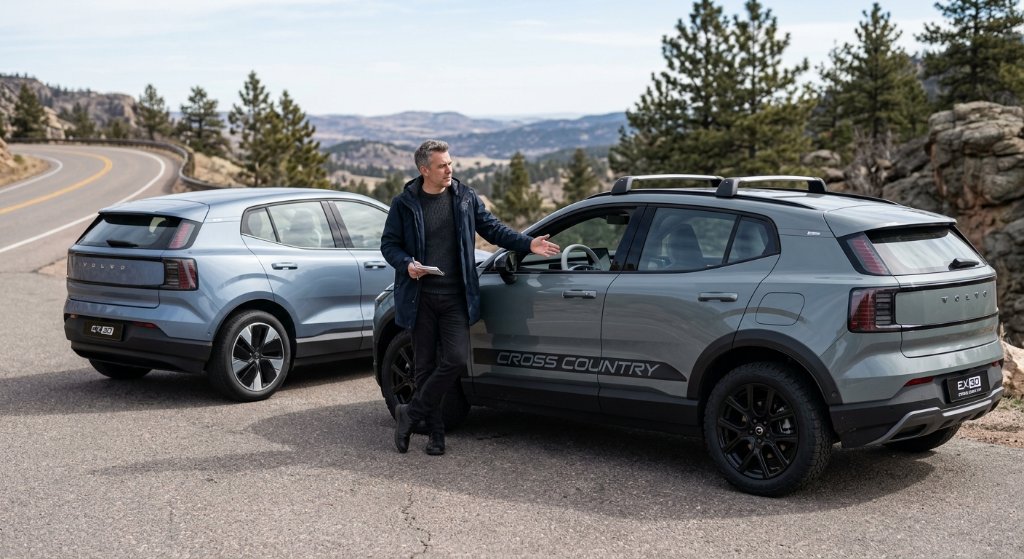
The 2026 Volvo EX30 and its newly minted, rugged sibling, the EX30 Cross Country, are a masterclass in how a single platform can yield two radically different driving experiences. Yet, as automotive journalists got their hands on this dual-natured duo, the excitement was tempered by a tragic reality. Geopolitical trade wars and mounting tariff pressures have forced Volvo to discontinue both models in the United States after the 2026 model year, turning what should have been a mass-market breakthrough into a fleeting, "forbidden-fruit" farewell.
Originally pitched as a sub-$35,000 game-changer to democratize the luxury EV segment, the EX30 has faced a tumultuous journey. To escape steep 100% tariffs on Chinese-built EVs, Volvo delayed the launch to shift production to Ghent, Belgium. However, subsequent import tariffs on European-made vehicles bloated the EX30's starting price well past $40,000. Despite a brief, highly praised run, Volvo's smallest EVs are heading for an early grave in the U.S. while continuing to thrive in Canada, Mexico, and Europe.
One Powertrain, Two Radically Different Philosophies
Under the skin, both the standard EX30 and the Cross Country share the exact same powerhouse: a dual-motor, all-wheel-drive setup producing a blistering 422 horsepower and 400 lb-ft of torque. Yet, Volvo’s engineers have managed to split this mechanical DNA into two distinct personalities. While the standard EX30 is tuned to be a sharp, agile urban zip-about, the Cross Country trades razor-sharp reflexes for relaxed, go-anywhere comfort.
The Cross Country marks the first time Volvo's historic, rugged badge has been applied to an all-electric model. To earn its hiking boots, the Cross Country receives a chassis overhaul aimed at smoothing out rough roads rather than carving up canyon tarmac.
Key specifications and features highlight their distinct configurations:
- The Powertrain: 422 horsepower and 400 lb-ft of torque, pushing the standard model from 0 to 100 km/h in an astonishing 3.7 seconds.
- The Battery: A 69 kWh pack (65 kWh usable) offering an EPA-rated range of 227 miles on a full charge (slightly lower on the aerodynamically busier Cross Country).
- The Standard EX30 Ride: Firm, responsive, and incredibly agile, behaving more like a hot hatch than a traditional compact crossover.
- The Cross Country Upgrades: A 19-mm (0.8-inch) suspension lift on revised, softer springs, a softened rear anti-roll bar, front and rear skidplates, and matte-black wheel-arch extensions.
- Wheels and Rubber: 19-inch matte-black aero wheels wrapped in chunky, adventure-ready 235/50R19 tires.
The Software Stumbling Block: Where Minimalism Becomes Madness
While both versions deliver undeniable charm and jaw-dropping straight-line performance, they also inherit the EX30’s most polarizing element: an ultra-minimalist interior that borders on hostile. In an effort to reduce manufacturing costs and environmental impact, Volvo stripped the dashboard of almost every physical switch, relocating everything from side-mirror adjustments to climate controls to a central vertical touchscreen.
For a brand built entirely on the foundation of safety, this design decision is highly counterintuitive. Drivers must navigate multi-layered menus on the screen for basic daily adjustments. Compounding the frustration is a highly sensitive driver-monitoring system. Put your hand at the top of the steering wheel or look at the screen too long while trying to adjust the temperature, and the car's sensors will frantically chime to warn you of "distracted driving". It is an ironic loop where the vehicle demands screen interaction but then punishes the driver for looking away from the road.
Why This Matters:
The premature exit of the Volvo EX30 and Cross Country from the U.S. market is a watershed moment for the EV industry. It proves that even the most brilliant, competitively engineered product can be entirely crushed by the shifting sands of global trade policy.
- The Losers: U.S. buyers lose out on one of the most uniquely styled, high-performance, compact luxury EVs on the market. There is a massive void left behind for an affordable, pocket-sized premium vehicle.
- The Winners: South Korean manufacturers like Hyundai and Kia, alongside domestic giants like Tesla, stand to win big. Hyundai's IONIQ 5 and the upcoming Kia EV3 will happily absorb the buyers Volvo is forced to leave on the table.
- The Market Signal: This highlights the immense risk of globalized supply chains. Relying on foreign manufacturing—even in friendly European nations like Belgium—is no longer a safe bet for the volatile U.S. market.
- What's Next for Volvo: This exit places immense pressure on Volvo’s remaining U.S. lineup. With the EX30 gone, the Swedish brand must rely heavily on the success of its flagship EX90 (built in South Carolina) and the upcoming mid-size EX60 to salvage its aggressive goal of transitioning to a fully electrified lineup.
Verdict
The 2026 Volvo EX30 and Cross Country represent a tragic "what could have been" scenario for American EV enthusiasts. They offer a mesmerizing blend of Scandinavian design, blistering speed, and—in the case of the Cross Country—rugged versatility that makes daily driving a joy. But between the frustratingly over-digitized cabin and the geopolitical tariff battle that ultimately sealed its fate, this brilliant pair of pocket rockets will go down in history as one of the great automotive "forbidden fruits" of the modern EV era.