Veloz's 'Real Stories' Hub Breaks Through EV Adoption Barriers with Authentic Driver Experiences
The electric vehicle (EV) revolution is accelerating, but persistent myths and misconceptions continue to hinder widespread adoption. Enter Veloz, a n...
Editorial Team
World Of EV
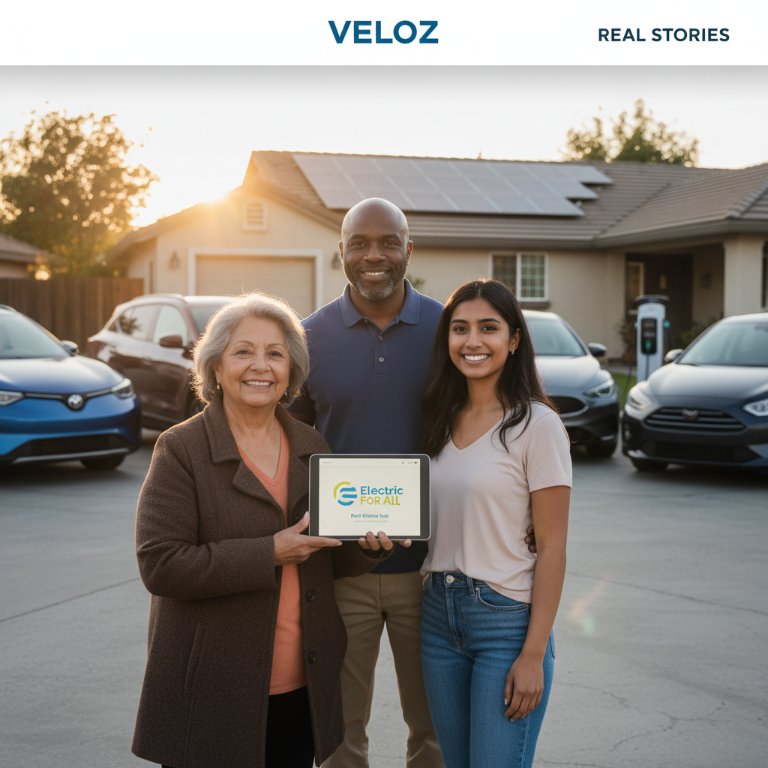
The electric vehicle (EV) revolution is accelerating, but persistent myths and misconceptions continue to hinder widespread adoption. Enter Veloz, a national nonpartisan nonprofit, which has launched its innovative 'Real Stories' hub on ElectricForAll.org. This interactive platform is poised to transform the EV narrative, moving beyond technical specifications and marketing hype to showcase the authentic, lived experiences of EV drivers across the United States.
After years of EV discourse focusing on early adopters and technical capabilities, the market has matured, demanding relatable context for the average American consumer. Veloz, a public-private nonprofit dedicated to achieving 100% zero-emission vehicles, recognizes that peer-to-peer validation is paramount in this next phase of growth. The 'Real Stories' hub directly addresses this need by providing first-person accounts, answering critical questions and demonstrating how EVs integrate into diverse real-world scenarios, from navigating charging as a renter to managing multi-generational household logistics.
Shifting the Narrative: From Speculation to Lived Experience
The 'Real Stories' hub is a pivotal shift in how the EV industry communicates with prospective buyers. Instead of relying solely on statistics or expert endorsements, Veloz has curated a collection of video testimonials from a broad spectrum of EV owners. These aren't polished advertisements; they are candid discussions addressing the everyday realities and benefits of electric driving. The hub highlights voices from states like Nebraska, Louisiana, Massachusetts, California, and Illinois, offering a genuine, coast-to-coast view of EV adoption across different regions and lifestyles.
Crucially, these stories tackle the silent questions that often deter consumers from making the switch:
- Cost Savings: Drivers share how they've significantly reduced expenses on gas and maintenance, with some reporting savings of over $2,000 annually on fuel alone.
- Charging Convenience: Personal accounts illustrate how home charging for as little as $18 a week simplifies daily routines, dispelling concerns about public infrastructure reliance. Renters, a demographic often overlooked, demonstrate practical charging solutions even without a private garage.
- Practicality for All Lifestyles: From busy families managing school drop-offs to individuals taking their EVs off-road for adventures, the stories showcase the versatility of electric vehicles in a variety of household needs.
- Affordability of Used EVs: Some drivers share their experiences with purchasing used EVs, like a 2013 Nissan Leaf for $3,000, eliminating car payments and further reducing overall transportation costs.
Confronting Common Barriers Head-On
The timing of Veloz's 'Real Stories' hub is particularly strategic. While EV interest is surging, significant barriers persist, including concerns over high purchase costs, perceived limited charging infrastructure, and consumer awareness and misconceptions. Traditional marketing often struggles to overcome these psychological hurdles, which are frequently rooted in a lack of relatable experience. By presenting authentic narratives, Veloz directly counters common anxieties like 'range anxiety' and the perceived complexity or expense of EV ownership. The hub also integrates with ElectricForAll.org's broader suite of tools, allowing users to compare vehicles, calculate savings, and find location-specific incentives, making the journey to EV ownership more transparent and accessible.
Why This Matters:
This initiative by Veloz is more than just a new marketing campaign; it represents a sophisticated understanding of consumer psychology in a rapidly evolving market. In an industry often dominated by technical jargon and aspirational branding, the 'Real Stories' hub provides a crucial human element. It democratizes the EV conversation, shifting power from manufacturers and policymakers to everyday drivers. This peer-to-peer validation is incredibly potent, fostering trust and relatability in a way that corporate messaging often cannot.
Who Wins? Prospective EV buyers gain invaluable, unfiltered insights, reducing uncertainty and making informed decisions. The broader EV industry benefits from accelerated mainstream adoption, as these stories dismantle common myths and expand the perceived viability of EVs for diverse demographics. Even the used EV market, often overlooked, gains significant validation. Veloz, as a nonpartisan entity, solidifies its role as a trusted resource, facilitating the 'Electric For All' mission.
Who Loses? Primarily, the persistent skepticism and misinformation surrounding EVs take a hit. This initiative undermines the narrative that EVs are only for a niche segment of the population or present insurmountable challenges. Traditional, less nuanced educational approaches may also find their impact diminished in comparison to this authentic storytelling model.
What This Signals: This launch signals the EV market's entry into a critical phase of mainstreaming. It recognizes that for mass adoption, the focus must shift from simply what an EV can do, to how it seamlessly integrates into and improves real lives. It’s a clear message that authenticity and community-driven content are becoming indispensable tools for fostering genuine consumer confidence and driving future growth.
Veloz's 'Real Stories' hub offers a powerful antidote to EV skepticism, translating complex technical advancements into tangible, relatable benefits for everyday Americans. By championing authentic driver experiences, Veloz is not just telling people about the future of transportation; it's showing them that the future is already here, and it works for everyone. This human-centric approach is likely to become a benchmark for effectively accelerating the transition to a fully electric future.