Toyota's Landmark Study Silences PHEV Critics, Proves Owners Embrace Electric Driving
A new, large-scale study by Toyota has decisively challenged a long-standing criticism leveled against Plug-in Hybrid Electric Vehicles (PHEVs): that ...
Editorial Team
World Of EV
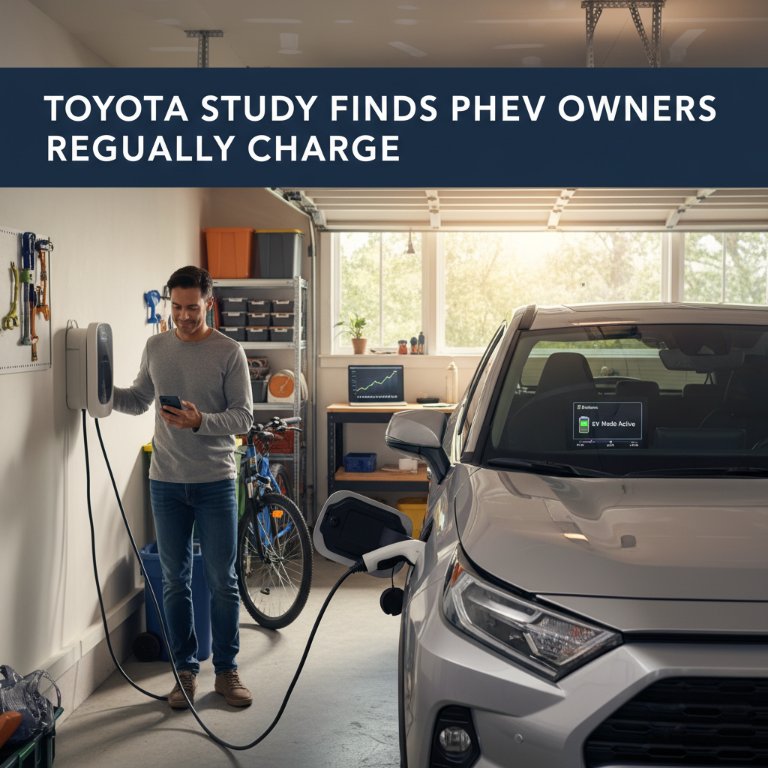
A new, large-scale study by Toyota has decisively challenged a long-standing criticism leveled against Plug-in Hybrid Electric Vehicles (PHEVs): that owners rarely bother to charge them. The comprehensive analysis, encompassing over 6,000 Toyota and Lexus PHEVs across the U.S. and Canada, reveals that the vast majority of owners consistently utilize their vehicles' electric capabilities. This finding offers crucial validation for PHEVs as a practical, everyday electrification solution.
For years, skeptics dismissed PHEVs as a less effective "green" option, arguing that their internal combustion engines would too often render their electric drivetrains moot due to a perceived lack of charging discipline among owners. This sentiment often positioned PHEVs as little more than traditional hybrids, failing to deliver on their promise of reduced emissions and fuel consumption. However, Toyota's data paints a different picture, suggesting that modern PHEV owners are actively integrating electric driving into their daily routines.
The Study's Revelations: Beyond the Anecdotal
The study's core finding directly refutes the common anecdotal evidence and some past research (often conducted on earlier generation PHEVs) that suggested poor charging habits. Instead, it demonstrates a clear pattern of regular charging among Toyota and Lexus PHEV owners. This is particularly significant given the evolution of PHEV technology.
- Consistent Charging Habits: The study confirms that most owners regularly plug in their vehicles, maximizing their electric-only range for daily commutes and shorter trips.
- Dual-Nature Utility: This behavior validates the PHEV's intended role as a practical compromise: enabling emission-free electric driving for everyday needs while retaining the flexibility of gasoline for longer journeys, effectively mitigating range anxiety.
- Enhanced Electric Range: The study highlights that current PHEV models offer substantially more usable electric range than their predecessors. Older PHEVs often had electric ranges in the 10-20 mile bracket, which might not cover a full daily commute for many. Modern PHEVs, however, frequently offer 30-50 miles or more of electric range, making them far more practical for electric-only daily use. For example, some 2026 Toyota and Lexus PHEVs offer electric ranges of over 40 miles, with the RAV4 Prime boasting around 52 miles and the Prius PHEV offering 44 miles.
This increased electric capability is crucial. When PHEVs have a meaningful electric range, owners are more incentivized to charge and utilize that range, leading to tangible environmental and economic benefits.
Why This Matters:
- Vindication for Toyota's Multi-Pathway Strategy: This research strongly supports Toyota's long-held "multi-pathway" approach to carbon neutrality. Unlike many competitors who pivoted aggressively to pure Battery Electric Vehicles (BEVs), Toyota has consistently advocated for a diverse portfolio including traditional hybrids, PHEVs, BEVs, and even hydrogen fuel cell vehicles. The study provides compelling data that their PHEV offerings are indeed delivering on their environmental promise when used as intended, countering critics who argued this strategy was too slow or insufficient. This reinforces Toyota's position as a pragmatic leader, providing solutions that fit varying customer needs and infrastructure realities across global markets.
- Reshaping Perceptions of PHEVs: For too long, PHEVs have been caught in a definitional limbo – not fully electric, not purely gasoline. This study helps solidify their identity as a powerful transition technology and, for many, a sustainable long-term solution. It underscores that with adequate electric range and owner engagement, PHEVs significantly reduce fuel consumption and emissions. This could lead to a re-evaluation of PHEVs by consumers and policymakers, especially in regions with developing charging infrastructure or for individuals with diverse driving needs that a full BEV might not yet fully address.
- Empowering Consumer Choice: For prospective buyers, the study offers reassurance. It validates that investing in a PHEV is a meaningful step towards greener driving, providing the best of both worlds: daily electric commutes with the safety net of gasoline for longer trips without range anxiety. This flexibility is a key differentiator and a major selling point for many who are not yet ready or able to commit to a purely electric vehicle.
- Market Signal for Development: The success of modern PHEVs, as demonstrated by this study, signals to the wider industry the importance of designing PHEVs with substantial and usable electric ranges. This isn't just about meeting regulatory targets; it's about matching consumer behavior and delivering genuine environmental impact. It encourages further innovation in battery technology and powertrain integration to maximize electric driving capability.
Looking Ahead
Toyota's comprehensive study unequivocally demonstrates that the era of the underutilized PHEV is, for most owners, a relic of the past. As electric ranges continue to grow and charging becomes even more accessible, sophisticated PHEVs will undoubtedly continue to play a vital and increasingly important role in the global transition to a carbon-neutral automotive future. This data validates consumer choice and strengthens the case for diverse electrification strategies, proving that there isn't just one path forward.