The Ultimate Circular Loop: How Upcycled EV Charger Crates are Boosting Crop Yields by 300%
The global rush to build out electric vehicle charging infrastructure has an overlooked footprint: packaging waste. Every high-power DC fast-charger d...
Editorial Team
World Of EV
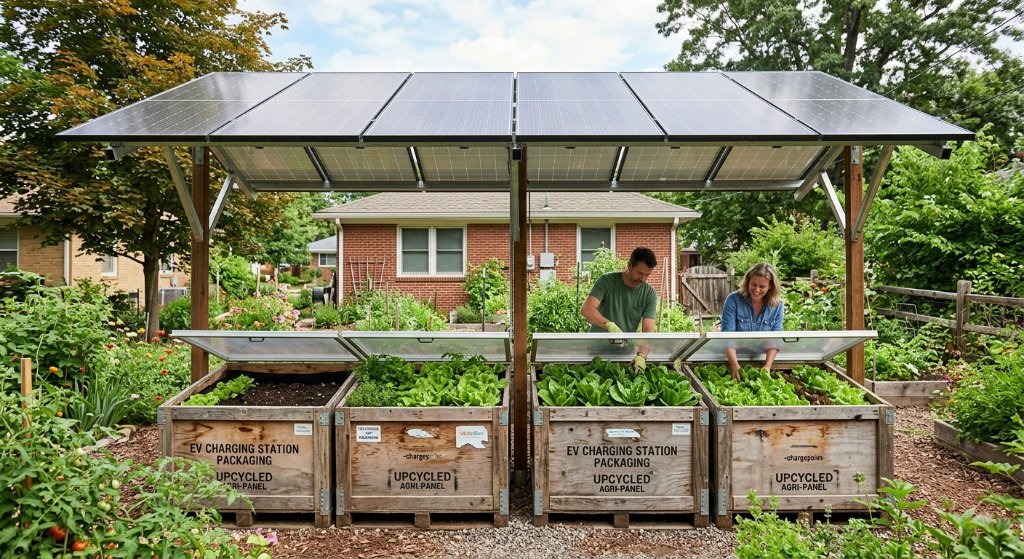
The global rush to build out electric vehicle charging infrastructure has an overlooked footprint: packaging waste. Every high-power DC fast-charger deployed by networks like Electrify America, Tesla, or ChargePoint arrives clad in massive, heavy-duty wooden shipping crates designed to protect sensitive power electronics. Historically, these crates have headed straight to municipal waste streams, undermining the holistic green transition they are meant to support.
However, a groundbreaking sustainability research study has turned this logistics headache into an agricultural triumph. By upcycling these discarded wooden crates into backyard "cold frames" and pairing them with semi-transparent solar panels, researchers have demonstrated a highly efficient agrivoltaic setup. This self-sustaining microclimate not only generates clean energy but boosts lettuce crop productivity by an astonishing 300% compared to traditional open-air farming.
The Anatomy of a Backyard Agrivoltaic Hack
This DIY-friendly innovation merges small-scale solar power with urban agriculture. Instead of using traditional glass or plastic lids for cold frames—which protect plants from frost but offer no energy benefits—researchers topped the upcycled EV charger crates with semi-transparent photovoltaic (PV) panels.
Here is how this ingenious setup functions:
- Dual-Use Solar Canopies: The semi-transparent solar panels capture sunlight to generate clean electricity, while filtering out harsh, direct UV rays that can scorch delicate crops.
- Microclimate Optimization: The wooden structure of the EV charger crate acts as an insulated barrier, shielding crops from extreme wind, retaining soil moisture, and stabilizing ambient temperatures.
- Upcycled Foundations: By utilizing heavy-duty shipping crates, the setup requires zero new raw materials for construction, drastically lowering the embodied carbon footprint of the miniature greenhouse.
- Substantial Yield Gains: In comparative testing, lettuce grown within this agrivoltaic cold frame grew up to three times faster and produced significantly more biomass than open-air control groups.
Why This Matters:
This breakthrough represents a massive paradigm shift for both the EV and renewable energy sectors. It successfully bridges the gap between infrastructure logistics and micro-scale agriculture, proving that the circular economy can deliver tangible, localized benefits.
For EV charging networks and hardware manufacturers, this offers a golden opportunity to tackle "Scope 3" upstream waste. Instead of paying landfill disposal fees, companies could partner with community gardens or offer "upcycling kits" directly to consumers. It shifts the narrative from "EVs reduce tailpipe emissions" to "the entire EV ecosystem actively regenerates the environment."
For the broader market, this is a proof-of-concept for localized agrivoltaics. While massive solar farms over crop fields are gaining global traction, this proves that the concept can be scaled down to suburban backyards and urban balconies. The ultimate winner here is the eco-conscious consumer, who can now harvest homegrown food and clean energy simultaneously from what was once industrial shipping waste.
The Road Ahead
As the automotive industry scrambles to meet net-zero targets, we must look beyond the vehicle battery to find decarbonization opportunities. The repurposing of industrial logistics waste into food-producing, energy-generating backyard hubs is a masterclass in circular design. Expect forward-thinking charging brands to seize on this trend, turning their shipping liabilities into valuable community assets.