The Range Myth Busted: Why First-Time EV Owners Say You're Buying Too Much Battery
The transition from internal combustion engines (ICE) to electric vehicles (EVs) has long been gatekept by a single, dominating fear: range anxiety. F...
Editorial Team
World Of EV
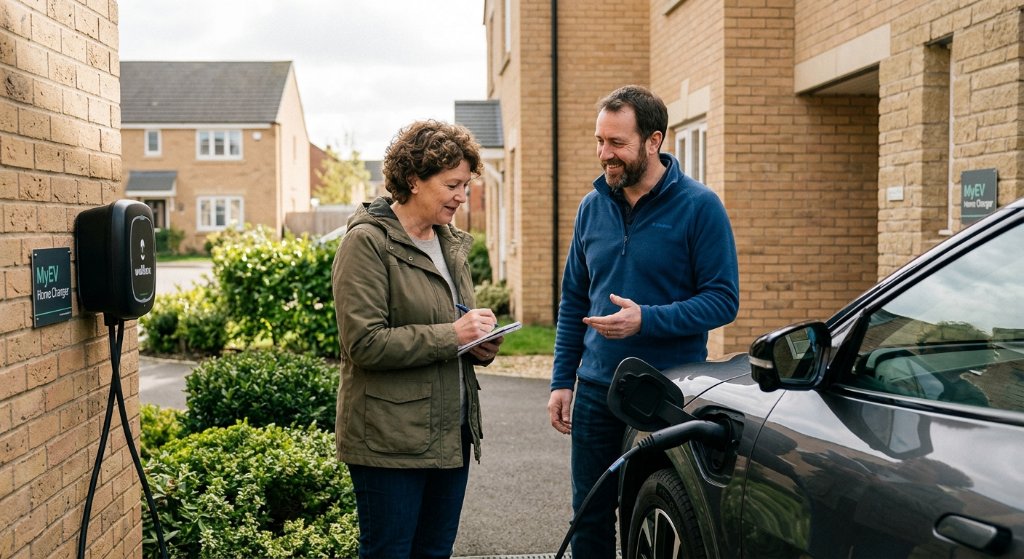
The transition from internal combustion engines (ICE) to electric vehicles (EVs) has long been gatekept by a single, dominating fear: range anxiety. For years, legacy automakers and ambitious startups alike chased 400-mile-plus ranges to soothe consumer fears, resulting in heavier, more expensive vehicles that many mainstream buyers struggled to afford.
However, as a new wave of first-time EV owners takes to the roads, a stark reality is setting in. Real-world ownership data is proving that the relentless pursuit of maximum battery capacity is not only unnecessary, but a costly financial mistake. Instead, a shift toward practical buying habits—anchored by the convenience of home charging—is rewriting the EV transition playbook.
The Home Charging Paradigm Shift
Experienced owners agree that the single most transformative aspect of EV ownership is establishing Level 2 home charging. Moving away from the "gas station model"—where drivers wait until their tank is empty to seek out a public fueling station—requires a mental shift to the "smartphone model," where the vehicle is passively topped up overnight.
- Zero-effort refueling: Waking up every morning with a fully charged battery completely eliminates the chore of weekly gas station stops and minimizes reliance on public charging networks.
- Stunning cost savings: Utilizing off-peak residential electricity rates makes home charging exponentially cheaper than paying premium prices at public DC fast-charging stations or buying gasoline.
- Battery longevity: Consistent Level 2 AC charging is significantly gentler on lithium-ion battery chemistry than the high-heat, high-voltage environment of public DC fast chargers.
Debunking the 400-Mile Range Fallacy
Perhaps the most valuable lesson shared by veteran EV drivers is the realization of how little range they actually need. While the industry has historically marketed EVs based on maximum highway range, the average American's daily commute hovers around just 30 to 40 miles. Buying a massive 100-kWh battery to cover an occasional annual road trip is an incredibly inefficient use of capital.
- The weight and efficiency penalty: Larger batteries add hundreds of pounds of dead weight to a vehicle, which actively degrades driving dynamics, increases tire wear, and reduces overall energy efficiency.
- The pricing premium: Choosing an extended-range trim over a standard-range variant often inflates the vehicle's MSRP by $10,000 to $15,000—money that is rarely recouped in daily utility.
- The chemistry constraint: Many high-range NMC (Nickel Manganese Cobalt) batteries are best kept charged between 20% and 80% to prevent degradation. Consequently, owners who avoid charging to 100% daily are lugging around expensive capacity they rarely even tap into.
Why This Matters:
This shift in consumer awareness represents a massive turning point for the automotive market. For years, OEMs (Original Equipment Manufacturers) have been locked in a costly "range war," trying to match ICE vehicles mile-for-mile on a single fill-up.
- Who wins? Value-focused automakers utilizing Lithium Iron Phosphate (LFP) chemistry. LFP batteries are cheaper to produce, highly durable, and can be charged to 100% daily without rapid degradation. By steering buyers toward realistic range expectations, manufacturers can build smaller, lighter, and far more affordable mass-market EVs.
- Who loses? High-end EV startups relying solely on ultra-long-range claims to justify $100,000+ price tags. As buyers realize that public charging infrastructure is maturing and that they don't need a 500-mile battery, these premium, heavy-battery vehicles will see their market share erode.
- The Market Signal: The era of early-adopter range anxiety is giving way to pragmatic consumerism. As buyers begin to calculate their actual daily needs rather than their worst-case scenarios, the demand will shift heavily toward efficient, standard-range EVs priced under $35,000.
To successfully make the leap to electric, buyers must unlearn decades of gas-station habits. Stop shopping for the annual road trip and start buying for the 95% daily commute. The future of the EV market isn't about stuffing larger batteries into cars; it’s about building smarter, more realistic consumer expectations and backing them up with robust home charging.