The EV Lock-In Effect: How Tesla's Seamless UX Is Rewiring Driver Muscle Memory—And Ruining ICE Rentals
A viral, humorous testimonial shared on Reddit has highlighted a profound psychological shift in the automotive world: driving an electric vehicle doe...
Editorial Team
World Of EV
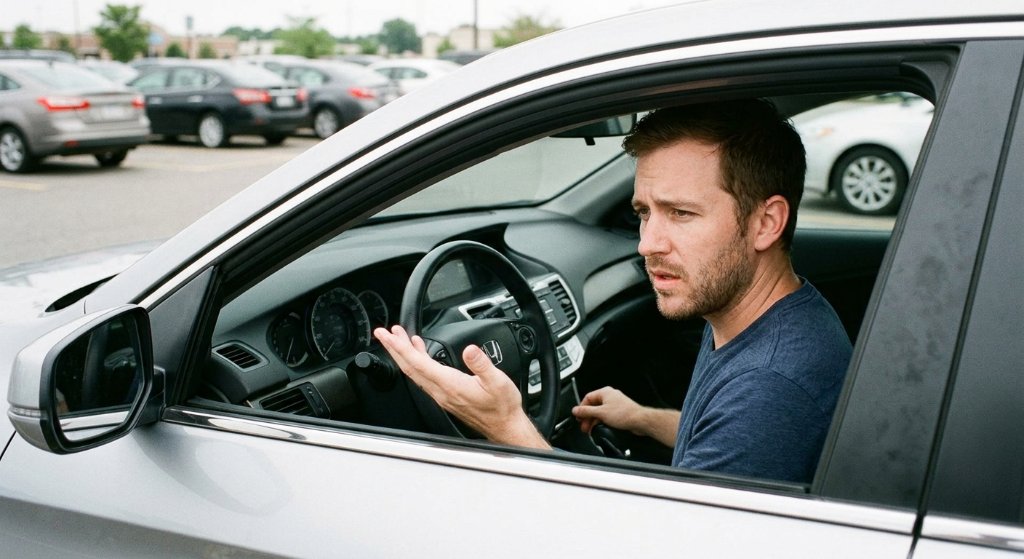
A viral, humorous testimonial shared on Reddit has highlighted a profound psychological shift in the automotive world: driving an electric vehicle doesn't just change how you fuel your car; it completely rewrites your cognitive muscle memory. An EV owner recounted their chaotic experience renting a traditional internal combustion engine (ICE) vehicle on vacation, admitting that they repeatedly left the running car unlocked in parking lots and forgot to press the brake pedal at red lights. Joking that "Tesla has made me a bad driver," the motorist put a spotlight on a very real, industry-wide phenomenon.
This isn't just an isolated, funny anecdote; it is the ultimate proof of the "EV UX lock-in." When Tesla pioneered features like phone-key walk-away auto-locking and aggressive one-pedal regenerative braking, they didn't just iterate on the automobile—they deleted legacy driving habits. Now, as legacy automakers scramble to catch up, the stark contrast between pure-play EV user experiences and traditional ICE layouts is creating a massive psychological barrier for drivers trying to transition back and forth.
The Muscle Memory Meltdown: What We Forget
The transition from a modern, software-defined EV back to a traditional gas-powered rental vehicle exposes just how many micro-actions we have outsourced to vehicle software. For drivers accustomed to minimalist EV interfaces, returning to a gas car feels like stepping back into the dial-up internet era.
The most common habits that EV drivers "unlearn" include:
- The "One-Pedal" Reflex: In an EV with strong regenerative braking, lifting off the accelerator brings the car to a complete, held stop. In an ICE vehicle, forgetting to hold down the physical brake pedal at a traffic light causes the car to dangerously "creep" forward.
- The Walk-Away Lock Habit: Many modern EVs lock automatically as the driver walks away with their phone. In a rental ICE car, this habit leads to leaving the keys in the ignition, the doors wide open, and sometimes even the engine still idling.
- The Ignition Amnesia: Pure-play EVs turn "on" when you sit in them and "off" when you exit. In contrast, ICE cars require a physical key turn or a start/stop button push—steps that EV drivers now routinely forget, leaving vehicles running in public parking lots.
Legacy OEMs vs. The Software-Defined Vehicle
This user experience gap highlights a massive philosophical divide in the automotive industry. When Tesla launched the Model S and subsequent Model 3, they discarded decades of automotive layout conventions. There was no start button, no handbrake, and no physical key fob. Rivian and Lucid quickly followed this "blank slate" design philosophy.
Legacy automakers, however, have struggled with this transition. Fearing they would alienate traditional buyers, companies like Volkswagen (with the ID.4) and Ford (with the Mustang Mach-E) initially kept physical start/stop buttons and traditional key fobs in their electric models. While this made their EVs feel familiar to gas-car converts, it also handcuffed those vehicles to outdated UX paradigms. As software-defined vehicles (SDVs) become the industry standard, legacy brands are starting to realize that safety and convenience features like phone-as-a-key (PaaK) and true one-pedal driving are no longer optional "cool tech" features—they are foundational expectations.
Why This Matters:
The comedic frustration of an EV driver struggling with a rental car reveals a powerful market force: the cognitive lock-in effect.
- The Retention Loop is Unbreakable: Once a consumer adapts to a frictionless UX where they never have to touch a key, press a start button, or use a brake pedal in stop-and-go traffic, the cognitive load of returning to an ICE vehicle becomes a major pain point. This high friction level acts as a powerful retention tool for EV brands. Once a customer goes "frictionless," they are highly unlikely to ever buy a traditional ICE vehicle again.
- The Software-Defined Vehicle (SDV) Winner-Take-All: This highlights why the software battleground is so critical. Automakers who master seamless, phone-based proximity locking, over-the-air (OTA) updates, and customizable regenerative braking curves will win long-term customer loyalty.
- The Threat to Legacy Rental and Fleets: Rental car agencies and fleet operators face a unique challenge. As EV adoption grows, a larger portion of their customer base will find traditional ICE fleets frustrating, confusing, or even hazardous to drive due to faded muscle memory. Rental agencies must accelerate their own EV transitions to match the expectations of modern drivers.
In short, "Tesla making us bad drivers" is a tongue-in-cheek way of saying that modern software-defined EVs have made traditional driving mechanics obsolete. The physical chores of driving are being phased out, and any automaker failing to provide this level of seamless automation is already falling behind.
Conclusion
The humorous plight of the EV driver stranded in an ICE rental highlights a broader truth: the automotive industry is no longer just competing on horsepower, range, or build quality. The real battle is being fought over cognitive ease and software integration. As drivers become conditioned to vehicles that anticipate their every move—from unlocking upon approach to stopping without a brake pedal—traditional cars will increasingly feel like relics of a bygone era. For automakers, the mandate is clear: simplify the user experience, or risk losing your customers to those who do.