The Disposable EV Dilemma: Why the Industry Must Fix Its Broken Repair Ecosystem Before Insurance Premiums Suffocate Growth
For the past decade, the electric vehicle narrative has been dominated by a singular metric: new vehicle deliveries. Brands like Tesla, BYD, and Rivia...
Editorial Team
World Of EV
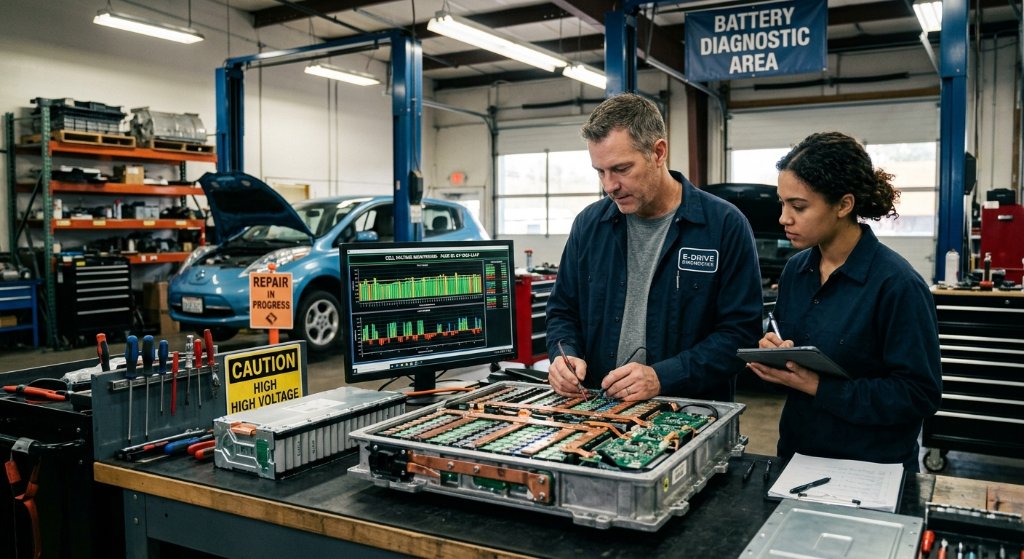
For the past decade, the electric vehicle narrative has been dominated by a singular metric: new vehicle deliveries. Brands like Tesla, BYD, and Rivian raced to scale production, treating EVs more like high-tech smartphones on wheels than traditional automobiles. But as the global EV fleet matures and early-generation vehicles slide out of their original manufacturer warranties, a harsh reality is setting in. The industry is facing a massive aftermarket crisis, and without a mature, independent repair ecosystem, functional EVs are increasingly heading to the scrapheap after minor accidents.
Historically, legacy automakers built robust, open aftermarket supply chains. If an internal combustion engine (ICE) car broke down, a local independent mechanic could plug in an OBD-II scanner, diagnose the issue, and source affordable aftermarket parts. Conversely, the pioneering era of EVs relied heavily on vertical integration and locked-down ecosystems. This "walled garden" approach is now backfiring, driving up insurance premiums and threatening the long-term viability of the second-hand EV market.
The High Cost of a Walled Garden
Currently, minor collisions that would require a simple bumper replacement on an ICE car are routinely resulting in EVs being written off as total losses. Because insurance companies cannot verify the internal health of a battery pack after an impact, they often choose to write off the entire vehicle rather than risk a catastrophic thermal runaway event. This is a direct consequence of how modern EVs are engineered and supported:
- Proprietary Diagnostics: OEMs strictly guard their battery management system (BMS) data, preventing independent shops from assessing cell-level health.
- Unrepairable Architecture: Structural battery packs—such as Tesla’s 4680 cell-to-chassis design—are glued directly into the vehicle frame. While this improves structural rigidity and assembly line efficiency, it makes physical battery repairs virtually impossible compared to modular packs like those found in GM's Ultium platform.
- The Technician Bottleneck: There is a severe global shortage of mechanics certified to handle high-voltage (HV) systems, leaving consumers entirely dependent on expensive, backlogged dealership service networks.
The Road to a Sustainable EV Aftermarket
To prevent EVs from becoming disposable consumer electronics, industry advocates and right-to-repair coalitions are pushing for a standardized, open-access repair framework. Transitioning from full pack replacements to component-level restoration is the only path toward reducing ownership costs.
Achieving this requires a three-pronged approach:
- Standardized Diagnostic Protocols: Establishing an industry-wide "EV diagnostic passport" that allows independent technicians to read cell voltages and internal resistance accurately.
- Modular Battery Design: Shifting OEM design philosophy toward repairable modular packs, where individual bad cells or modules can be safely swapped out for a fraction of the cost of a new pack.
- Workforce Up-Skilling: Democratizing high-voltage safety and repair training so local mechanics can safely transition from oil changes to battery rebuilding.
Why This Matters:
This is a critical pivot point for the electric vehicle transition. For years, the industry hid behind the promise of "lower maintenance costs" to justify high initial purchase prices. While EVs do have fewer moving parts than ICE vehicles, the astronomical cost of battery replacements and rising insurance premiums are completely erasing those savings for second- and third-hand buyers.
- The Winners: Independent repair shops and remanufacturing startups (such as those specializing in battery diagnostics and module rebuilding) who position themselves early in this space. They will capture a massive, high-margin market as millions of EVs age out of warranty.
- The Losers: OEMs who refuse to adapt. If an automaker’s vehicles are notoriously unrepairable, insurance companies will jack up premiums to prohibitive levels, cratering the vehicle's resale value and, ultimately, destroying demand for new models.
- The Bottom Line: If the EV transition is to succeed globally, vehicles cannot be treated as disposable. Standardizing diagnostics and democratizing repairs isn't just a win for consumer rights; it is a financial necessity to prevent skyrocketing insurance rates from suffocating the market.
Looking Ahead
We are moving out of the "early adopter" phase of electrification and entering the era of long-term utility. The brands that survive the next decade will not just be those that can build the most cars, but those whose vehicles can be affordably maintained for fifteen years and 200,000 miles. The battleground has shifted from the assembly line to the service bay.