The Death of Charger Anxiety: How Public EV Networks Finally Saved the Summer Road Trip
For years, taking an electric vehicle on a long-distance summer road trip was an exercise in high-stakes logistics and raw hope. Drivers mapped out jo...
Editorial Team
World Of EV
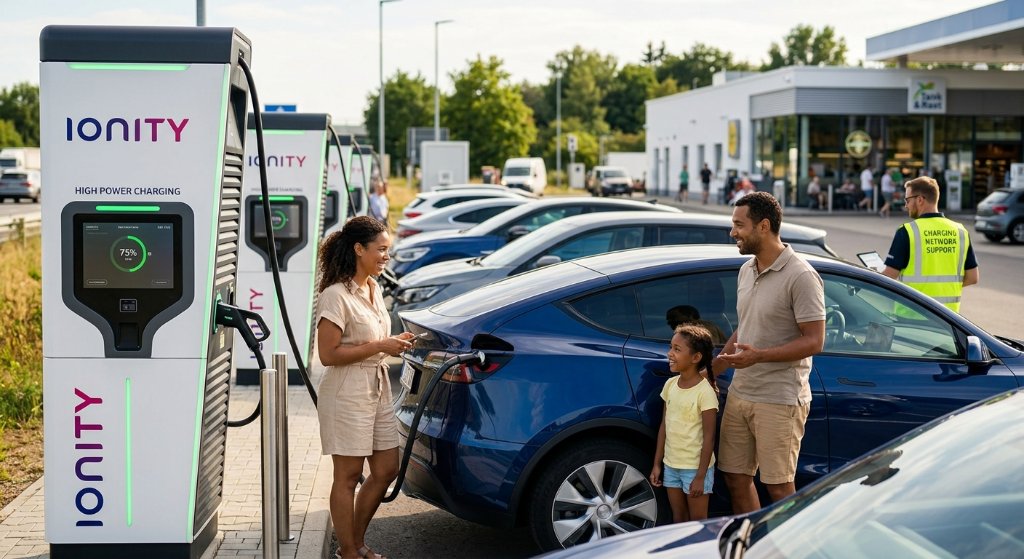
For years, taking an electric vehicle on a long-distance summer road trip was an exercise in high-stakes logistics and raw hope. Drivers mapped out journeys like military operations, crossing their fingers that they wouldn't pull up to a bank of blank screens, snapped cables, or the dreaded "red ring of death" at non-Tesla fast chargers. But this summer travel season, the narrative has shifted dramatically. A comprehensive review of customer experiences reveals that public charging network operators have made monumental strides, drastically reducing driver anxiety and turning long-distance EV travel into a remarkably routine affair.
This progress represents a massive evolution for an industry that has long struggled with a reputation for unreliability. Just a couple of years ago, industry data showed that nearly one in five public charging attempts (around 20%) ended in failure—creating a wave of "charge anxiety" that threatened to stall the mass adoption of electric vehicles. Today, targeted operational overhauls, rigorous maintenance protocols, and the deployment of rapid on-the-ground support teams have fundamentally rewritten the rules of the highway.
The Shift from Expansion to Obsessive Maintenance
The secret behind this summer's smooth road trips isn't just that there are more chargers on the map; it is that the chargers we have actually work. Network operators have pivotally shifted their priority from rapid land-grabs and sheer port counts to ruthless uptime and equipment maintenance. The days of leaving a broken unit offline for weeks are gone, replaced by a hyper-focused operational standard.
Key drivers behind this reliability revolution include:
- On-the-Ground Support "Swarms": Operators are now deploying specialized, rapid-response maintenance crews to high-traffic travel corridors, ensuring physical damage or hardware failures are resolved in hours rather than weeks.
- Proactive Diagnostic Software: Real-time backend monitoring now flags software glitches and payment terminal errors before a driver even pulls up, allowing for remote, over-the-air reboots and fixes.
- Stricter Performance Mandates: Influenced heavily by federal guidelines like the National Electric Vehicle Infrastructure (NEVI) formula program—which demands a strict 97% uptime—networks have baked rigorous performance metrics into their core business models.
The Standardization Catalyst
This reliability surge also stems from a broader industry shakeup. For a long time, the non-Tesla public charging ecosystem was a fragmented mess of competing software standards, unreliable hardware suppliers, and various plug configurations. The ongoing transition toward the North American Charging Standard (NACS) has acted as a catalyst, forcing legacy operators to standardize their technology and modernize their oldest, most problematic hardware. By weeding out unstable legacy systems and upgrading to high-power, liquid-cooled dispensers, networks have drastically minimized the physical wear-and-tear that historically plagued high-use stations during peak summer heat waves.
Why This Matters:
This operational turnaround is a watershed moment for the EV industry. Historically, "charge anxiety"—the fear of arriving at a broken plug—has superseded "range anxiety" as the single largest hurdle preventing mainstream car buyers from making the switch to electric. By proving that public fast-charging can be as dependable as a traditional gas pump, networks are removing the final psychological barrier for the average consumer.
- Who Wins: Mainstream car buyers and legacy automakers. Brands like Hyundai, Kia, Ford, and GM—whose brilliant high-voltage architectures and long-range vehicles were previously handcuffed by a spotty public charging experience—can now sell their road-trip-capable EVs without caveats.
- Who Loses: Tesla’s exclusive Supercharger moat is officially evaporating. While Tesla’s network remains a gold standard, non-Tesla networks are rapidly closing the gap. This means Tesla can no longer rely solely on its superior charging network to win over fence-sitters.
- The Market Signal: This shift signals that the EV market is graduating from the "early adopter" phase to the "early majority". Early adopters were willing to tolerate buggy apps and out-of-order signs; mass-market buyers will not. Operators who fail to maintain this high-reliability threshold will quickly find themselves obsolete as drivers flock to networks that guarantee a first-time plug success.
Ultimately, this summer’s successful travel season demonstrates that the EV infrastructure is maturing into a resilient, reliable utility. As public networks continue to refine their maintenance strategies and prepare for the next wave of high-power charger deployments, the dream of seamless, coast-to-coast EV travel has finally become a reality.