The 22-Minute Fix: How Stellantis Just Erased the Biggest Fear of Buying a Chinese EV
For years, European car buyers interested in affordable Chinese electric vehicles have faced one massive, lingering source of anxiety: "What happens i...
Editorial Team
World Of EV
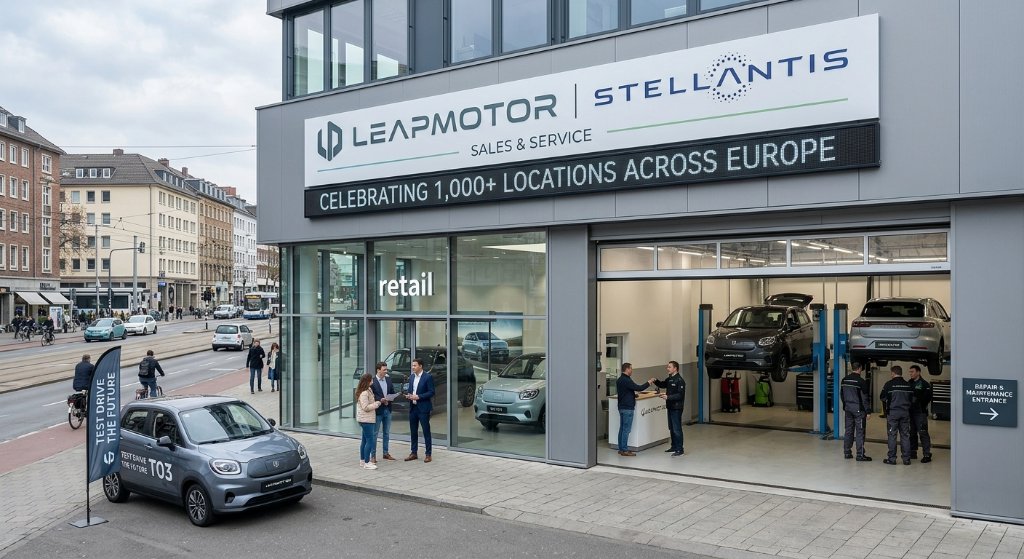
For years, European car buyers interested in affordable Chinese electric vehicles have faced one massive, lingering source of anxiety: "What happens if it breaks down?" While overseas startups scramble to build standalone service networks from scratch or leave buyers stranded in "dealership deserts" waiting months for imported parts, Leapmotor has officially neutralized this objection.
Through its strategic joint venture with European automotive giant Stellantis—known as Leapmotor International—the fast-rising brand has scaled its European retail and service footprint to a massive 1,020 locations across 36 countries. This aggressive expansion is an industry masterclass in distribution, effectively transforming Leapmotor from a foreign newcomer into one of the most accessible EV brands on the continent virtually overnight.
Leveraging the Stellantis Super-Network
Leapmotor's rapid scale-up is entirely unprecedented in the EV era, growing from its first European sales points in late 2024 to over a thousand locations today. Rather than burning through capital to build standalone boutiques, Leapmotor is directly piggybacking on Stellantis' massive, existing dealer ecosystem. Its vehicles now share showroom and workshop space with established mainstays like Peugeot, Fiat, Jeep, and Citroën.
This cooperative footprint has redefined convenience for European buyers:
- The 22-Minute Radius: The expanded network ensures that the average European Leapmotor owner is now only a 22-minute drive away from certified sales, maintenance, and aftersales support.
- Massive Geographic Reach: Leapmotor's 1,020 sites now span 36 European nations—stretching from Iceland to Bulgaria—covering roughly 80% of the region.
- Skyrocketing Volume: Backed by this network, Leapmotor recorded a massive 103,129 global deliveries in August alone, with Europe accounting for a staggering 27% of that volume.
- Expanding Product Lineup: The service network is fully equipped to handle Leapmotor’s growing European fleet, including the T03 city car, the C10 family SUV, and the newly launched B10 compact SUV.
An Untouchable Edge Over Foreign Rivals
Traditionally, new automotive players spend years and hundreds of millions of euros establishing a viable service network. We saw this with Tesla’s early service bottleneck struggles, and we see it today as Chinese giants like BYD and NIO spend heavily to construct standalone hubs. Leapmotor’s integration into the Stellantis ecosystem bypasses this entire lifecycle.
When a European customer buys a Leapmotor B10, they know they can get it serviced at the local dealership they have trusted for decades to repair their Fiat 500 or Peugeot 208. This immediate familiarity builds instant consumer trust, dismantling the primary psychological barrier keeping buyers from embracing Chinese EV technology.
Why This Matters:
This development signals a profound shift in the global EV chess match, creating clear winners and losers while establishing a new survival strategy for foreign brands.
- Who Wins:
- Leapmotor: The Chinese manufacturer gains instant, continent-wide credibility and a ready-made logistics system that would have otherwise taken a decade to build.
- Stellantis: The legacy giant successfully injects highly competitive, low-cost Chinese EV technology into its product lineup, protecting its market share from being cannibalized by low-cost rivals.
- European Consumers: Buyers get access to highly affordable, tech-forward EVs backed by the peace of mind of a local, trusted neighborhood service bay.
- Who Loses:
- Other Chinese EV Makers: Rivals like BYD, Geely, and Great Wall Motor are left playing catch-up. They must either invest billions to replicate a fraction of this service density or face an uphill battle convincing buyers that their vehicles won't become unfixable paperweights if a part breaks.
- Traditional European Rivals: Brands like Volkswagen and Renault are now forced to compete against highly affordable Chinese hardware that carries the exact same servicing convenience as native European brands.
- The Strategic Signal: This is the ultimate blueprint for navigating the intense geopolitical and tariff war between Brussels and Beijing. By combining Leapmotor’s rapid, low-cost EV engineering with localized European manufacturing (such as plans to build vehicles at Stellantis’ Zaragoza plant in Spain) and Stellantis’ retail dominance, this partnership proves that the future of global EV expansion belongs to hybrid, cross-border alliances.
In a world where protectionist tariffs threaten to lock Chinese brands out of the European market, Leapmotor and Stellantis have built an impenetrable back door. By bringing parts, service, and localized manufacturing closer to the customer, they have removed the friction from EV adoption and rewritten the global automotive playbook. If other legacy automakers do not find their own "Leapmotor equivalent" soon, they risk being left far behind in the race to electrify the masses.