Thailand's EV Dream Faces Reality Check: Government Slams Industry Over Mounting Consumer Complaints
Thailand, long heralded as a burgeoning hub for electric vehicle adoption and manufacturing, is now grappling with a significant challenge to its burg...
Editorial Team
World Of EV
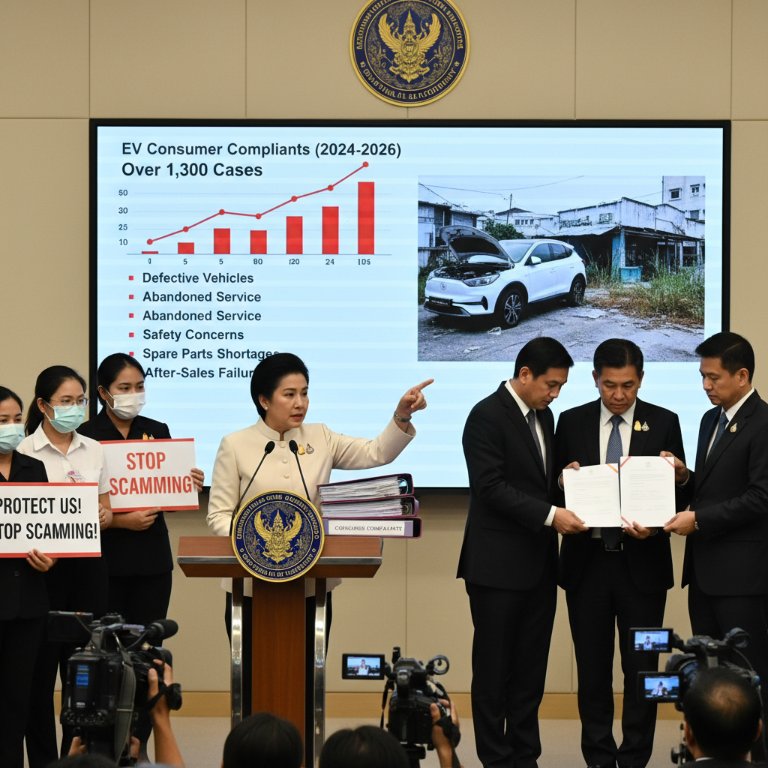
Thailand, long heralded as a burgeoning hub for electric vehicle adoption and manufacturing, is now grappling with a significant challenge to its burgeoning EV dream. The nation's government has issued a stern warning to the EV industry, signaling a critical turning point as consumer complaints skyrocket. This crackdown comes as the rapid influx of new EV models and brands has outpaced the development of robust consumer protection and after-sales infrastructure.
A Surge in Consumer Grievances
Between 2024 and 2026, the Thai consumer protection authorities logged over 1,300 complaints, painting a stark picture of buyer dissatisfaction. These grievances span a wide array of critical issues, from outright defective vehicles to the troubling abandonment of promised service networks. Rapid and often unpredictable price cuts have left early adopters feeling short-changed, while safety concerns, persistent spare parts shortages, and a widespread failure in after-sales service have eroded consumer trust. This deluge of complaints highlights the growing pains of a market that has seen explosive growth, often prioritizing sales volumes over sustained customer satisfaction.
Government Takes Decisive Action
In response to this escalating crisis, Prime Minister's Office Minister Ms. Supamas Isaraphakdi delivered a clear ultimatum to the industry. The government is not merely acknowledging these issues but actively pursuing over 103.1 million baht in damages on behalf of aggrieved consumers. Authorities have initiated targeted showroom inspections, placing a renewed emphasis on stringent compliance with product labeling laws. This includes ensuring accurate and verifiable driving range claims—a common point of contention for EV buyers—and transparent disclosure of warranty terms, which have often been opaque or inconsistently applied by some manufacturers. This robust government intervention marks a pivotal moment, shifting the focus from simply promoting EV adoption to ensuring a fair and reliable market for consumers.
Why This Matters:
This government intervention in Thailand is far more than a localized skirmish; it's a potent signal to the entire global EV industry, particularly those players eyeing rapidly developing markets.
For Consumers: This is a clear victory for consumer rights. It establishes a precedent that quality, service, and transparent dealings are non-negotiable, providing much-needed reassurance in a market often characterized by aggressive sales tactics and uncertain after-sales support. Prospective buyers will now have a stronger basis to demand better from manufacturers.
For Manufacturers: The message is unequivocal: sustainable growth hinges on robust product quality, reliable service networks, and transparent business practices, not just competitive pricing. Brands that have prioritized quick market penetration over long-term customer satisfaction will face significant reputational and financial repercussions. This scrutiny will likely force an industry-wide reevaluation of business models in emerging EV markets, pushing towards more localized production, stronger dealer training, and readily available spare parts.
Market Maturity: Thailand's move indicates a critical maturation phase for the EV market. The "Wild West" era of rapid, unregulated expansion is giving way to a more structured environment where regulatory oversight is catching up to technological advancement. This could lead to a consolidation within the market, favoring established players or new entrants willing to invest heavily in comprehensive customer support. Brands, particularly many of the new Chinese entrants that have aggressively captured market share in Thailand, must now demonstrate their long-term commitment to the market beyond just competitive pricing.
Broader Implications: This scenario echoes challenges seen in other burgeoning EV markets globally. Governments and consumers worldwide are increasingly demanding accountability, making Thailand's strong stance a potential blueprint for other nations seeking to protect their citizens as the EV transition accelerates.
Thailand's government has drawn a line in the sand, demanding accountability and integrity from the burgeoning EV industry. This stern warning and subsequent actions underscore a vital shift: the future of electric mobility in the region, and indeed globally, depends not just on innovative technology and aggressive pricing, but critically, on unwavering consumer trust and a commitment to comprehensive after-sales support. Manufacturers who fail to heed this warning do so at their own peril, as the market matures and consumers become increasingly discerning.