Tesla's Robotaxi Dream Takes Concrete Form: Nevada Permit Greenlights Critical Commercial Rollout
The long-awaited promise of Tesla's autonomous robotaxi network is closer than ever to becoming a tangible reality. In a significant move that signals...
Editorial Team
World Of EV
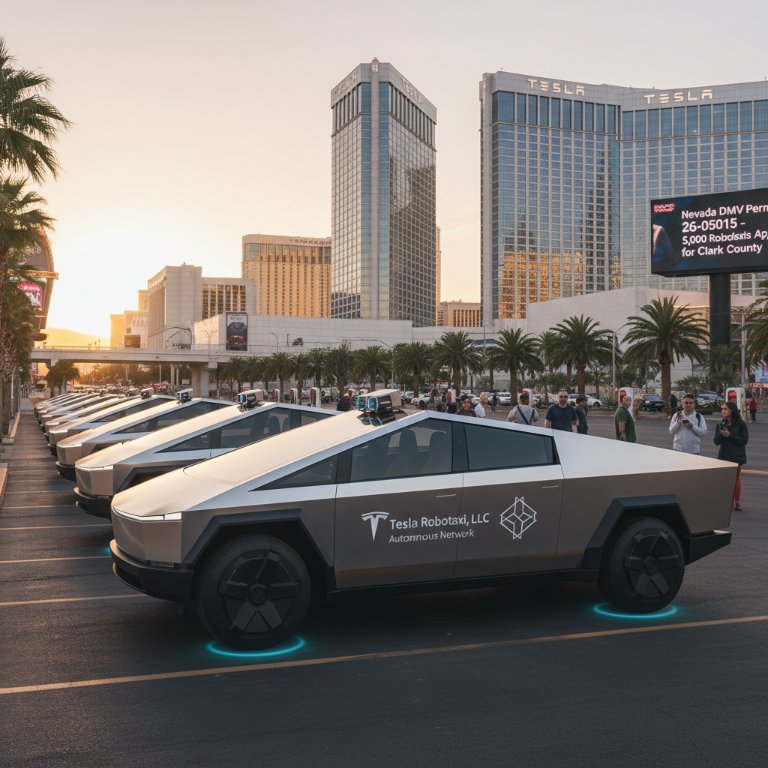
The long-awaited promise of Tesla's autonomous robotaxi network is closer than ever to becoming a tangible reality. In a significant move that signals a pivotal phase for the company's autonomous driving ambitions, Tesla Robotaxi, LLC has officially filed for an Autonomous Vehicle Network Company permit in Nevada (Docket 26-05015). This crucial step seeks regulatory approval to deploy a formidable fleet of up to 5,000 robotaxis across Clark County, Nevada, within the first 12 months of launch. This expansive rollout targets high-traffic areas, including the bustling Las Vegas and Henderson airports, placing Tesla squarely in the commercial ride-hailing arena.
This permit filing is no mere formality; it builds directly upon the earlier testing approvals granted by the Nevada Department of Motor Vehicles in September 2025. For a company that has, for years, championed a future where privately owned Teslas seamlessly transition into a revenue-generating robotaxi network, this move represents a calculated escalation from testing to the pursuit of full-scale commercial operations. The filing underscores Tesla's commitment to monetizing its Full Self-Driving (FSD) technology on a mass scale, moving beyond individual consumer subscriptions.
Nevada's High-Stakes Playground for Autonomous Mobility
Clark County, encompassing the vibrant hub of Las Vegas, presents an ideal, high-visibility proving ground for Tesla's robotaxi ambitions. The proposed initial deployment targets an impressive scale:
- Fleet Size: Up to 5,000 robotaxis.
- Operational Area: Clark County, including key transportation arteries like the Las Vegas and Henderson airports.
- Timeline: Within the first 12 months of launch.
This aggressive timeline and ambitious scale highlight Tesla's confidence, or perhaps its urgency, in bringing its autonomous vision to market. The move positions Tesla to directly compete with established ride-sharing giants and other autonomous vehicle developers who have either launched or are testing similar services in various U.S. cities.
The Full Self-Driving Bet: From Beta to Billions?
Tesla's journey to full autonomy has been distinct, relying primarily on a vision-only approach with a vast fleet of consumer vehicles contributing data. While CEO Elon Musk has consistently projected a future dominated by robotaxis, the path has been characterized by iterative FSD Beta updates and frequently revised timelines for widespread deployment. Unlike competitors like Waymo and Cruise, which have utilized extensive lidar and radar sensor suites and primarily operated within geo-fenced areas with human safety drivers, Tesla has leaned into its camera-centric system, aiming for a scalable solution from its existing production vehicles. This permit filing is arguably the most significant regulatory hurdle the company has sought to clear in its quest to move FSD from an advanced driver-assistance system for private owners to a commercial autonomous ride-hailing service.
Why This Matters:
- For Tesla's Valuation and Future: A successful robotaxi launch could unlock massive new revenue streams, potentially fulfilling Musk's long-held prophecy that Tesla's valuation would be driven by its autonomous capabilities. Conversely, any significant setbacks or regulatory challenges could deal a severe blow to investor confidence and the company's long-term strategy. This is a "do-or-die" moment for proving the commercial viability and safety of Tesla's FSD. It could validate the vision-only approach or expose its limitations in complex commercial operations.
- For the Autonomous Vehicle Landscape: This move intensifies competition within the AV space. While Waymo and Cruise have made strides in cities like Phoenix, San Francisco, and Austin, Tesla's entry with a potentially much larger and rapidly deployable fleet (leveraging its existing vehicle production) could dramatically accelerate the widespread adoption of robotaxis. It will also serve as a crucial real-world test of different technological approaches (vision-only vs. lidar/radar).
- For Consumers and Urban Mobility: A successful robotaxi service in a major tourist destination like Las Vegas could fundamentally alter transportation habits, potentially offering cheaper, more convenient, and safer alternatives to traditional ride-sharing or car ownership. However, public trust and regulatory scrutiny regarding safety will be paramount, particularly in high-density areas.
- For Ride-Sharing Incumbents: Companies like Uber and Lyft, which have heavily invested in their own autonomous development or partnerships, will face a formidable new competitor capable of rapidly scaling operations without the same driver-related costs.
Tesla's bid for a Robotaxi permit in Nevada represents a crucial inflection point. The coming months will be critical as the company navigates regulatory hurdles, deploys its fleet, and, most importantly, demonstrates the real-world performance, safety, and reliability of its Full Self-Driving technology on a commercial scale. The eyes of the world are now fixed on Clark County, awaiting the next chapter in Tesla's audacious autonomous journey.