Tesla’s Refreshed ‘Juniper’ Model Y Faces the Ultimate Paradise Stress Test: Why Island EV Ownership Demands a Different Playbook
When Tesla launched the highly anticipated 2026 Model Y "Juniper" facelift, it promised to inject the same level of refinement, acoustic isolation, an...
Editorial Team
World Of EV
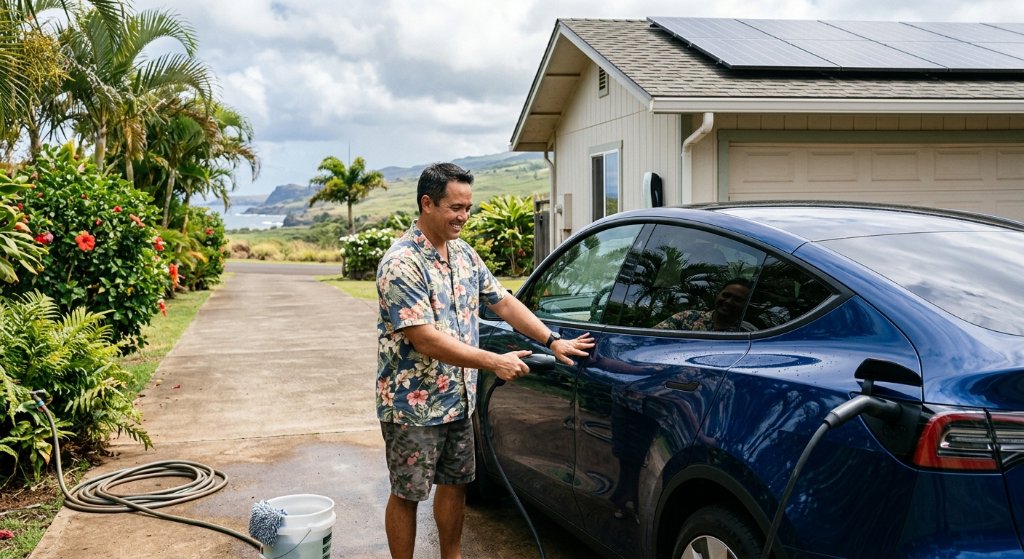
When Tesla launched the highly anticipated 2026 Model Y "Juniper" facelift, it promised to inject the same level of refinement, acoustic isolation, and sleek aesthetic into the world's best-selling crossover that the "Highland" update brought to the Model 3. But as the first wave of Juniper deliveries spreads across the globe, the real-world ownership experience is starting to trickle in—and it's revealing that geographic realities can quickly temper the excitement of a new EV.
A fascinating case study recently emerged from the Big Island of Hawaii, where a veteran EV driver transitioned from a vintage 2018 Model 3 to a brand-new 2026 Model Y Juniper. While the upgrade highlights Tesla's massive leaps in build quality and ride comfort over the last eight years, local veterans immediately responded with crucial regional "life hacks" that serve as a stark reality check for anyone buying a cutting-edge EV outside of major suburban mainland corridors.
The Island Upgrade: A Leap Forward, With a Catch
For an owner jumping from a first-generation 2018 Model 3 to the refreshed 2026 Model Y Juniper, the technological and manufacturing leap is staggering. The Juniper update addresses the older Model Y's primary flaws—harsh suspension, highway road noise, and a sparse interior—by utilizing a redesigned chassis, frequency-selective damping, and extensive double-glazed acoustic glass. Yet, as stunning as the redesigned light bars and premium cabin materials are, the physical delivery process in Hawaii reveals a hidden hazard unique to island transit:
- The Sea Salt Threat: Vehicles bound for Hawaii spend days on open-ocean cargo ships, arriving at ports caked in highly corrosive marine salt residue.
- The Golden Rule of Port Delivery: Local EV veterans warn that new owners must wash their vehicles immediately upon delivery. Allowing salt-laden ocean mist to bake onto the paint and undercarriage under the intense tropical sun can permanently damage the clear coat and accelerate corrosion on exposed chassis parts.
- Tesla's Delivery Gap: Unlike traditional franchise dealerships that detail cars pre-delivery, Tesla's lean direct-to-consumer delivery centers in remote regions often bypass deep detailing, leaving the onus of salt remediation on the buyer.
Charging in Paradise: The Level 2 Mandate
While mainland buyers often take Tesla’s ubiquitous Supercharger network for granted, the Big Island of Hawaii tells a completely different story. The island’s vast geography is notoriously underserved by Tesla's DC fast-charging infrastructure, turning the dream of public fast-charging into a logistical nightmare. For the Juniper owner, local veterans emphasize that home charging is not an option—it is an absolute necessity:
- The Zero-Supercharger Reality: With scarce DC fast-charging options scattered across a massive landmass, relying solely on public infrastructure is highly impractical.
- The L2 Solution: Installing a dedicated Level 2 (240V) home charger is the single most critical prep step for any Hawaii EV buyer.
- Leveraging Solar: Given Hawaii’s highest-in-the-nation utility rates, pairing a home L2 charger with residential solar panels is the only way to make EV ownership financially viable over a gas-powered counterpart.
Why This Matters:
This island testimonial highlights a broader truth about the mature EV landscape of 2026: vehicle hardware is only half the battle. As Tesla rolls out the "Juniper" Model Y to defend its crown against aggressive rivals like the BYD Sealion 7 and Zeekr 7X, the user experience remains heavily dictated by local infrastructure and delivery logistics.
For Tesla, remote markets like Hawaii represent both a triumph and a vulnerability. It proves that brand loyalty remains incredibly strong—drivers are willing to transition within the ecosystem despite significant regional hurdles. However, it also exposes the limitations of Tesla’s lean retail model. Leaving brand-new $50,000+ vehicles caked in corrosive sea salt for customers to clean themselves is a customer-service failure that legacy competitors with robust dealer networks rarely commit. Furthermore, as EV adoption reaches the mass market, the lack of charging infrastructure in non-metropolitan areas threatens to stall growth. If Tesla wants to maintain its global dominance, it must expand its Supercharger footprint beyond highway corridors and ensure its delivery experience matches the premium feel of its newly refreshed vehicles.
Moving Forward in Paradise
Ultimately, the transition from a 2018 Model 3 to the 2026 Model Y Juniper showcases how far Tesla has come in engineering a world-class passenger vehicle. But it also serves as a potent reminder that the EV revolution is local, not global. For prospective buyers in paradise—or any underserved rural region—success depends less on the car’s EPA-rated range and more on the robustness of their home charging setup and their willingness to immediately hose down their shiny new investment.