Tesla's Q1 2026 Conundrum: New Registrations Plummet, Cybertruck Takes a Hit, While Used Market Thrives
The electric vehicle landscape is undergoing a significant transformation, and even market titans like Tesla are not immune to its shifts. The first q...
Editorial Team
World Of EV
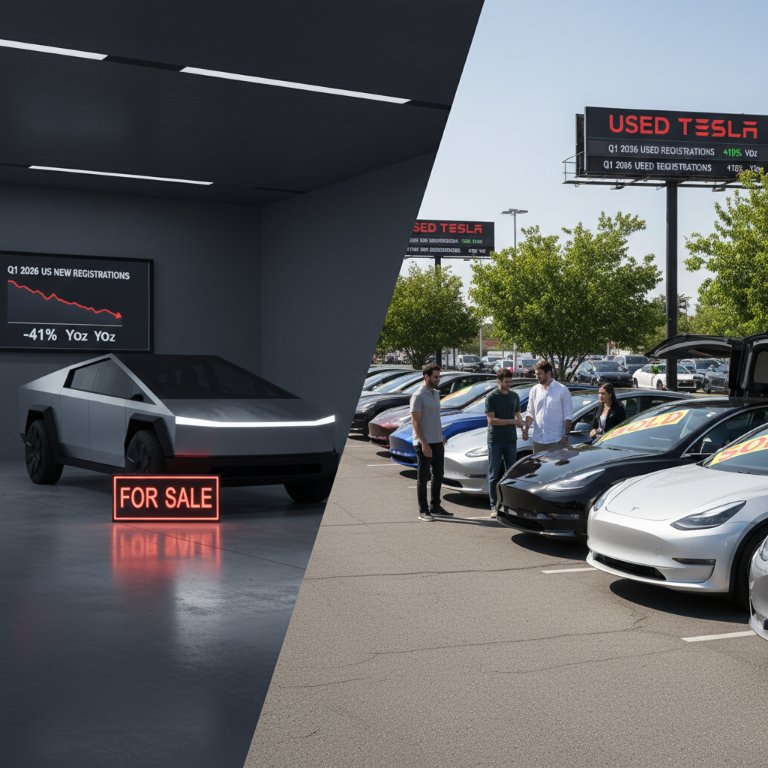
The electric vehicle landscape is undergoing a significant transformation, and even market titans like Tesla are not immune to its shifts. The first quarter of 2026 delivered a stark reality check for the EV giant in the United States: new vehicle registrations experienced a notable decline, with the highly anticipated Cybertruck suffering a particularly sharp blow. In stark contrast, the used Tesla market demonstrated remarkable resilience and growth, signaling a maturing market and evolving consumer priorities.
New Registrations Stumble Amidst Cybertruck Woes
New Tesla vehicle registrations in the U.S. saw a downturn in Q1 2026. This slowdown is particularly pronounced for the Cybertruck, which recorded an approximately 41% year-over-year decline in registrations. While specific Q1 2025 Cybertruck registration numbers are not widely publicized, it's clear the initial novelty and fervent demand that characterized its limited early deliveries are not translating into sustained high-volume new registrations in early 2026. For context, Tesla registered just 4,186 Cybertrucks in the US during Q1 2026, down from 7,140 in Q1 2025. This suggests a struggle to move the needle beyond early adopters, or perhaps an inability to meet a broader market appetite at its current price and configuration. Overall new EV sales in the U.S. also fell by 27% year-over-year in Q1 2026, indicating a broader market slowdown, though Tesla's decline contributes significantly to this trend. Tesla's total global deliveries, however, saw a 6.3% increase in Q1 2026 compared to Q1 2025, suggesting the U.S. market's softness is a more localized challenge rather than a global one for the company.
The Resilient Rise of the Used Tesla Market
Conversely, the used Tesla market in the U.S. is flourishing. Q1 2026 saw 76,554 used Teslas registered, marking a robust 16% year-over-year increase. This surge in pre-owned EV activity isn't exclusive to Tesla; the national used EV market grew 12% year-over-year in Q1 2026, with some reports even indicating a 27.7% year-over-year increase in March alone. This trend is driven by several factors:
- Increased Affordability: Used EVs, including Teslas, are becoming significantly more accessible, with average listing prices for used EVs nearing parity with comparable gasoline vehicles.
- Growing Inventory: A substantial wave of three-year EV leases is concluding, feeding a rich and diverse supply of late-model used EVs into the market.
- Evolving Incentives: While federal incentives for new EVs have shifted, the previously owned clean vehicle credit of up to $4,000 remains available for qualifying used purchases, further enhancing affordability.
- High Fuel Prices: Elevated gasoline prices continue to push consumers toward more economical alternatives, making used EVs a compelling choice.
Why This Matters:
This bifurcated market performance carries profound implications for Tesla and the broader EV industry. For Tesla, the decline in new registrations, especially for a halo product like the Cybertruck, signals a potential saturation of its traditional early-adopter customer base in the U.S. The Cybertruck's 41% year-over-year decline in registrations, from 7,140 in Q1 2025 to 4,186 in Q1 2026, highlights the challenges of scaling production and demand for a niche, high-priced vehicle. While overall global deliveries increased, the U.S. market's resistance suggests Tesla must either innovate to capture a new segment of buyers or adjust its domestic pricing and production strategies. The strong used market, where Tesla still dominates, could be a double-edged sword; it expands the brand's reach but might also cannibalize new car sales if the perceived value proposition for a new Tesla diminishes compared to a well-maintained used model.
For consumers, this trend is a clear win. The burgeoning used EV market means greater choice, lower prices, and more accessible entry points into EV ownership. This allows a broader demographic of buyers, who might have been priced out of new EVs, to embrace electric mobility, particularly as gas prices remain elevated.
For the overall EV market, this data signals a crucial maturation phase. The era of unchecked growth for new EVs, particularly in the U.S. without strong federal incentives, is evolving into a more complex landscape where affordability and practical considerations are paramount. The focus is shifting from simply launching new models to proving long-term value and accessibility. Automakers must now seriously consider how their new vehicle strategies interact with a vibrant and increasingly competitive used EV market. Those who can offer compelling new models and ensure their vehicles retain strong resale value will ultimately thrive.
In conclusion, Tesla's Q1 2026 performance in the U.S. underscores a pivotal moment for the EV market. While new vehicle demand faces headwinds, particularly for high-profile, niche products like the Cybertruck, the flourishing used EV market offers a more optimistic outlook for the wider adoption of electric vehicles. Tesla, and indeed all EV manufacturers, must now navigate a landscape where savvy consumers are increasingly prioritizing value and accessibility, transforming the EV dream into a mainstream reality through the secondary market.