Tesla's Open-Source Gambit: Releasing Model S and Model X Blueprints Changes the Right-to-Repair Game
Tesla's Q2 2026 decommissioning of its flagship Model S and Model X lines marked a bittersweet, historic pivot. Fremont's iconic assembly lines were d...
Editorial Team
World Of EV
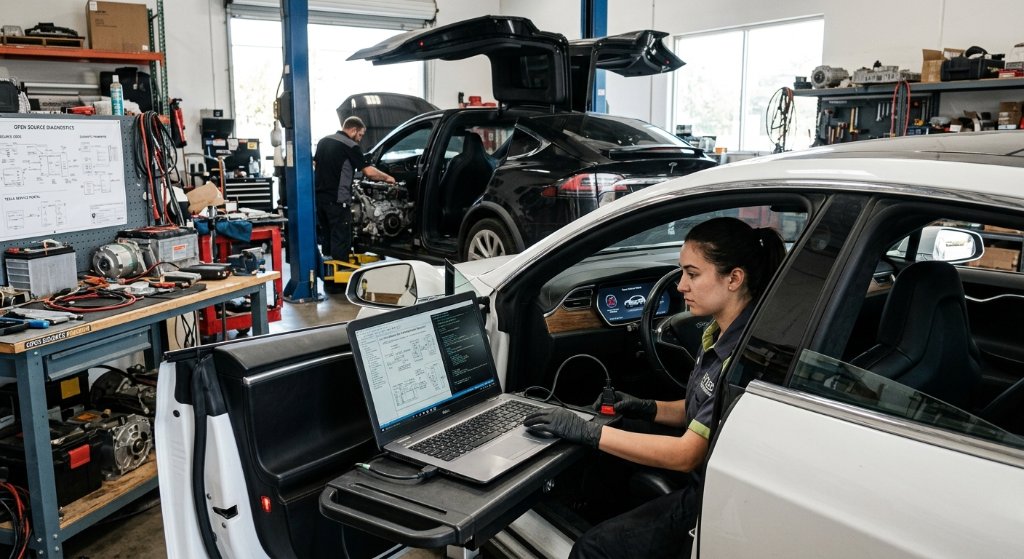
Tesla's Q2 2026 decommissioning of its flagship Model S and Model X lines marked a bittersweet, historic pivot. Fremont's iconic assembly lines were dismantled to make room for Optimus humanoid robots and Cybercab autonomous vehicles, leaving luxury EV buyers wondering what would become of the massive existing fleet of premium sedans and SUVs. Now, we have our answer. Tesla CEO Elon Musk announced on X that the company plans to release the design and software of both the Model S and Model X as open source—a move designed to keep these pioneering electric vehicles operational long after factory support fades.
This decision closely mirrors Tesla's 2023 move to open-source the original Roadster. By transferring custody of these vehicles to the community, Tesla is attempting to hand the keys of long-term maintenance over to the aftermarket. However, for a company historically notorious for its walled-garden service model, this open-source push represents both an unprecedented olive branch to the right-to-repair movement and a calculated exit strategy from legacy premium hardware support.
From Premium Assembly Lines to Open-Source Repositories
The phase-out of the Model S (introduced in 2012) and the Model X (introduced in 2015) was a long-expected necessity. Despite receiving multiple facelifts and the high-performance Plaid treatment over the years, the aging architectures could not easily accommodate the modern, cost-efficient 48-volt systems pioneered by the Cybertruck. Rather than completely leaving early adopters and secondary-market buyers stranded with expensive bricked vehicles, Tesla is stepping back by stepping open.
By releasing these files, Tesla aims to provide a lifeline to diagnostic, tuning, and independent repair communities. Key resources expected to be released include:
- Mechanical CAD Files: Blueprints detailing the structural layout of the vehicles, allowing third-party manufacturers to fabricate exact replacement body parts, suspension components, and brackets.
- CAN Bus Databases (.dbc files): Essential code translating how the car's computers communicate, enabling custom tuning, battery pack diagnostics, and aftermarket modifications.
- Diagnostic Software Packages: Accessible configurations that will allow independent garages to troubleshoot complex faults without relying on proprietary Tesla software.
- Circuit Diagrams and Service Manuals: Unrestricted access to the inner electrical workings of the vehicles to simplify high-voltage battery and motor repairs.
A Playbook of Skepticism: The Roadster Precedent
While the news is being celebrated by DIY enthusiasts, seasoned industry experts are viewing the announcement with healthy skepticism. When Musk claimed the original Roadster's design and engineering were 'fully open source' in November 2023, the reality was somewhat underwhelming.
Tesla's actual release amounted to only a few CAN database files on GitHub, a 309 MB diagnostic software ISO, and several PDF manuals housed behind a service portal login—with no official open-source license attached. If the Model S and Model X initiative is to be a true success, Tesla must provide actual, unrestricted source code and comprehensive hardware schematics, rather than a glorified public relations dump.
Why This Matters:
- The Ultimate Win for Independent Repair: Historically, Tesla has fought tooth and nail against the 'Right to Repair' movement, locking down parts and threatening to brick modified cars. This release legitimizes and empowers independent specialists to build a robust, sustainable aftermarket, significantly extending the lifespan of these high-end EVs.
- Second-Hand Value Stabilization: Premium EVs often suffer from steep depreciation due to the looming fear of astronomical out-of-warranty repair bills. If third-party shops can easily access diagnostics and aftermarket parts, the residual value of used Model S and Model X vehicles could see a much-needed stabilization.
- A Masterclass in Corporate Offloading: Make no mistake—this is a strategic retreat. By open-sourcing the blueprints, Tesla is shifting the costly burden of supporting an aging legacy fleet onto the community. This allows Tesla to cleanly wash its hands of parts manufacturing and warranty logistics as it aggressively pivots to AI, Optimus robotics, and the Cybercab.
- A Challenge to Traditional OEMs: Tesla's move sets an intriguing precedent for the wider automotive industry. If other manufacturers follow suit when phasing out older EV architectures, we could see a paradigm shift where old electric cars are treated like open-source software, rather than useless, unrepairable e-waste.
Looking to the Future of the Electric Legacy
The retirement of the Model S and Model X marks the end of Tesla's first chapter. By open-sourcing these vehicles, Tesla is acknowledging that their legacy belongs to the enthusiasts who helped build the brand. Whether this turns into a genuinely open ecosystem or remains a limited repository of basic files, it changes the trajectory of EV ownership. The aftermarket now has the blueprints; it is up to them to keep the original electric flagships humming down the highway.