Tesla’s Next Big Bet: A Purpose-Built Wheelchair-Accessible Robotaxi Under Development at Giga Texas
Tesla is finally addressing the glaring, regulatory elephant in the room of its autonomous ride-hailing ambitions. During a District of Columbia City ...
Editorial Team
World Of EV
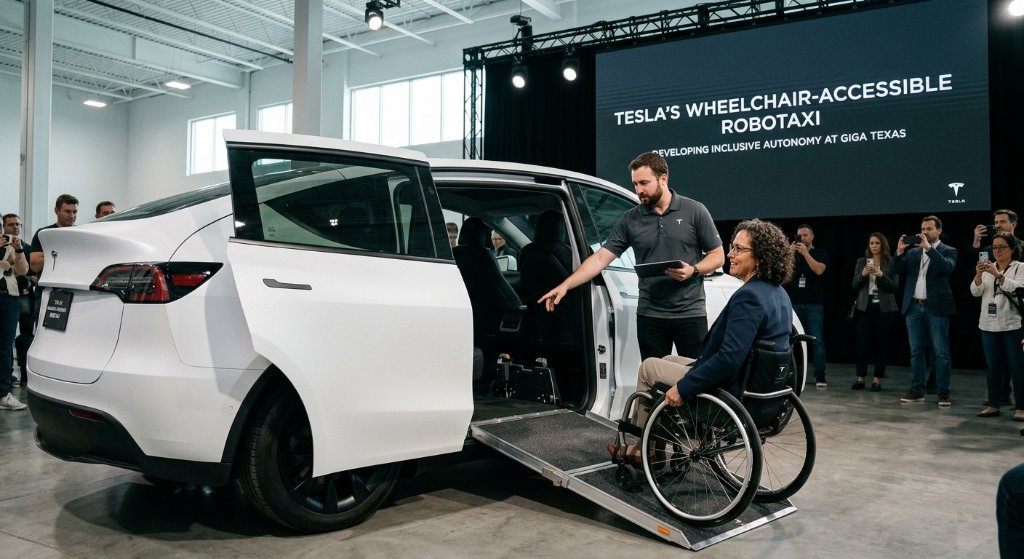
Tesla is finally addressing the glaring, regulatory elephant in the room of its autonomous ride-hailing ambitions. During a District of Columbia City Council hearing on Monday, July 13, 2026, a Tesla senior policy advisor confirmed that the company is actively developing a purpose-built, wheelchair-accessible autonomous vehicle (WAV) slated for production at Gigafactory Texas. This revelation represents a major strategic pivot for a company that has, until now, focused its autonomous future on sleek, low-slung, non-accessible designs like the two-seater Cybercab.
For years, Tesla has faced criticism from disability advocates and urban transit experts who argued that its upcoming robotaxi network would fail to comply with federal regulations, specifically the Americans with Disabilities Act (ADA). By designing a vehicle specifically tailored for passengers permanently confined to wheelchairs, Tesla is not just chasing inclusivity—it is clearing a critical legislative hurdle required to operate a legal, nationwide ride-hailing network.
The Giga Texas Playbook: What We Know So Far
The news came to light when India Herdman, Tesla’s senior policy advisor, testified before Washington D.C. lawmakers regarding a bill that could permit robotaxi services to operate in the District. While Herdman confirmed the vehicle is an "active product" currently in development in Austin, Tesla has remained tight-lipped on the exact specifications, pricing, and launch timeline.
This announcement raises a critical question: is this an entirely new platform, or a heavily modified version of the "Robovan" concept unveiled by Elon Musk? While Tesla’s current autonomous pilot fleet in Miami, Austin, Dallas, and Houston relies on the Model Y, that platform is inherently unsuitable for wheelchair roll-in accessibility.
Key elements of Tesla's upcoming accessibility strategy include:
- Purpose-Built Architecture: Unlike aftermarket conversions of traditional minivans, this vehicle is being engineered from the ground up as a native autonomous WAV.
- Giga Texas Integration: Manufacturing will be centered at Tesla’s Austin headquarters, leveraging the high-volume production capabilities currently used for the Cybertruck and Model Y.
- The Cybercab Limitation: While Tesla recently touted the Cybercab's "wheelchair-height" seats for easy transfers, a two-seat coupe cannot accommodate power wheelchairs, making a dedicated WAV vehicle essential.
Bridging the Autonomous Accessibility Gap
Historically, the autonomous vehicle industry has struggled with ADA compliance. Competitors like Alphabet’s Waymo have relied heavily on adapted platforms—specifically modified Chrysler Pacifica minivans—to offer wheelchair-accessible rides, partnering with third-party conversion companies like BraunAbility. Cruise attempted to solve this with the purpose-built Origin shuttle, but that program was indefinitely shelved following regulatory and safety setbacks.
Tesla's entry into purpose-built WAVs could drastically alter the economics of specialized paratransit. Currently, municipal paratransit services are notoriously inefficient, expensive, and slow. If Tesla can scale a driverless, wheelchair-friendly vehicle, it could monopolize a highly lucrative and heavily subsidized sector of public transit.
Why This Matters:
This is a "do-or-die" regulatory move for Tesla's ride-hailing network. In major metropolitan markets like New York, San Francisco, and Washington D.C., municipal taxi and ride-hailing fleets are legally mandated to maintain a specific percentage of wheelchair-accessible vehicles. Without a WAV in its lineup, Tesla’s "Tesla Network" would be locked out of the most profitable urban centers in America.
Who Wins:
- Disability Advocates and Passengers: A purpose-built, mass-produced driverless WAV will drastically lower wait times and costs for millions of people with mobility challenges.
- Tesla’s Regulatory Standing: This vehicle disarms the strongest legal argument cities have to ban or restrict autonomous vehicle networks.
Who Loses:
- Traditional Paratransit Providers: Highly subsidized, inefficient traditional transport services will face an existential threat if Tesla can deliver on-demand, low-cost autonomous WAVs.
- Waymo and Competitors: While Waymo has a head start, they still rely on expensive, low-volume retrofits. If Tesla scales native WAV production at Giga Texas, they will instantly undercut their rivals on cost-per-mile.
Ultimately, Tesla’s decision to develop a wheelchair-accessible robotaxi is a calculated business maneuver masquerading as corporate goodwill. It proves that Tesla’s leadership team finally understands that winning the autonomous race requires more than just advanced software—it requires a vehicle fleet that conforms to the physical and legal realities of modern city transit. Whether Tesla can deliver this "active product" to market faster than its historically sluggish timelines suggest remains the million-dollar question.