Tesla's New Lens Cleaning Patent: A Clearer Path for FSD and Optimus Autonomy
Tesla has secured a crucial new patent (No. 12,636,684) for a 'Lens Cleaning System,' a development poised to significantly enhance the reliability of...
Editorial Team
World Of EV
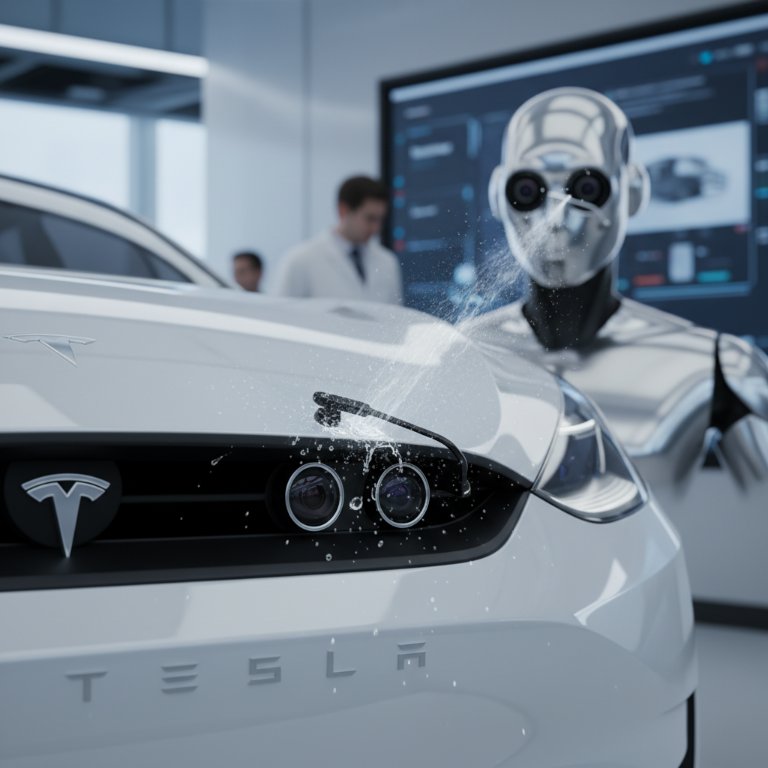
Tesla has secured a crucial new patent (No. 12,636,684) for a 'Lens Cleaning System,' a development poised to significantly enhance the reliability of its Full Self-Driving (FSD) suite and the Optimus humanoid robot. This isn't merely about keeping cameras tidy; it’s a critical hardware integration designed to address a fundamental Achilles' heel of vision-only autonomous systems: obstructed views. For years, skeptics and enthusiasts alike have pointed to environmental factors – rain, snow, dirt, and even bugs – as major impediments to Tesla's camera-centric FSD strategy. This patent signals a proactive and pragmatic step by the EV giant to ensure its AI can 'see' clearly, moving beyond software workarounds to tackle a physical limitation head-on.
Addressing Autonomy's Achilles' Heel
Tesla’s unwavering commitment to a camera-only 'Tesla Vision' approach for its FSD system has been both lauded for its cost-effectiveness and criticized for its inherent vulnerabilities. Unlike many competitors that integrate lidar or radar for redundancy, Tesla has bet heavily on perfecting vision through advanced neural networks. However, even the most sophisticated AI is useless if its primary sensors are blinded. This new patent describes a system capable of dispensing fluid and employing a wiper assembly to clear debris from camera lenses. This direct mechanical solution bypasses the limitations of purely software-based image processing attempting to compensate for obscured views, providing the raw, clean data essential for robust autonomous decision-making. The implications extend beyond vehicles, directly benefiting the Optimus robot, which relies on similar vision systems to navigate and interact with its environment reliably.
The Mechanics Behind Cleaner Vision
The patented 'Lens Cleaning System' details a sophisticated integration of fluid delivery and mechanical wiping components. While specific deployment details remain under wraps, the patent outlines the core functionality: a precise application of cleaning fluid followed by a wiper action to ensure optimal lens clarity. This kind of system suggests dedicated hardware modules for critical cameras, likely those most exposed to the elements on the vehicle's exterior, such as those embedded in the B-pillars, fenders, and front bumper. Ensuring these cameras consistently provide an unobstructed field of view is paramount for FSD to progress beyond current limitations, especially when operating in diverse weather conditions where human intervention is currently often required due to compromised visibility.
Why This Matters:
This patent isn't just a minor improvement; it's a foundational piece of the puzzle for achieving truly reliable Level 4 and Level 5 autonomy, particularly for a vision-first system like Tesla's. Here's why it's a game-changer:
- Enhanced FSD Reliability and Safety: The single biggest hurdle for Tesla's FSD has been its performance in adverse conditions. By ensuring clear camera vision, this system directly addresses a major cause of FSD disengagements and potential safety risks, boosting confidence in the system's capabilities across a wider range of real-world scenarios.
- Accelerating Optimus Deployment: For the Optimus robot to transition from controlled environments to practical applications, robust and uninterrupted vision is non-negotiable. This cleaning system provides a vital component for Optimus to operate effectively in dynamic, potentially messy, human environments.
- Reinforcing Tesla Vision's Viability: This hardware solution strengthens Tesla's long-held assertion that vision alone, when perfected, is sufficient for full autonomy. It shows Tesla is investing in fundamental hardware solutions to overcome the inherent limitations of its chosen sensor suite, rather than waiting for software alone to solve physical problems.
- Competitive Edge: While other autonomous driving developers often rely on expensive lidar and radar arrays, this patent showcases Tesla's commitment to perfecting its vision-based approach. If successfully implemented, it could significantly narrow the perception gap regarding the robustness of camera-only systems versus multi-sensor setups.
- Consumer Confidence: Prospective EV buyers and current Tesla owners looking to leverage FSD will likely see this as a significant step forward. It means fewer interventions, more consistent performance, and a more seamless autonomous driving experience, making the FSD package a more compelling and reliable proposition.
Tesla's new lens cleaning patent represents a crucial step forward in its ambitious pursuit of autonomous driving and robotics. By directly tackling the environmental challenges that have long plagued camera-based systems, this hardware innovation could unlock new levels of reliability and safety for FSD and Optimus. It underscores a strategic move to ensure that, regardless of the conditions, Tesla's AI always has a crystal-clear view of the road ahead, bringing us closer to a truly self-driving future.