Tesla's Latest Software Push: FSD V14.3.3 and Spring 2026 Features Signal Progress Amidst Autonomy Aspirations
Tesla continues its relentless software development cycle, officially rolling out version 2026.14.6.6 to its fleet. This comprehensive update bundles ...
Editorial Team
World Of EV
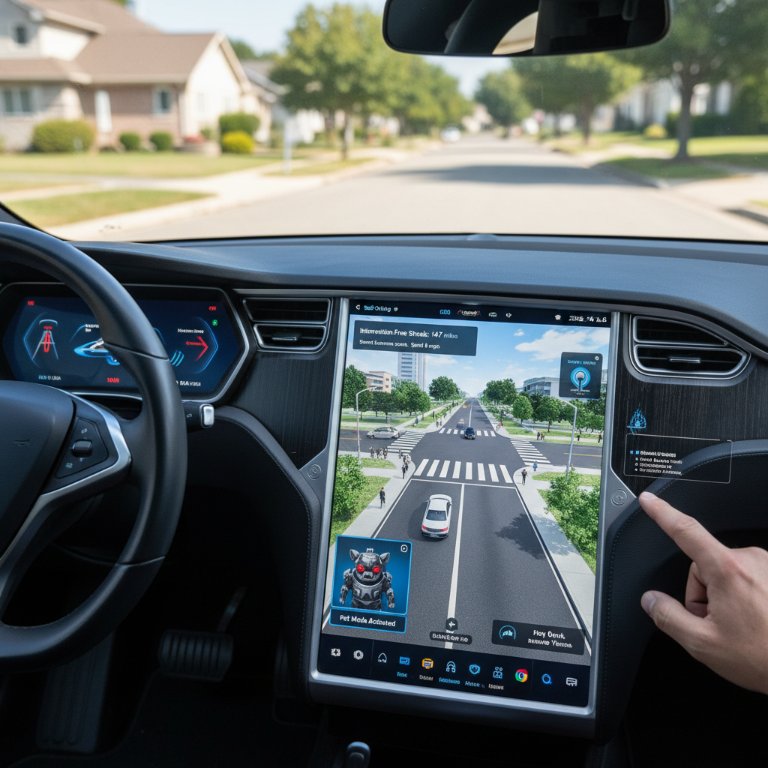
Tesla continues its relentless software development cycle, officially rolling out version 2026.14.6.6 to its fleet. This comprehensive update bundles significant enhancements to its Full Self-Driving (FSD) Beta, now at V14.3.3, alongside a suite of user experience improvements dubbed the Spring 2026 features. For savvy EV enthusiasts and industry professionals watching Tesla’s long-promised autonomous future, this update represents a critical, albeit incremental, step in the company's journey.
After years of intense scrutiny and a protracted development timeline that has seen FSD evolve through countless iterations, each promising closer proximity to full autonomy, these new features arrive with tempered expectations. While true Level 5 autonomy remains elusive, Tesla’s strategy of continuous over-the-air updates keeps its vehicles at the forefront of automotive software innovation, a stark contrast to many legacy automakers still grappling with basic connectivity.
FSD V14.3.3: Refining the Autonomy Experience
- Live Intervention-Free Streak Counter: This gamified feature provides real-time feedback on a driver's FSD performance, tracking how long the system operates without requiring human intervention. While seemingly a simple UI addition, it's a clever psychological tool designed to encourage driver trust and, crucially for Tesla, generate cleaner, longer-duration FSD data for further training.
- Faster Smart Summon: Tesla has increased the top speed of Smart Summon from 6 mph to 8 mph. Smart Summon, which allows owners to “summon” their vehicle from tight parking spots to their location, has historically been criticized for its sluggishness and cautious operation, often making it more of a novelty than a practical feature. This speed bump aims to address some of that feedback, enhancing usability in less complex environments.
- Redesigned Self-Driving App: A refreshed user interface for the FSD application suggests Tesla is continually optimizing the in-car experience. Streamlined controls and clearer visualizations are paramount as the system takes on more complex driving tasks, aiming to reduce cognitive load on the driver.
- Unreal Engine Park Visualizations: For vehicles equipped with AMD Ryzen processors, the FSD visualizations now leverage the power of the Unreal Engine, promising more realistic and detailed rendering of the car’s surroundings when parked. This isn't directly related to driving performance but significantly enhances the perceived sophistication and modernity of the infotainment system, a key differentiator for Tesla.
Spring 2026 Features: Elevating the Cabin Experience
Beyond FSD, the Spring 2026 update introduces a raft of widely available enhancements that boost convenience and personalization:
- 'Hey Grok' Hands-Free Voice Activation: Tesla's proprietary AI, Grok, can now be activated hands-free with the simple command, 'Hey Grok.' This deepens the integration of Tesla's AI into the vehicle, building on the company's broader efforts to create a comprehensive digital ecosystem that rivals dedicated smart home assistants.
- Grok Accessing Saved Address Labels: Expanding Grok's utility, the AI can now access and utilize saved address labels (e.g., 'Home,' 'Work'). This eliminates the need for drivers to verbally specify full addresses, making navigation requests more intuitive and efficient.
- 'Pet Mode' Replaces 'Dog Mode' with 'Cyberhog' Mascot: The popular 'Dog Mode,' which maintains a comfortable cabin temperature for pets while displaying a message to passersby, has been rebranded as 'Pet Mode' and features a charming 'Cyberhog' mascot. This inclusive change acknowledges that a variety of animals accompany owners in their Teslas, a small but thoughtful user experience detail.
- 24-Hour Dashcam Retention: The dashcam now retains footage for a full 24 hours, significantly increasing the window of time available for reviewing potential incidents or interesting driving moments. This is a crucial safety and security enhancement, offering greater peace of mind to owners.
- Blind Spot Warning Accent Lights: Tesla has added accent lights to the blind spot warning system, providing a more overt and noticeable visual cue to alert drivers of vehicles in their blind spots. This directly addresses a critical safety aspect, offering an additional layer of awareness beyond the existing screen visualizations.
Why This Matters:
This latest software push from Tesla isn't just about new features; it's a strategic move with far-reaching implications for the company, its competitors, and the broader EV market. The introduction of the 'Live Intervention-Free Streak Counter' signals Tesla's ongoing push to build user trust and, critically, to gamify the data collection process. The longer drivers engage with FSD without interventions, the more valuable data Tesla collects, accelerating its machine learning models. This is a subtle but powerful mechanism for continuous improvement.
The bump in Smart Summon speed, while seemingly minor, acknowledges a long-standing user critique and aims to make the feature genuinely more useful, moving it from a party trick to a practical convenience. The Unreal Engine visualizations, while primarily aesthetic, underscore Tesla's commitment to delivering a premium, tech-forward user experience that rivals high-end gaming platforms, a draw for many tech-savvy buyers.
The enhancements to Grok's integration further solidify Tesla's ambition to be more than just an automotive manufacturer; it's an AI and software company that happens to make cars. By making Grok hands-free and context-aware with address labels, Tesla is building out a comprehensive in-car assistant that aims to seamlessly integrate into users' digital lives, potentially paving the way for future monetization of its AI services. The updated Pet Mode and 24-hour dashcam retention are thoughtful quality-of-life improvements that enhance the ownership experience and bolster safety and security, factors that are increasingly important to prospective buyers.
Ultimately, this update reinforces Tesla's position as the industry leader in over-the-air software capabilities. While competitors like Mercedes-Benz and GM are making strides with their own advanced driver-assistance systems and infotainment, Tesla's agility and breadth of features, delivered iteratively, maintain a significant competitive edge. For the market, it signals that Tesla remains committed to its FSD vision, even as the path to true autonomy remains arduous. Who wins? Tesla and its early adopters, who continue to receive cutting-edge features. Who loses? Perhaps traditional automakers who still struggle with delivering software updates and a cohesive digital experience, finding themselves playing perpetual catch-up.
Tesla's software version 2026.14.6.6 and its bundled FSD V14.3.3 and Spring 2026 features illustrate the company's dual focus: relentless pursuit of autonomous driving and continuous enhancement of the in-cabin user experience. While the ultimate promise of full self-driving cars is still on the horizon, these updates demonstrate Tesla's unwavering commitment to pushing the boundaries of what's possible in an EV, setting a high bar for the rest of the industry to follow.