Tesla's Latest Safety Setback: Over 125,000 EVs Recalled for Critical Seat Belt Warning Glitch
Tesla is once again in the spotlight for a safety recall, this time impacting over 125,000 vehicles across its Model S, Model X, Model 3, and Model Y ...
Editorial Team
World Of EV
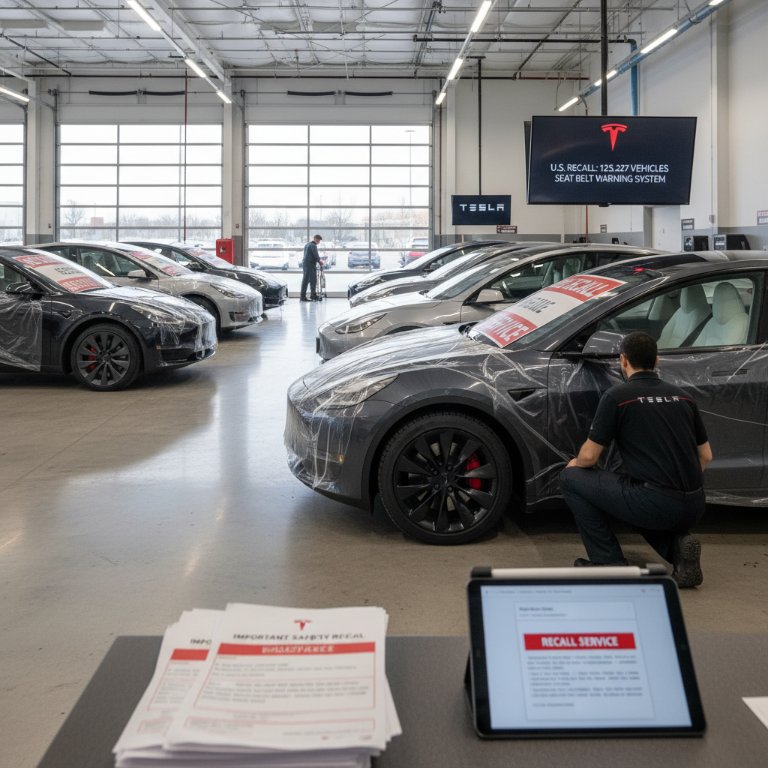
Tesla is once again in the spotlight for a safety recall, this time impacting over 125,000 vehicles across its Model S, Model X, Model 3, and Model Y lineups in the United States. The issue at hand is a critical malfunction within the seat belt warning system, failing to adequately alert drivers when their seat belts are unbuckled. This latest recall adds to a growing list of regulatory actions for the EV giant, reinforcing ongoing questions about software quality and safety compliance.
Tesla, known for its rapid deployment of over-the-air (OTA) software updates, frequently addresses issues remotely. However, the sheer volume and critical nature of this particular recall highlight the challenges that even a software-defined vehicle company faces in maintaining robust safety standards. This incident comes on the heels of several other significant recalls for Tesla this year alone, including issues with Cybertruck accelerator pedals, rearview cameras, and even incorrect font sizes for warning lights.
The Silent Warning: What Went Wrong
The recall, filed with the National Highway Traffic Safety Administration (NHTSA), specifies that the seat belt warning system in affected vehicles may not provide the required audible and visual reminders to the driver. This non-compliance with Federal Motor Vehicle Safety Standard No. 208, which governs 'Occupant Crash Protection,' poses a clear safety risk.
- Affected Models: Certain 2012-2024 Model S, 2015-2024 Model X, 2017-2023 Model 3, and 2020-2023 Model Y vehicles are included in the recall.
- The Glitch: The system's failure stems from a software dependency on the driver seat occupancy switch. The updated software will remove this dependency, relying instead solely on the driver seat belt buckle and ignition status to activate the reminders.
- The Fix: Tesla plans to deploy a free over-the-air (OTA) software update to rectify the problem, expected to roll out in June.
- Reported Incidents: As of the recall announcement, Tesla had identified 104 warranty claims related to the condition but was unaware of any collisions, fatalities, or injuries directly attributable to the defect.
Why This Matters: Navigating a Minefield of Scrutiny
This recall is more than just another software patch; it signals heightened regulatory scrutiny and could impact Tesla's brand perception among safety-conscious consumers and industry professionals. While Tesla's proactive use of OTA updates for fixes is often lauded for its efficiency, the frequency and critical nature of recent recalls are becoming a significant concern.
For EV enthusiasts and prospective buyers, this raises uncomfortable questions about the foundational safety systems in vehicles that are otherwise seen as cutting-edge. A malfunctioning seat belt warning is not a cosmetic issue; it's a lapse in fundamental occupant protection that could have severe consequences in an accident. The fact that a software glitch could disable such a basic safety feature underscores the immense complexity and potential vulnerabilities within modern, software-defined vehicles.
Regulators, particularly NHTSA, are clearly watching Tesla closely. The agency has upgraded investigations into Tesla steering problems to engineering analyses and has scrutinized the adequacy of past Autopilot recalls. Each new recall, especially those affecting core safety functions, adds to the regulatory pressure on Tesla to demonstrate robust quality control and rigorous validation processes. This continuous cycle of recalls, even if fixed via software, could erode the goodwill built by Tesla's technological leadership.
From an industry perspective, this event serves as a stark reminder that even innovative software solutions require impeccable execution and testing. While over-the-air updates offer unparalleled flexibility, they also place a greater burden on manufacturers to ensure the initial software is flawless. Competitors will undoubtedly observe these developments, potentially highlighting their own more traditional, hardware-verified safety systems as a point of differentiation.
Looking Ahead: Tesla's Path to Rebuilding Trust
While Tesla expects to resolve this particular seat belt warning issue with an OTA update in June, the broader implications demand a more profound response. The company must demonstrate an unwavering commitment to quality assurance, moving beyond reactive fixes to proactive prevention. Maintaining its position as a leader in the EV space, especially in a rapidly maturing market, hinges not just on innovation but on an impeccable safety record that instills confidence across its entire customer base and satisfies increasingly watchful regulators. The road ahead for Tesla will require not just technological advancements, but a renewed focus on fundamental safety integrity to truly solidify its long-term market dominance.