Tesla's India Ambitions Crash: Tariff Standoff Ends Decade-Long Dream and Factory Hopes
The dream of Tesla manufacturing in India has officially ended, bringing a close to nearly a decade of high-stakes negotiations and ultimately, unmet ...
Editorial Team
World Of EV
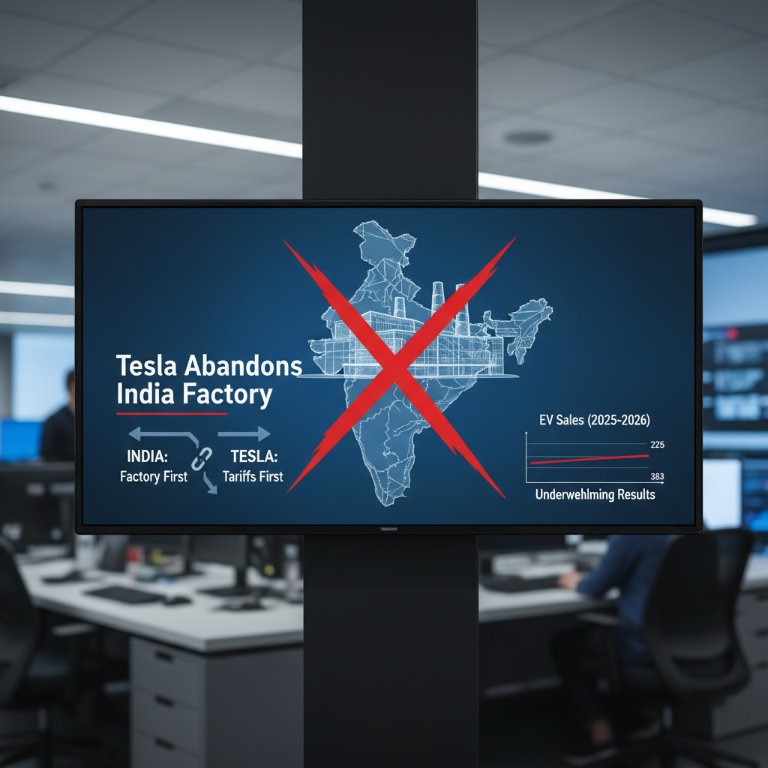
The dream of Tesla manufacturing in India has officially ended, bringing a close to nearly a decade of high-stakes negotiations and ultimately, unmet promises. This pivotal decision, confirmed by India’s Minister of Heavy Industries H.D. Kumaraswamy, marks a significant turning point for both Tesla's global expansion strategy and India's burgeoning electric vehicle market.
For years, EV enthusiasts and industry watchers have closely followed the on-again, off-again talks between Elon Musk's automotive giant and the Indian government. The core issue has always been a fundamental disagreement over import tariffs, a stalemate that has now proven insurmountable. Tesla sought lower import duties as a prerequisite for committing to local manufacturing, while India insisted on a factory investment before considering tariff concessions. This classic 'chicken or the egg' dilemma ultimately proved fatal for Tesla's direct manufacturing aspirations in the subcontinent.
A Retail Foray That Faltered
Tesla's attempt to penetrate the Indian market began with retail sales in July 2025, but the results were unequivocally underwhelming. Despite the brand's global prestige, the company managed to sell only 225 vehicles in 2025. Cumulative sales through April 2026 reached approximately 383 units, a stark contrast to the rapid adoption seen in other markets. This sluggish performance underscored a crucial misjudgment of the Indian consumer landscape.
- Pricing Mismatch: Models like the six-seat Model Y L variant, launched in April 2026, were priced far outside the sweet spot for the Indian market. Local EV growth is predominantly driven by affordable domestic brands that offer compelling value propositions.
- Inventory Clearance: Tesla resorted to offering discounts to clear unsold inventory, a clear indicator of the struggle to move units at premium price points without local production benefits.
The Unbreakable Tariff Gridlock
At the heart of Tesla's failure to establish a manufacturing base was the intractable tariff standoff. India levies significant import duties on fully built electric vehicles, a protective measure designed to encourage local production and foster its domestic automotive industry. Tesla, accustomed to entering markets with a phased approach often starting with imports, found this barrier impenetrable without an initial concession from the Indian government.
Why This Matters:
- Who Wins? The clear victors are India's domestic EV manufacturers, such as Tata Motors and Mahindra, who have aggressively captured the affordable EV segment by leveraging local production and understanding consumer demand. This outcome reinforces the Indian government's 'Make in India' initiative and its focus on fostering homegrown industries. Indian consumers also benefit from a competitive market of more accessible and locally tailored EV options.
- Who Loses? Tesla is the primary loser, missing out on what is projected to become one of the world's largest automotive markets. This setback significantly complicates its global expansion narrative and highlights the challenges of penetrating protectionist markets without a fundamental shift in strategy. While not a 'do-or-die' moment for a company of Tesla's scale, it represents a substantial opportunity cost and a dent in its ambition to dominate every major market. The Indian government also loses the prestige and potential technological transfer that a marquee brand like Tesla could have brought, though its commitment to local industry remains steadfast.
- What This Signals: This saga sends a clear signal to global automakers: market entry into India requires a firm commitment to local manufacturing and a deep understanding of local pricing sensitivities. Importing premium EVs at high tariffs is not a viable long-term strategy. It underscores a growing global trend where governments prioritize domestic industrial growth over unfettered market access for foreign players, forcing companies to adapt or withdraw.
Tesla's retreat from its Indian manufacturing plans serves as a potent case study in the complexities of global market penetration. Without a resolution to the tariff impasse and a strategic adjustment to local market demands, the promise of a 'Tesla India' factory will remain an unfulfilled ambition, leaving the path open for domestic players to lead India's EV revolution.