Tesla’s FSD v14.3.10 Mass Rollout Fixes Critical HW4 Camera Glitch as HW3 Reaches Its 'Lite' Limits
Tesla has initiated a major mass rollout of software update 2026.27.11, delivering the highly anticipated FSD (Supervised) v14.3.10 to its fleet. This...
Editorial Team
World Of EV
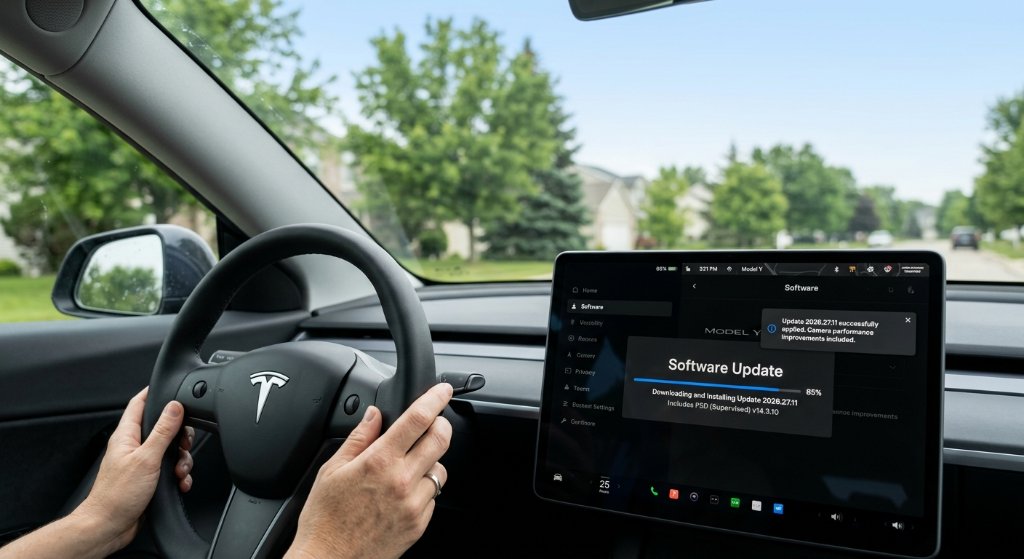
Tesla has initiated a major mass rollout of software update 2026.27.11, delivering the highly anticipated FSD (Supervised) v14.3.10 to its fleet. This release represents a critical stabilization patch targeting Tesla’s newest AI4 (Hardware 4) vehicles, which were heavily impacted by a highly disruptive camera software bug in the previous v14.3.9 version.
For years, Tesla has walked a tightrope, attempting to deliver the promise of full self-driving autonomy across vastly different hardware generations. While newer vehicles reap the benefits of high-resolution cameras and massive processing power, older models are feeling the strain—a reality that this latest deployment highlights more than ever.
The Fix: Banishing False Alarms on AI4 Vehicles
The marquee achievement of FSD v14.3.10 is the eradication of a highly frustrating camera bug introduced in v14.3.9. AI4-equipped vehicles were suffering from persistent, false 'Camera Service Required' and dirty-camera alerts. These false positives did not just clutter the driver’s screen; they routinely disabled FSD mid-drive, forcing frustrated owners to clean pristine camera lenses or panic-book service appointments.
Key updates bundled inside the 2026.27.11 release include:
- Camera Diagnostic Calibration: A total recalibration of the software’s lens-occlusion and dirty-camera detection algorithms, eliminating false-positive service alerts.
- Improved AI4 Integration: Optimization specifically tailored for the higher-bandwidth, 5-megapixel cameras utilized in Tesla’s newer models.
- FSD Engagement Stability: Drastic reduction in sudden, safety-compromised disengagements caused by phantom sensor failures.
The HW3 Divergence: The 'Lite' Reality Set in Stone
While AI4 owners receive the full-fat FSD experience, the story is very different for Tesla’s legacy fleet. Hardware 3 (HW3) vehicles—the 2019-era platform that CEO Elon Musk famously promised would be fully capable of Level 5 autonomy without hardware upgrades—are not getting v14.3.10. Instead, they continue to receive a specialized 'v14.2 Lite' update.
This 'Lite' branch is a stark admission of physical reality. Tesla’s end-to-end neural networks have grown so massive and complex that HW3’s aging compute processor simply cannot run them in their native format. To keep older vehicles in the FSD loop, Tesla's engineers have had to heavily optimize, truncate, and essentially 'shrink' the AI models to fit HW3's hardware limits.
Why This Matters:
This software update marks a profound inflection point for Tesla's autonomy strategy, signaling both a short-term win for newer buyers and a sobering long-term reality check for legacy owners.
- The Winners (AI4 Owners & Tesla Service Centers): Owners of newer Tesla models get a crucial stability patch that restores faith in the brand's premium software. Simultaneously, Tesla's service centers avoid a massive wave of unnecessary diagnostic visits from drivers seeking physical camera replacements for what was purely a software glitch.
- The Losers (HW3 Owners): This rollout cements the reality of a 'two-tier' FSD ecosystem. HW3 owners are officially on a legacy life-support track. While they continue to receive updates like 'v14.2 Lite,' the gap between their FSD performance and that of newer vehicles will only widen as Tesla shifts its development focus entirely to AI4 and the upcoming AI5/HW5 platform.
- The Market Signal: By bifurcating the software path, Tesla is tacitly admitting that 'one-size-fits-all' autonomy is dead. This transition threatens to impact the resale value of HW3 vehicles and raises serious legal and ethical questions regarding Tesla’s past promises of lifetime hardware compatibility. It also signals to competitors like Waymo and BYD that managing a heterogeneous autonomous fleet is incredibly complex, requiring continuous, resource-heavy software fracturing.
Looking Ahead
As Tesla pushes forward with update 2026.27.11, the company is successfully putting out fires on its cutting-edge AI4 platform. However, the software split serves as a loud reminder that hardware limits are absolute. While FSD v14.3.10 keeps Tesla on the bleeding edge of consumer driver-assist technology, legacy owners must come to terms with the fact that their vehicles are increasingly being left in the slow lane of the autonomy race.