Tesla’s Autonomous Future Gets a Massive Power-Up: Samsung Tapes Out Next-Gen 2nm AI5 Chip
Samsung has officially reached "tape-out" for Tesla's highly anticipated, next-generation AI5 self-driving chip. This milestone confirms that the phys...
Editorial Team
World Of EV
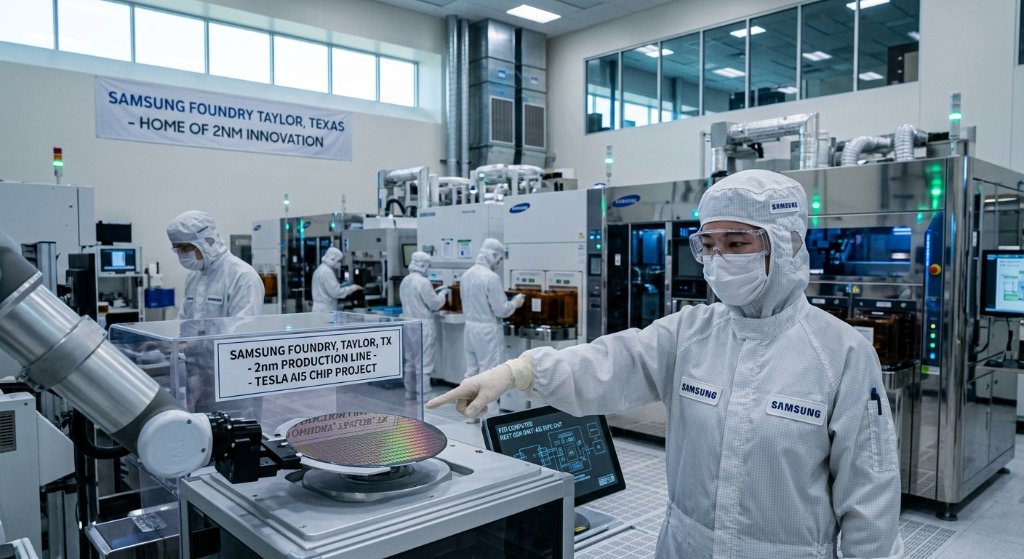
Samsung has officially reached "tape-out" for Tesla's highly anticipated, next-generation AI5 self-driving chip. This milestone confirms that the physical blueprint for Tesla's future autonomy brains is finalized, cleared for production, and headed to Samsung’s state-of-the-art foundry in Taylor, Texas. For Tesla, this is not just a routine hardware refresh; it is a monumental technological leap that shifts its self-driving computer architecture to an ultra-efficient 2-nanometer process node.
The news, initially disclosed by a Samsung Foundry principal engineer on LinkedIn before the post was quickly deleted, provides crucial confirmation of Tesla’s aggressive silicon roadmap. After years of navigating the physical and memory limitations of older hardware suites, Tesla is laying the foundation for a platform that will power its future robotaxis, next-gen passenger vehicles, and even its Optimus humanoid robots.
From Blueprint to Texas Silicon: The 2nm Surprise
Reaching "tape-out" is the critical bridge in semiconductor manufacturing where chip design is locked and handed over to the foundry. From this point, Samsung will fabricate initial engineering samples, validate the hardware, and prepare for high-volume manufacturing. While previous industry expectations pegged Samsung's 2nm line for the subsequent AI6 chip, this milestone confirms Tesla is skipping ahead, utilizing the cutting-edge node to build the AI5 (previously referred to as Hardware 5).
This represents an immense jump in architecture. By moving to Samsung's 2-nanometer (SF2T) process, Tesla gains an unprecedented combination of processing speed and energy efficiency. Key details of the upcoming hardware platform include:
- Next-Gen Node: Crafted on Samsung’s latest 2nm process, skipping the 3nm transition entirely.
- Made in the USA: Mass production will take place at Samsung’s brand-new, multi-billion-dollar Taylor, Texas facility, securing supply chain resilience against geopolitical risks.
- Dual-Sourcing Strategy: Tesla will continue to split production of the AI5 between Samsung and TSMC, creating manufacturing redundancy.
- Target Timeline: Engineering samples are expected by late 2026, with full vehicle integration and high-volume production slated for mid-to-late 2027.
Bridging the Generational Gap and the "Memory Wall"
To appreciate the gravity of the AI5 development, one must look at Tesla’s current hardware struggles. Today's Tesla vehicles ship with Hardware 4 (AI4), which is fabricated on a mature 7nm process. While CEO Elon Musk has repeatedly asserted that AI4 is capable of achieving unsupervised Full Self-Driving (FSD), Tesla’s engineering team has spent years frantically rolling out interim updates like "AI4 Plus" and "AI4.5".
These stopgap hardware iterations, which double system RAM to 64GB, exist because Tesla's advanced end-to-end neural networks are hitting a physical "memory wall". The sheer computational weight of running deep-learning vision models in real-time has pushed current hardware to its absolute limits. The AI5 chip is designed to shatter this ceiling, offering up to 10 times the computing power of standard AI4 and vastly superior memory bandwidth, ensuring the system can easily digest the next decade of AI advancements.
Why This Matters:
- The Big Winner: Samsung and US Tech Manufacturing. Securing Tesla’s 2nm AI5 business at the Taylor, Texas fab is a monumental victory for Samsung Foundry. After facing years of skepticism regarding its advanced node yields compared to TSMC, this partnership serves as a massive endorsement of Samsung’s 2nm capabilities and positions their US facility as a critical hub for high-performance automotive computing.
- The Big Loser: Current Tesla Buyers' Peace of Mind. This rapid leap to AI5 introduces a severe "fear of missing out" (FOMO) for current buyers. Given that Hardware 3 (HW3) has already been functionally sidelined due to compute limitations for unsupervised FSD, the massive raw-power gulf between current AI4 cars and the upcoming 2nm AI5 platform suggests that today's vehicles may ultimately face a similar technological ceiling. Buyers purchasing an EV today based on the promise of future unsupervised autonomy may find themselves left behind when AI5-equipped cars launch in 2027.
- The Market Signal: The EV Race is Now a Silicon Arms Race. Tesla’s heavy investment in in-house custom silicon underscores a fundamental shift in the automotive industry. The competitive battlefield is no longer just about battery chemistry, range, or physical build quality; it is about onboard AI inference. By controlling its own chip design and partnering directly with leading-edge foundries, Tesla is maintaining a multi-year lead over legacy automakers who still rely on off-the-shelf tier-1 supplier solutions.
Looking Ahead
The tape-out of the 2nm AI5 chip is a masterclass in technological forward-planning, ensuring Tesla’s hardware matches its ambitious software promises. While mass-market integration is still a couple of years away, this milestone signals that the future of autonomous driving will be forged in Texas silicon. For those waiting on the ultimate, future-proof robotaxi platform, the horizon just became much clearer.