Tesla Weaponizes Its Retail Army: SEC Clears Game-Changing 'Auto-Vote' Program
The U.S. Securities and Exchange Commission (SEC) has officially green-lit Tesla’s brand-new **Issuer Voluntary Retail Voting Program (IVRVP)**. This ...
Editorial Team
World Of EV
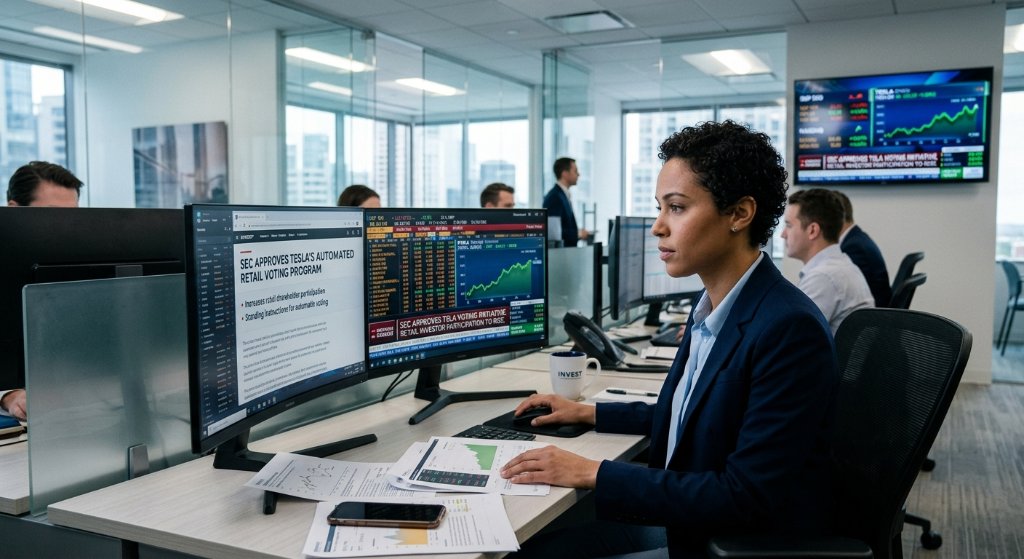
The U.S. Securities and Exchange Commission (SEC) has officially green-lit Tesla’s brand-new Issuer Voluntary Retail Voting Program (IVRVP). This landmark regulatory shift allows retail investors to set a single, standing instruction that automatically casts their votes in accordance with the Tesla board's recommendations for all future shareholder meetings. For Elon Musk and his board, this is the ultimate structural defense mechanism, unlocking the voting power of millions of small-time investors who typically leave their proxy ballots gathering digital dust.
To understand why this is such a monumental development, one only has to look back at Tesla’s historically dramatic shareholder battles. From the agonizingly close campaigns to secure Musk’s massive multi-billion-dollar compensation package to relocating the company's legal home to Texas, Tesla’s management has repeatedly had to wage expensive, high-stakes public relations wars. Chasing down individual retail votes is a notoriously difficult, costly endeavor. With this new SEC-approved framework, Tesla has effectively built an automated, board-aligned voting bloc that could permanently shift the balance of power in corporate governance.
How the 'Auto-Vote' Program Works
Developed in partnership with retail-friendly brokerages like Robinhood, the IVRVP is designed to eliminate the friction that stops average investors from participating in proxy votes. Rather than forcing shareholders to review complicated proxy packets and manually submit votes multiple times a year, the program introduces a "set-it-and-forget-it" approach:
- The Core Standing Instruction: Once a retail investor opts into the program, their shares will automatically be voted in alignment with the Tesla board's recommendations.
- Two Paths of Participation: Shareholders can choose between two levels of automated voting. The first option automatically votes with the board on all matters. The second option votes with the board on standard items but excludes high-stakes events like contested director elections, mergers, acquisitions, or divestitures.
- Built-in Safeguards: To satisfy SEC regulators, the program ensures investors can override the automatic vote on any individual proposal or opt out of the system entirely at any time, free of charge. Tesla is also required to issue annual reminders and continue distributing all standard proxy materials.
- Broker Integration: Platforms like Robinhood are establishing specialized "Hubs" directly within their apps to make enrolling in the IVRVP as seamless as buying a share of stock.
Eliminating the Multillion-Dollar Voter Chase
For years, Tesla’s massive retail investor base has been both a blessing and a curse. While these passionate individual investors fiercely back Musk's long-term vision, their actual voting turnout has been abysmal. According to industry data, retail investors voted just 28% of their shares across the market, whereas institutional giants (like pension funds and Wall Street asset managers) boasted a robust 76.6% turnout rate.
This participation gap has cost Tesla dearly. The EV maker reportedly shelled out more than $2 million on specialized proxy solicitation firms during its last two annual meetings simply to cajole small shareholders into voting. More importantly, low retail turnout gave disproportionate leverage to massive institutional investors—many of whom routinely vote against the board on executive pay, board seats, and climate initiatives. By automating the retail vote, Tesla's board can now easily counter the influence of activist institutional funds.
Why This Matters:
- The Ultimate Win for Tesla’s Board: This is an absolute masterstroke for Elon Musk and Chairman Robyn Denholm. By transforming passive retail investors into a default "yes" voting block, Tesla has insulated its board from hostile corporate maneuvers, activist investor campaigns, and pushback on controversial executive compensation structures.
- The Loss for Corporate Activism: Institutional advisory firms like ISS and Glass Lewis, alongside ESG-focused pension funds, are the clear losers here. Their ability to pressure Tesla on governance issues, environmental transparency, or labor practices is severely diminished when a massive wave of automated, pro-board retail votes is triggered the moment a proxy is filed.
- A Precedent for the Whole Market: Because the SEC issued this approval as a broad "Framework Letter," Tesla has effectively written the playbook for the rest of the corporate world. Any public company with a highly enthusiastic retail following—from legacy automakers trying to manage uneasy EV transitions to volatile "meme stocks"—can now implement their own automated voting programs.
- The "Blank Check" Controversy: Critics and corporate governance watchdogs are already sounding the alarm, calling the program a virtual "blank check" for management. By encouraging retail investors to abdicate their oversight role and rubber-stamp board decisions, critics argue this weakens the fundamental democratic principles of public markets.
The Bottom Line
Tesla’s new automated voting program represents a paradigm shift in how public companies engage with their owners. By leveraging technology to bypass the traditional apathy of retail investors, Tesla has not only solved a multi-million-dollar administrative headache, but has also structurally secured its leadership’s control over the company's future direction. For the everyday EV enthusiast holding TSLA shares, voting just became effortless—but it comes at the cost of active, critical oversight.