Tesla Unleashes 'V14-lite' for HW3, Belgium Paves Way for FSD European Expansion
Tesla is making significant strides on two critical fronts this month, addressing both the immediate feature needs of its vast existing fleet and the ...
Editorial Team
World Of EV
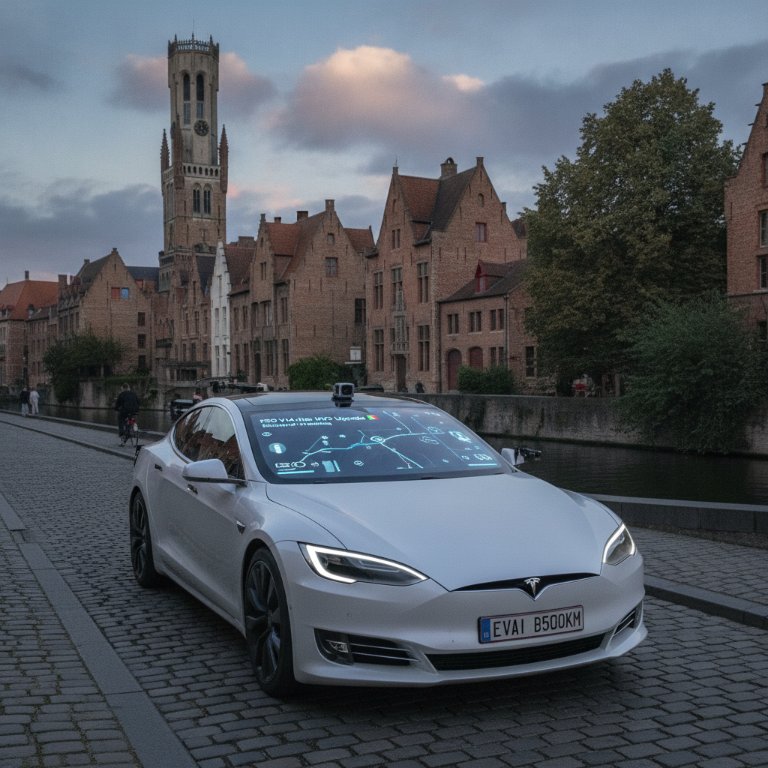
Tesla is making significant strides on two critical fronts this month, addressing both the immediate feature needs of its vast existing fleet and the long-anticipated global regulatory hurdles for its Full Self-Driving (FSD) technology. A 'V14-lite' update, engineered to deliver the bulk of V14 AI4 capabilities to older Hardware 3 (HW3) vehicles, is slated for a late June rollout, commencing in the United States. Concurrently, a major regulatory breakthrough in Belgium signals a potential watershed moment for FSD's long-awaited arrival on European roads. This dual progress underscores Tesla's commitment to both customer value and the ambitious vision of autonomous driving.
Bringing Advanced AI to Legacy Hardware
The forthcoming 'V14-lite' update is a game-changer for hundreds of thousands of Tesla owners. For years, Hardware 3 (HW3) vehicles, while capable, have watched newer HW4-equipped Teslas receive more advanced FSD features, powered by the superior AI4 stack. This update directly addresses that disparity, extending the life and enhancing the value proposition for the extensive HW3 fleet. Rather than forcing owners into costly hardware upgrades, Tesla is leveraging software optimization to bridge the gap.
Key anticipated improvements from the 'V14-lite' update for HW3 vehicles include:
- Enhanced object detection and prediction, particularly in complex urban environments.
- Smoother and more human-like driving maneuvers, reducing instances of 'robotaxi' jitters.
- Improved decision-making capabilities at intersections and while navigating tricky road conditions.
- A more robust and reliable FSD experience, bringing HW3 closer to the performance seen in newer vehicles.
This move demonstrates Tesla's ongoing dedication to its installed base, ensuring that early adopters continue to benefit from the company's rapid AI advancements, solidifying customer loyalty and retention.
FSD's European Breakthrough: Belgium Leads the Charge
Across the Atlantic, Belgium has delivered a significant win for Tesla's FSD ambitions. As of June 5, 2026, the nation completed the mandatory 5,000 kilometers of FSD testing on its public roads and promptly submitted its homologation file for official review. Homologation, in essence, is the process of certifying a vehicle or system for road use within a specific jurisdiction, ensuring it meets all safety and regulatory standards. This is a monumental step, as FSD has been navigating a labyrinth of diverse national regulations, with approval still pending in 12 other European countries.
The implications of Belgium's progress are profound:
- Setting a Precedent: Belgium's potential approval could provide a critical regulatory blueprint and accelerate the homologation process in other European Union member states.
- Market Expansion: FSD's availability in Europe unlocks a massive new revenue stream for Tesla and allows more owners to experience the full capabilities they've paid for.
- Data Acquisition: Wider European deployment will significantly increase the volume and diversity of real-world driving data, further accelerating FSD's development and safety validation.
- Competitive Advantage: As other automakers struggle to deploy advanced Level 2+ driver-assistance systems, Tesla's FSD approval would solidify its leadership in autonomous technology.
Why This Matters:
These developments are not just incremental updates; they represent strategic moves with far-reaching implications for Tesla, its customers, and the broader EV landscape. The 'V14-lite' update for HW3 is a clear signal that Tesla prioritizes customer satisfaction and aims to extend the useful life and technological relevance of its older vehicles. This approach fosters trust and reinforces the company's unique software-defined vehicle philosophy. For owners, it means a more capable, safer, and enjoyable driving experience without the immediate pressure of upgrading hardware, effectively enhancing the resale value and longevity of their investment.
Belgium's FSD progress, meanwhile, is a powerful indicator that the regulatory floodgates for true autonomous driving might finally be cracking open in Europe. For years, European regulators have been notoriously cautious, but Belgium's diligent testing and official submission could act as a crucial catalyst. A successful homologation in Belgium paves the way for a domino effect across the continent, drastically expanding FSD's addressable market and enabling Tesla to leverage its technological lead on a much grander scale. This is not a 'do-or-die' moment, but rather a significant maturation of Tesla's long-term vision, signaling a new chapter of widespread adoption and regulatory acceptance for advanced driver-assistance systems. Competitors, many of whom are still grappling with Level 2 ADAS functionality, will find themselves even further behind in the race towards true autonomy.
In conclusion, Tesla is meticulously executing on its dual strategy: enhancing the experience for its current customer base through intelligent software updates and persistently chipping away at the regulatory barriers that impede global FSD deployment. The imminent 'V14-lite' release and Belgium's groundbreaking FSD approval efforts underscore a future where advanced autonomous capabilities become accessible to a wider audience, solidifying Tesla's position at the vanguard of the EV and AI revolution.