Tesla Semi Shifts Into High Gear: Rapid Sales Ignite Commercial EV Truck Market
After years of anticipation and a carefully managed rollout, Tesla's Semi program is finally demonstrating its significant commercial potential. The l...
Editorial Team
World Of EV
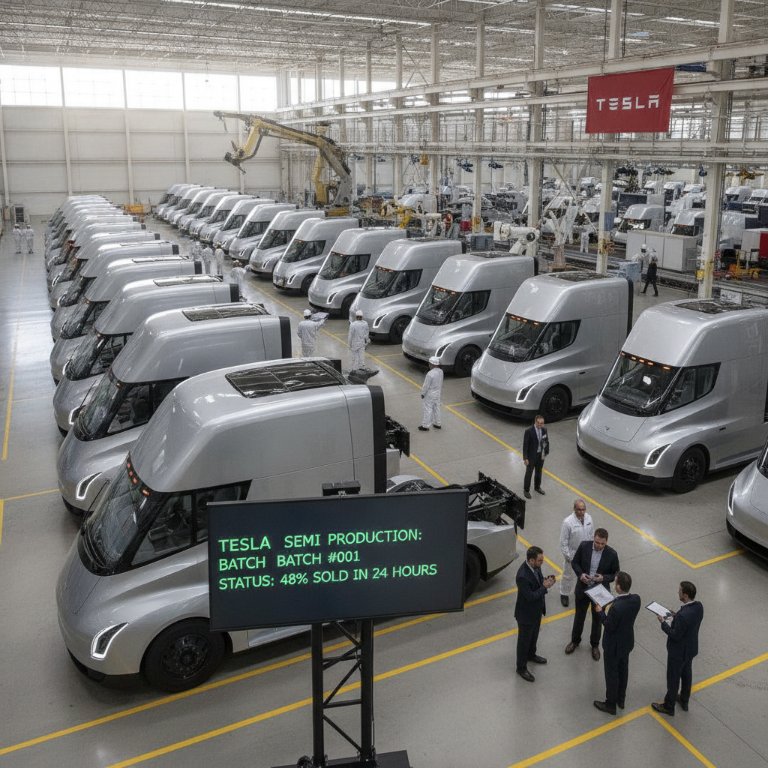
After years of anticipation and a carefully managed rollout, Tesla's Semi program is finally demonstrating its significant commercial potential. The latest news, with nearly half of a recent batch of production units selling out within a single day, underscores a burgeoning demand from fleet operators and signals a pivotal moment for the electric heavy-duty trucking segment, transitioning from concept to robust market reality.
High-Volume Production Kicks Off
The impressive sales figures arrive on the heels of a critical production milestone. Tesla officially commenced high-volume manufacturing of the Semi at Gigafactory Nevada on April 29, 2026. This marks a significant pivot from the early pilot programs and limited deployments, as Tesla aims to deliver "many thousands" of units by the close of 2026, eventually scaling to an ambitious annual capacity of 50,000 electric trucks. The immediate absorption of available units by buyers highlights a robust, pent-up demand for commercially viable electric transport solutions.
From Concept to Commercial Reality: A Long Haul
The journey to this commercial breakthrough has been anything but short. First unveiled with much fanfare in 2017, the Tesla Semi faced numerous delays, challenging the patience of early reservation holders and fueling skepticism across the industry. Critics questioned everything from battery longevity and payload capacity to charging infrastructure and total cost of ownership. While competitors like Daimler's eCascadia and Volvo's VNR Electric have made inroads with their own Class 8 electric trucks, Tesla's approach, promising radical efficiency and range, has always loomed large. This rapid sell-out suggests that the initial operational deployments, such as those with PepsiCo, have successfully de-risked the technology in the eyes of major fleet buyers.
Why This Matters:
This rapid commercial uptake for the Tesla Semi is more than just a good news story for Elon Musk; it's a profound signal for the entire transportation sector. For years, heavy-duty trucking has been considered one of the hardest segments to decarbonize, primarily due to range, payload, and charging challenges. Tesla's ability to sell out nearly half a batch of Semis in 24 hours demonstrates that fleet operators are now confident in the economic and operational viability of electric Class 8 trucks. This signals a seismic shift, validating Tesla's long-held vision and potentially accelerating the transition away from diesel.
- Who Wins: Tesla solidifies its position as a serious contender in the commercial vehicle space, moving beyond passenger cars. Early-adopting fleet companies stand to gain significant operational savings through lower fuel and maintenance costs, alongside meeting increasingly stringent sustainability goals. The broader EV charging infrastructure industry will also see a massive boost as demand for mega-chargers grows exponentially.
- Who Loses: Traditional truck manufacturers who have been hesitant or slow to invest heavily in robust electric Class 8 alternatives will feel immense pressure. The fossil fuel industry, particularly diesel suppliers, will face a long-term erosion of demand in a critical segment.
- Market Signal: This event sends a clear message: the electric truck revolution is not just coming; it's here, and it's moving at Tesla speed. It will likely spur accelerated investment and development from competitors, intensifying the race for market share in this crucial sector.
The swift commercial traction of the Tesla Semi marks a watershed moment for electric heavy-duty transport. As Gigafactory Nevada ramps up production, the focus will now shift to sustained delivery targets and the real-world performance data from these expanding fleets. The era of silent, emission-free long-haul trucking isn't just a distant dream; it's rapidly becoming a mainstream reality, driven by undeniable commercial appeal.