Tesla Semi Secures Historic 2,500-Truck Deal to Double America's Electric Fleet
After nearly a decade of skeptical side-eyes from legacy truck makers, production bottlenecks, and a glacial rollout that started back in 2017, the Te...
Editorial Team
World Of EV
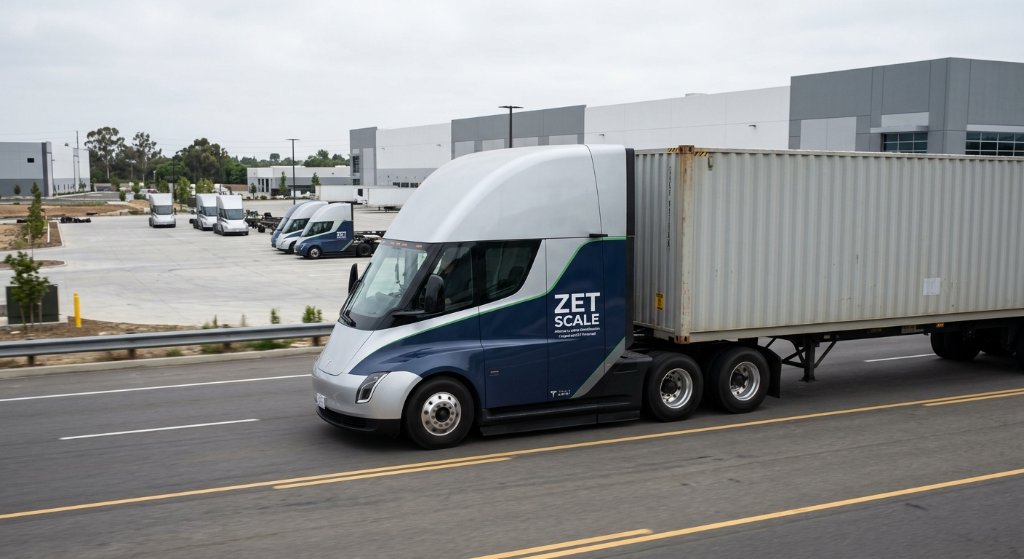
After nearly a decade of skeptical side-eyes from legacy truck makers, production bottlenecks, and a glacial rollout that started back in 2017, the Tesla Semi has finally landed its defining breakthrough. The Zero-Emission Truck Shipper-Carrier Alliance Leading Electrification (ZET SCALE) has selected Tesla as its primary manufacturer for an unprecedented order of up to 2,500 Class 8 electric trucks.
This is not just another localized pilot program with a hand-delivered fleet of 15 rigs. It is the single largest electric heavy-duty truck order in U.S. history, a massive market intervention designed to almost double the entire population of electric Class 8 trucks currently running on American roads. Deliveries are scheduled to kick off in the fourth quarter of 2026, with the full order slated for completion within 18 months.
Organizing Demand at Scale
Historically, the chief obstacle preventing commercial fleets from ditching diesel has been the massive upfront cost of heavy-duty electric trucks coupled with charging-infrastructure anxiety. ZET SCALE—a powerful private-sector coalition operated by Catalyst Mobility (formerly CALSTART) and the Smart Freight Centre, and backed by heavyweights like Microsoft and PepsiCo—is bypassing this barrier entirely.
Rather than expecting individual, cash-strapped shipping carriers to buy these expensive rigs outright, the alliance has introduced a game-changing financial mechanism:
- The Buyer: ZET Financial, the alliance's financing arm, will purchase the battery-electric trucks directly.
- The Lease Model: ZET Financial will lease them to shippers and carriers under a fair-market-value lease, radically lowering the capital barrier to entry.
- The Multi-OEM Safety Net: While Tesla emerged as the undisputed winner of the competitive Request for Proposal (RFP)—scoring highest on price, range, and charging capability—carriers can also opt for secondary options from Kenworth, Volvo Trucks North America, or RIDE to meet specific regional requirements.
The Production & Logistics Footprint
To keep this massive fleet humming, the coalition is focusing its deployment around 10 critical logistics corridors across the country, matching the truck's operational sweet spot with regional freight lanes:
- West Coast Hubs: Los Angeles, Stockton, Bakersfield, Seattle, and Tacoma.
- Central & Southern Hubs: Houston, Dallas, San Antonio, and Chicago.
- East Coast Hubs: Atlanta and the Newark/New York metro area.
This deal places immense pressure on Tesla's manufacturing capabilities. Tesla is currently racing to complete a major expansion of Gigafactory Nevada, building out a high-volume manufacturing line designed to eventually produce 50,000 Semi units annually. With the clock ticking toward a late-2026 delivery kickoff, the Nevada facility must transition rapidly from low-volume trial production to a finely tuned, automated assembly powerhouse.
Why This Matters:
This deal is the ultimate market validation that the freight industry has desperately needed. For years, legacy commercial vehicle giants like Daimler, Volvo, and PACCAR looked at the Tesla Semi as a vaporware threat that was too delayed to pose a real danger. This historic order officially shatters that complacency. By selecting Tesla as the primary OEM through an independent RFP, ZET SCALE has signaled that Tesla’s dedicated EV skateboard architecture, powertrain efficiency, and Megacharger ecosystem remain the benchmarks to beat.
The real genius of this arrangement, however, lies in the aggregation of demand. Instead of manufacturers building expensive, custom-ordered electric rigs for one-off corporate greenwashing campaigns, ZET SCALE organizes massive, predictable buyer demand. This allows Tesla to manufacture at scale, driving down the unit cost of batteries and components.
- The Winners: Tesla is the clear winner here, gaining a guaranteed backlog of 2,500 heavy-duty vehicles to de-risk its capital-intensive Nevada Gigafactory expansion. Corporate giants like Microsoft and PepsiCo also win, unlocking a scalable way to slice their scope 3 logistical emissions.
- The Losers: Diesel-dependent carriers who fail to adapt will face tighter regulatory squeezes, particularly in emission-strict states like California. Furthermore, legacy truck makers who have relied on converted diesel chassis rather than dedicated EV-first platforms are now officially on notice—Tesla has a massive head start in heavy-duty commercialization.
- The Industry Signal: This represents the official end of the 'pilot phase' for electric heavy trucking. We are transitioning to institutional-grade, highly organized commercial fleets. It is a 'do-or-die' pivot point: either legacy OEMs match Tesla's scale and battery-to-wheel efficiency, or they surrender the future of freight.
With deliveries on track to begin in late 2026, the transition of American highways from diesel smog to electric hum is accelerating. By solving both the capital-expense problem and organizing demand, ZET SCALE has laid down a definitive blueprint for how industrial decarbonization actually gets done. The pressure is now squarely on Elon Musk and the Tesla team to deliver on their manufacturing promises, prove that the Semi is ready for prime-time duty cycles, and keep America's supply chain moving cleanly.