Tesla Rolls Out 'Quiet Charging Zone' to Silence Supercharger Noise Complaints
Tesla, ever the innovator, is taking a proactive step to address a simmering issue that has occasionally ruffled feathers in communities hosting its u...
Editorial Team
World Of EV
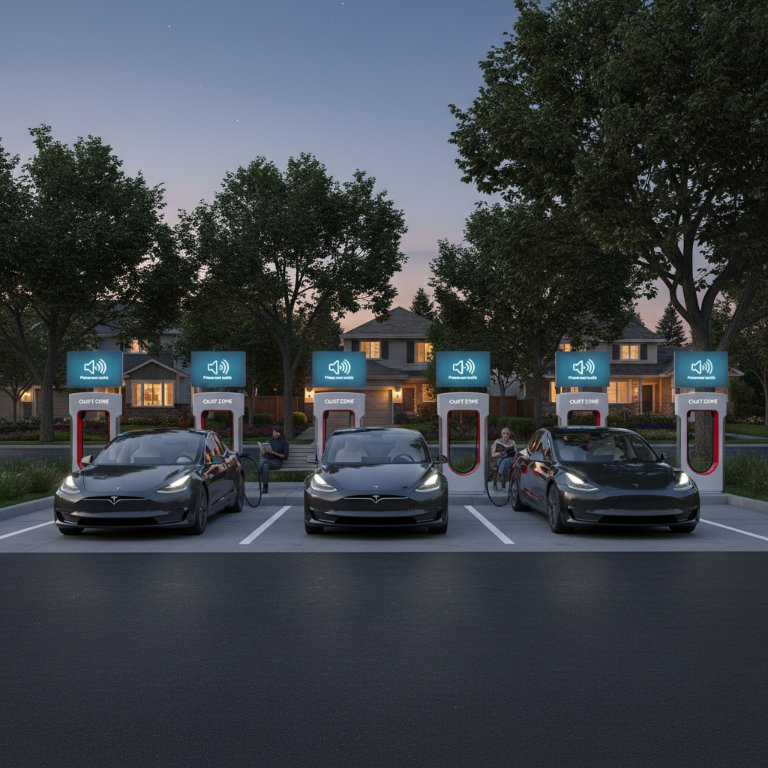
Tesla, ever the innovator, is taking a proactive step to address a simmering issue that has occasionally ruffled feathers in communities hosting its ubiquitous Supercharger stations: noise. The company has begun rolling out a new, location-specific 'Quiet Charging Zone' feature, a subtle yet significant software update designed to enhance neighborhood tranquility and improve community relations.
For years, the rapid expansion of Tesla's Supercharger network has been a cornerstone of its success, enabling long-distance travel and widespread EV adoption. However, as these critical charging hubs increasingly pop up in urban and residential areas, a less-discussed side effect has emerged: noise pollution from vehicles. While EVs themselves are quiet, the audio systems within them, particularly during longer charging sessions, have occasionally led to legitimate complaints from nearby residents about disruptive sound levels.
A Software Solution for Community Harmony
Tesla's 'Quiet Charging Zone' feature is a direct response to these community concerns. It's not a physical barrier or a hardware upgrade, but a clever software integration that leverages location data. When a Tesla vehicle enters a designated Quiet Charging Zone at a Supercharger, the system automatically prompts the driver to lower their vehicle's audio volume. This gentle reminder aims to foster a more considerate environment, ensuring comfort for those living or working adjacent to these charging facilities.
- Location-Specific Activation: The feature activates only at Supercharger sites identified as requiring special consideration due to their proximity to residential or noise-sensitive areas.
- Driver-Centric Prompt: Rather than enforcing a volume limit, the system provides a polite, in-vehicle notification, empowering drivers to be part of the solution.
- Focus on Community Well-being: This initiative demonstrates Tesla’s acknowledgment of its broader impact beyond just its immediate customers, recognizing the importance of being a good neighbor.
Why This Matters:
This seemingly minor update carries substantial implications for Tesla, its customers, and the broader EV charging landscape. It signals a maturation in Tesla's approach to infrastructure deployment and community integration.
- Enhanced Public Relations & Permitting: This feature is a significant win for Tesla's public image. Addressing noise complaints proactively can smooth the path for future Supercharger expansions, particularly in densely populated or residential zones where community approval is crucial. Local authorities are far more likely to grant permits if they see Tesla actively mitigating potential inconveniences.
- Improved User Experience (Beyond the Driver): While directly benefiting residents, this also indirectly improves the experience for drivers by ensuring a more harmonious charging environment. It transforms potential friction points into opportunities for positive interaction between the EV community and local residents.
- Setting an Industry Precedent: As other automakers and charging networks expand, they will undoubtedly face similar challenges. Tesla's proactive software-based solution could set a valuable precedent for responsible EV infrastructure development, encouraging others to consider the holistic impact of their sites on surrounding communities.
- Who Wins? Residents undeniably win, gaining a quieter environment. Tesla also wins by bolstering its reputation, potentially streamlining future site selections, and demonstrating responsiveness. Drivers win by contributing to a positive image of EV adoption.
- Who Loses? There are no real losers here, beyond perhaps a momentary inconvenience for drivers asked to lower their music. The benefits of community goodwill and smoother infrastructure expansion far outweigh this minor adjustment.
In conclusion, Tesla's 'Quiet Charging Zone' feature is more than just a software tweak; it's a strategic move that underscores the company’s evolving understanding of its role within urban ecosystems. By leveraging technology to foster community harmony, Tesla not only addresses a specific pain point but also sets a new standard for thoughtful, integrated EV infrastructure development, proving that innovation can extend beyond the vehicle itself to the very communities it serves.