Tesla Ramps Up Recurring Revenue: FSD Shifts Exclusively to Subscription in Europe
Tesla is making a pivotal strategic move in Europe, discontinuing the one-time purchase option for its Full Self-Driving (FSD) package and transitioni...
Editorial Team
World Of EV
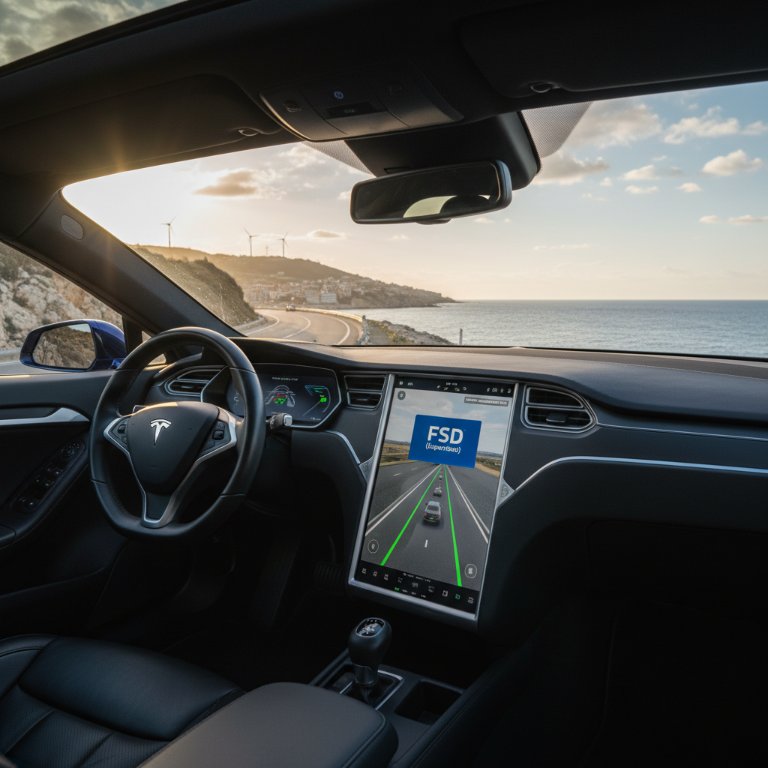
Tesla is making a pivotal strategic move in Europe, discontinuing the one-time purchase option for its Full Self-Driving (FSD) package and transitioning exclusively to a subscription model. This significant shift, taking effect in May 2026, with specific deadlines of May 15 for the Netherlands and May 21 for most other European countries, signals Tesla's aggressive pursuit of recurring revenue and a recalibration of its FSD monetization strategy outside North America. The more affordable Enhanced Autopilot package will also be phased out, pushing European owners towards the FSD subscription or basic Autopilot.
The End of Upfront Ownership
For years, Tesla has offered customers the choice to pay a substantial upfront fee to unlock the full potential of its advanced driver-assistance systems. This approach, while generating large one-time revenue spikes, has been less predictable than a subscription model. The decision to remove the outright purchase option for FSD in Europe, effective in just a few weeks, marks a definitive pivot. Prospective buyers will no longer face the dilemma of a large lump sum investment in a rapidly evolving technology; instead, they will be presented with an ongoing monthly commitment. This aligns Tesla more closely with software-as-a-service (SaaS) business models, a move long anticipated by industry analysts keen on Tesla's software ambitions.
The Dutch Proving Ground: A Glimmer of Progress Amidst Challenges
This strategic change follows the recent European debut of FSD (Supervised) v14 in the Netherlands. Tesla proudly reports that users have logged an impressive 10 million kilometers (approximately 6.2 million miles) on FSD in just one month in the country. This milestone, while demonstrating user engagement and a certain level of system capability, serves as a crucial data-gathering exercise for Tesla. However, the operational success in a limited market like the Netherlands contrasts sharply with persistent regulatory skepticism across the broader European Union. Countries such as Sweden, Finland, Denmark, and Norway continue to raise significant safety concerns regarding FSD’s performance, specifically citing issues like speeding, inadequate responses to icy road conditions, and the system’s ability to manage driver distraction. These regulatory hurdles remain a formidable blocker for a seamless, EU-wide FSD rollout, irrespective of Tesla's technical advancements.
Pricing Strategy: A Clear Path to Monthly Fees
While final pricing details await official confirmation, the subscription for FSD is anticipated to cost €99 per month. Tesla is also offering a concession for existing Enhanced Autopilot (EAP) owners, who will reportedly be able to subscribe at a discounted rate of €49 per month. This tiered pricing strategy aims to incentivize a portion of the existing EAP user base to upgrade, securing a new stream of revenue from customers who might not have opted for the full FSD purchase previously. The move effectively monetizes a feature that has been in development for over a decade, with its capabilities continually expanding through over-the-air updates.
Why This Matters:
This shift in Tesla's FSD strategy is far more than a simple pricing adjustment; it's a profound declaration of its long-term financial ambitions and a test of the European market's readiness for advanced autonomous features.
Tesla's Financial Calculus: The primary beneficiary here is Tesla's balance sheet. Recurring revenue streams are highly valued by investors, offering greater predictability and stability compared to one-off sales. This move could significantly boost Tesla's gross margins on software, positioning it more as a tech company than solely an automotive manufacturer.
Impact on European Consumers: For the savvy EV enthusiast and prospective buyer in Europe, this means a significant change in the cost of ownership. While the upfront barrier to entry for FSD is removed, the cumulative cost of a monthly subscription will quickly surpass the previous one-time purchase price for long-term owners. This could deter some who prefer full ownership and may also make FSD less appealing for those with shorter ownership cycles. Conversely, it might lower the initial hurdle for those who want to experience FSD but balked at the large upfront investment.
Regulatory Stalemate Persists: Despite the technical progress evidenced in the Netherlands, the move to a subscription model does not magically resolve the deep-seated regulatory issues in several key European markets. The safety concerns raised by Nordic countries underscore a fundamental conflict between Tesla's rapid deployment philosophy and Europe's cautious, jurisdiction-specific regulatory frameworks. Tesla's ability to extract recurring revenue from FSD is directly tied to its ability to operate legally and safely across the continent, a challenge that remains far from resolved. This signals that while Tesla is confident in its tech, the road to true, unrestricted 'Full Self-Driving' across the EU is still riddled with bureaucratic and safety-validation hurdles.
Industry Signal: Tesla's aggressive monetization of its ADAS software sets a precedent for the broader automotive industry. As other OEMs develop their own advanced driver-assistance systems, they will undoubtedly look to Tesla’s model for monetizing these increasingly sophisticated features. This could accelerate the trend towards subscription-based features across the automotive landscape.
Tesla's move to an exclusive FSD subscription model in Europe is a bold strategic play aimed at bolstering its financial performance and asserting its software leadership. While it simplifies the entry point for some, it introduces a long-term cost for many and highlights the ongoing tension between technological innovation, market monetization, and the critical need for regulatory approval across a diverse European landscape. The true success of this strategy hinges not just on customer adoption, but on Tesla's ability to navigate the complex regulatory environment and deliver on the promise of 'Full Self-Driving' in every sense of the word.