Tesla Model Y Achieves Historic First in NHTSA's Groundbreaking ADAS Tests, Reshaping Automotive Safety Landscape
The 2026 Tesla Model Y has etched its name into automotive history, becoming the inaugural vehicle to successfully navigate the National Highway Traff...
Editorial Team
World Of EV
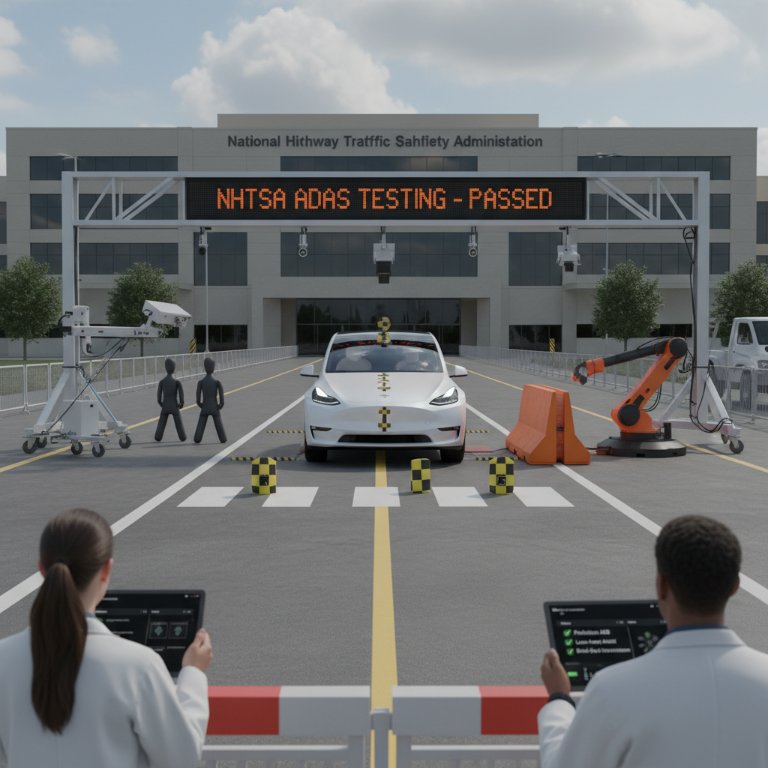
The 2026 Tesla Model Y has etched its name into automotive history, becoming the inaugural vehicle to successfully navigate the National Highway Traffic Safety Administration's (NHTSA) rigorous new advanced driver assistance system (ADAS) evaluations. This monumental achievement not only validates Tesla's long-standing commitment to cutting-edge ADAS technology but also sets an unprecedented benchmark for vehicle safety across the industry.
For years, the discourse around ADAS has been mired in varying standards and often unclear performance metrics. NHTSA's expanded testing protocol, however, marks a significant departure from previous, more rudimentary assessments, signaling a new era where crash avoidance capabilities are paramount. This isn't just about surviving a collision; it's about preventing it altogether, and the Model Y has just proven its prowess in this critical arena.
NHTSA's New Frontier: Comprehensive Crash Avoidance
NHTSA's updated ADAS testing regimen represents a critical evolution in how vehicle safety is evaluated. Moving beyond passive crashworthiness, these expanded evaluations place a stringent focus on active crash avoidance systems. The agency's intent is clear: to push automakers towards developing more robust and reliable technologies that actively mitigate the risk of accidents.
Key areas of focus in these groundbreaking tests include:
- Pedestrian Automatic Emergency Braking (AEB): Evaluating the vehicle's ability to detect and automatically brake for pedestrians in various scenarios, a crucial feature for urban safety.
- Lane-Keeping Assistance: Assessing the system's effectiveness in preventing unintentional lane departures, a common cause of highway accidents.
- Blind-Spot Warning: Confirming the accuracy and reliability of alerts when another vehicle is in the driver's blind spot.
- Blind-Spot Intervention: A more advanced capability, testing the vehicle's ability to actively steer away from a potential collision when a driver attempts to change lanes into an occupied blind spot.
Model Y's Unprecedented Validation
By being the first to pass these comprehensive tests, the 2026 Tesla Model Y has achieved a critical validation of its ADAS suite. This goes beyond simple functionality; it demonstrates a level of integration and performance that meets, and in some cases, likely exceeds the most demanding regulatory benchmarks to date. This success underscores Tesla's engineering philosophy, which heavily leverages camera-based vision systems and sophisticated software to interpret and react to complex driving environments. It provides tangible evidence that their approach to advanced driver assistance and ultimately, full self-driving capabilities, is delivering verifiable safety benefits under rigorous, independent scrutiny.
Why This Matters:
This is not merely a technical footnote; the Model Y's achievement carries profound implications for the automotive industry, consumers, and regulatory bodies worldwide.
- For Tesla: This is a monumental credibility boost. After years of intense scrutiny and often sensationalized headlines surrounding its Autopilot and Full Self-Driving (FSD) systems, passing NHTSA's most advanced ADAS tests provides undeniable, third-party validation of the Model Y's core safety capabilities. It can significantly assuage consumer concerns, potentially lower insurance premiums for Model Y owners, and strengthen Tesla's hand in future regulatory discussions. This reinforces their position as a technological leader in advanced vehicle safety.
- For Consumers: This news is a clear win. It signifies that robust, life-saving ADAS technologies are not only becoming standard but are also being subjected to increasingly stringent governmental oversight. Prospective EV buyers can now have greater confidence in the efficacy of the ADAS features offered in the Model Y and, by extension, the escalating safety standards across the industry. Safer cars mean fewer accidents, injuries, and fatalities.
- For the Industry: The Model Y's success sets a new, elevated bar. Other automakers, particularly those lagging in ADAS development or relying on less comprehensive systems, will feel immense pressure to accelerate their efforts to meet or exceed these new NHTSA benchmarks. This will catalyze innovation across the board, driving a competitive race towards ever-safer vehicles. Companies that previously offered only basic ADAS features will need to invest heavily in advanced pedestrian detection, sophisticated lane-keeping, and proactive blind-spot intervention to remain competitive and compliant.
- Regulatory Signal: This achievement signals to global regulatory bodies that comprehensive ADAS testing is not only feasible but essential. It could inspire similar testing protocols in other major automotive markets, further harmonizing and elevating vehicle safety standards internationally.
In conclusion, the 2026 Tesla Model Y's pioneering success in NHTSA's advanced ADAS tests is a landmark moment. It's a testament to Tesla's engineering prowess, a boon for consumer safety, and a powerful catalyst for the entire automotive industry. This sets a new gold standard, ensuring that future vehicles will not only protect occupants in a crash but actively work to prevent it from happening at all. The future of automotive safety is here, and the Model Y is leading the charge.