Tesla Empowers Owners: New Software Update Tackles Critical FSD Blurry Vision Head-On
Tesla's latest software update, version 2026.20, isn't just about minor tweaks or incremental improvements; it introduces a significant, user-facing e...
Editorial Team
World Of EV
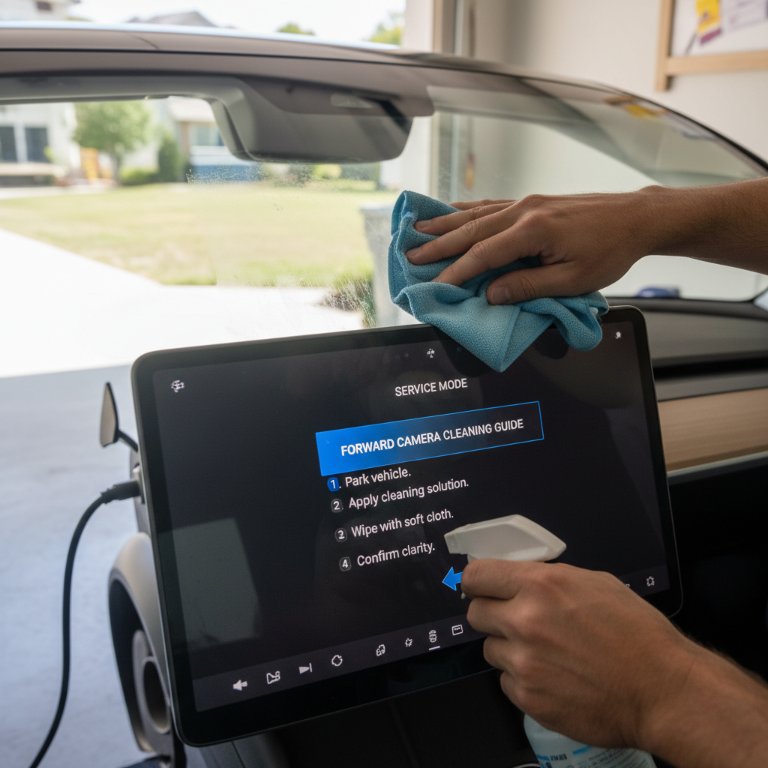
Tesla's latest software update, version 2026.20, isn't just about minor tweaks or incremental improvements; it introduces a significant, user-facing enhancement that directly impacts the core functionality of its advanced driver-assistance systems. For years, Tesla has championed a vision-only approach for its Autopilot and Full Self-Driving (FSD) systems, relying solely on an array of cameras to navigate the complexities of the road. This ambitious strategy, while offering a streamlined hardware package, has sometimes faced real-world challenges, particularly concerning environmental factors that can obscure camera vision and degrade performance.
Direct Control Over Camera Clarity
The update officially integrates a 'Forward Camera Cleaning' panel directly into the vehicle's Service Mode. This isn't merely a diagnostic readout; it provides owners with clear, guided steps to manually clean the crucial front-facing camera. This feature directly targets a persistent, yet often overlooked, issue: blurry visuals caused by everyday culprits like windshield haze, dirt, rain streaks, or even road grime. Owners can now proactively address a problem that previously might have required a service appointment or led to frustrating, intermittent FSD performance.
Enhancing Vision-Only Reliability
Tesla's unwavering commitment to a camera-centric FSD architecture means the clarity and unimpeded view of its cameras are paramount. Unlike many competing advanced driver-assistance systems that fuse camera data with radar or lidar, Tesla's FSD relies almost entirely on interpreting visual input. Any obstruction, no matter how minor, can significantly degrade the system's ability to accurately perceive its surroundings, potentially leading to issues ranging from phantom braking and incorrect speed limit recognition to missed lane markings and compromised object detection – problems that have previously drawn both regulatory scrutiny and user frustration.
- Direct Impact on Autopilot/FSD Performance: Ensuring optimal visual data input is foundational for safe and reliable autonomous features.
- User Empowerment: This feature strategically shifts a basic, yet critical, maintenance task from a potential service visit to the owner's immediate control, fostering greater self-sufficiency.
- Proactive Problem Solving: Tesla is addressing a common, real-world impediment to the consistent operation of its advanced driver-assistance systems, acknowledging the practical realities of everyday driving.
Why This Matters:
This seemingly minor software addition is a potent signal of Tesla's ongoing evolution in its FSD strategy and a deepened commitment to user experience. It underscores that while algorithms are continually refined, the physical interface with the world — the cameras — must also be meticulously maintained.
Who Wins? Tesla owners, particularly those who rely heavily on Autopilot and FSD, are the clear beneficiaries. They gain a direct, guided method to resolve a common issue that can degrade their vehicle's most advanced features, potentially improving FSD reliability, reducing frustration, and increasing confidence in the system. Tesla also wins by empowering its users, potentially reducing service center visits for what can often be a simple, owner-level fix, and indirectly bolstering confidence in its vision-only system by demonstrating responsiveness to real-world pain points.
Who Loses? Competitors who might dismiss such practical, user-centric fixes as minor might be missing the point. Tesla consistently iterates and addresses real-world challenges, often with ingenious software solutions. This move further differentiates Tesla by offering an immediate solution to a universal problem for camera-based ADAS systems, highlighting its agile development process compared to more traditionally structured automakers.
Market Signal: This update signals a maturity in Tesla's approach to FSD deployment. Rather than solely focusing on algorithmic improvements, the company is now overtly addressing the physical realities of camera-based perception and acknowledging that human interaction is still a vital component in maintaining system integrity. It reinforces Tesla's long-term strategy of putting powerful diagnostic and maintenance tools directly into the hands of its owners, enhancing the overall ecosystem around FSD rather than just the software itself. It’s an implicit recognition that even the most advanced AI needs a clear view to perform optimally.
While not a 'do-or-die' feature in itself, the integration of the 'Forward Camera Cleaning' panel in update 2026.20 represents more than just a new menu item; it's a testament to Tesla's commitment to refining its vision-only FSD system and empowering its users. By directly addressing a fundamental challenge to camera clarity, Tesla enhances the real-world reliability and perceived robustness of its advanced driving features, paving the way for a more consistent and user-friendly autonomous driving experience as FSD continues its journey toward full autonomy.