Robots Over Cars: Tesla's Fremont Factory Pivots to Optimus Production
Tesla, the automotive and technology titan, is embarking on a monumental strategic shift, confirming that production of its Optimus humanoid robot is ...
Editorial Team
World Of EV
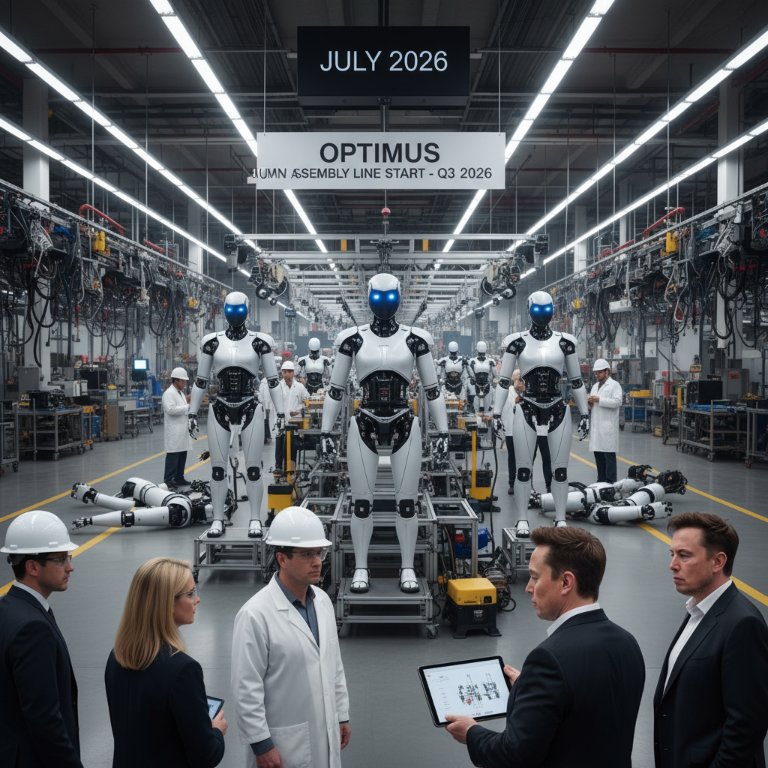
Tesla, the automotive and technology titan, is embarking on a monumental strategic shift, confirming that production of its Optimus humanoid robot is slated to commence at the iconic Fremont factory around late July or August 2026. This isn't just an expansion; it's a fundamental reorientation of a significant portion of Tesla’s manufacturing capability, demanding the dismantling of the venerable Model S and X production lines to make way for a robotic future.
After years of teasing and iterative development, this move signifies Tesla's deepening commitment to artificial intelligence and robotics, positioning Optimus as potentially a more crucial product than its foundational luxury EVs. The implications for the company, the automotive sector, and indeed, the broader manufacturing landscape, are profound.
The Fremont Transformation: Shifting Gears from Luxury EVs to Humanoid Robotics
Elon Musk's announcement underscores a radical reshaping of the Fremont facility, a plant steeped in Tesla's automotive history. The decision to retire the production lines for the Model S and X – vehicles that pioneered the luxury EV segment – is a bold statement about where Tesla sees its highest leverage for future growth. While the exact square footage and resource reallocation remain to be fully detailed, this move clearly signals:
- Prioritization of Robotics: Tesla is dedicating prime manufacturing real estate and engineering talent to Optimus, suggesting the robot is far from a side project.
- Technological Convergence: It highlights Tesla's vision of integrating its AI, software, and hardware expertise into a general-purpose humanoid robot, aiming to solve real-world labor challenges.
- Rethinking Manufacturing Infrastructure: The conversion of an existing automotive factory for humanoid robot production presents unique engineering and logistical challenges, offering a glimpse into Tesla's evolving production philosophy.
A Cautious Commencement: Realistic Expectations Amidst Ambitious Goals
Despite the ambitious timeline for production commencement, Musk also tempered expectations, noting that initial production will be 'quite slow.' This measured approach is a pragmatic acknowledgment of the inherent complexities in manufacturing advanced humanoid robots at scale. It also brings into focus Tesla's past ambitious, yet often revised, timelines within its robotics division.
- Missed 2025 Target: Notably, Tesla's previous target of building 10,000 Optimus robots by the end of 2025 was not met, fueling skepticism among industry observers and investors regarding the pace of rollout. This historical context is vital; Tesla has a track record of setting aggressive targets that frequently require adjustment.
- The Learning Curve: Mass-producing a sophisticated bipedal robot with advanced AI and dexterous manipulation capabilities is a monumental task, far more intricate than assembling an EV. Each unit represents a convergence of mechanical engineering, sensor integration, battery technology, and cutting-edge AI.
- Quality Over Quantity (Initially): The 'slow' ramp-up likely points to an iterative process of refining the manufacturing techniques, ensuring quality control, and further developing the robot's capabilities through early deployments.
Why This Matters:
- For Tesla's Identity and Valuation: This move signals Tesla's definitive transition from primarily an automotive company to a robotics and AI powerhouse. While the Model S and X were once beacons of luxury EV innovation, their obsolescence in the face of Optimus production underscores a shift in core business. Investors will be closely watching whether Optimus can generate the kind of revenue and profitability to justify such a monumental shift, potentially unlocking a new, massive market beyond just cars.
- The Future of Manufacturing and Labor: If Optimus achieves even a fraction of its intended capabilities, it could revolutionize factory automation, logistics, and even domestic labor. This presents a direct answer to global labor shortages and escalating manufacturing costs. Competitors across industries will be forced to accelerate their own automation strategies, or risk being left behind. However, the social and economic impacts on human employment will become a pressing debate.
- A High-Stakes Gamble: Given the previous missed targets and the sheer complexity of humanoid robotics, this move is a high-stakes gamble. If Optimus falters in its rollout or fails to meet functional expectations, it could divert significant resources and attention from Tesla's core EV business at a time when competition in the electric vehicle market is intensifying dramatically. Conversely, if successful, it represents a 'do-or-die' moment that could redefine Tesla's legacy and catapult it into an entirely new market dominion.
- Industry Signal: This bold step by Tesla will inevitably galvanize the nascent humanoid robotics industry. We can expect increased investment, accelerated R&D, and fiercer competition from startups and established tech giants alike, all vying for a slice of this potentially trillion-dollar market.
The dismantling of the Model S and X lines at Fremont for Optimus production marks a pivotal moment for Tesla, symbolizing a shift from its automotive roots to a future dominated by AI and robotics. While the initial production will be slow and skepticism persists due to past missed targets, the potential impact of a successful Optimus rollout on manufacturing, labor, and Tesla's overall valuation is immense. The coming years will reveal whether this bold gamble secures Tesla's place not just as an EV leader, but as a vanguard of the robotic age.