Rivian Issues Massive 98,000-Vehicle Recall Over Camera Bug, Snaring the New R2 SUV
In a vivid reminder of the double-edged sword of software-defined vehicles, Rivian Automotive has issued a massive safety recall covering 98,828 of it...
Editorial Team
World Of EV
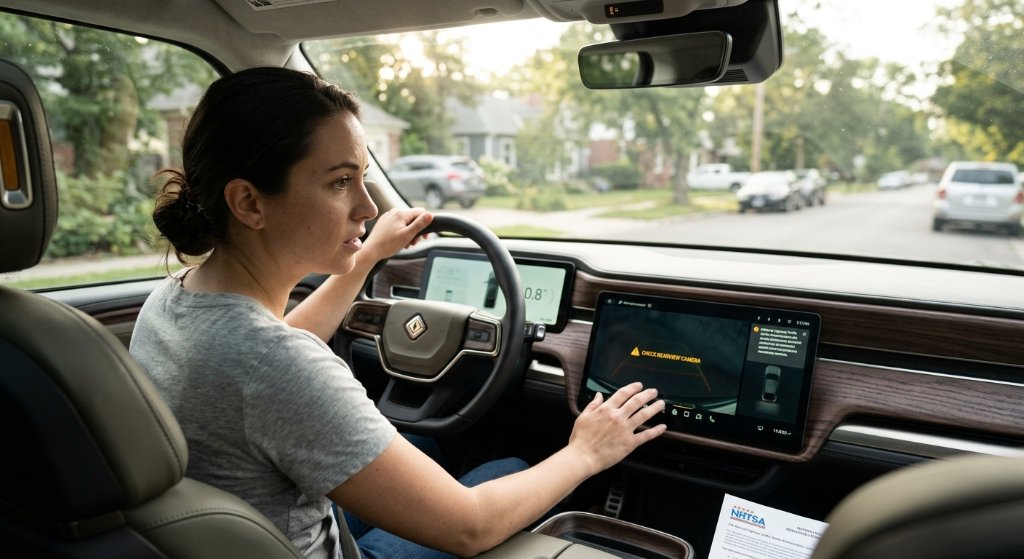
In a vivid reminder of the double-edged sword of software-defined vehicles, Rivian Automotive has issued a massive safety recall covering 98,828 of its electric trucks and SUVs in the United States. Filed with the National Highway Traffic Safety Administration (NHTSA), the recall targets a software glitch that causes center-screen safety prompts to overlap the rearview camera view when drivers shift into reverse. The campaign affects virtually the entirety of Rivian's modern fleet, including the R1T pickup, R1S SUV, and—most notably—the brand-new, mass-market-oriented R2 crossover.
While a recall of this size might spell disaster for a legacy automaker bound to physical dealership networks, Rivian is leaning heavily on its advanced technology stack to defuse the situation. This is the first official recall involving the highly anticipated R2 platform, which recently began consumer deliveries. However, rather than forcing owners to schedule tedious service appointments, Rivian is leveraging seamless over-the-air (OTA) software updates, demonstrating why startup EV players are fundamentally changing the rules of vehicle ownership.
The Bug Behind the Screen: What Went Wrong
The root of the issue is a failure to meet Federal Motor Vehicle Safety Standard (FMVSS) No. 111, which strictly regulates rear visibility. Modern digital cockpits must juggle dozens of dynamic notifications, and in this rare instance, software priority collided with federal safety law. When a driver disabled stability control, parked, and returned to the vehicle, a safety prompt asking to re-enable the system would overlap and obstruct the backup camera screen upon shifting into reverse.
The NHTSA warned that this obstruction significantly reduces rearward visibility, increasing the risk of backing into pedestrians or obstacles. Here is how the affected fleet breaks down:
- Rivian R1S (Model Years 2022–2027): 62,259 units (built between March 2022 and August 2026)
- Rivian R1T (Model Years 2022–2026): 34,088 units (built between August 2021 and July 2026)
- Rivian R2 (Model Year 2027): 2,481 units (built between April and August 2026)
The Saving Grace of Over-the-Air Architecture
Despite the high-stakes safety warning, this campaign is practically over before the physical letters even hit mailboxes. Because Rivian’s entire lineup is built on an integrated central network architecture, the startup has already pushed out software patches—update 2026.23 for R1 models and 2026.31 for the R2—to neutralize the bug.
According to Rivian, more than 95 percent of the affected vehicles have already downloaded and installed the update. The company also confirmed that it is not aware of any real-world accidents, injuries, or fatalities resulting from the glitch. For the vast majority of owners, the safety hazard was quietly patched overnight while their vehicles were parked in their garages.
Why This Matters:
This recall highlights the stark, frustrating divide between 21st-century vehicle technology and 20th-century automotive regulations. The federal government's recall apparatus was designed for an era of physical part failures—faulty ignition switches, exploding airbags, or leaking brake lines. Sending physical snail-mail letters to warn owners about a digital bug that has already been patched weeks prior is an outdated bureaucratic headache that costs millions and stirs unnecessary consumer panic.
Furthermore, this is a pivotal moment for the new R2 platform. Representing Rivian's transition from a low-volume, niche luxury brand to a mass-market powerhouse, the R2 is the company's ultimate make-or-break vehicle. Experiencing a federal safety recall so early in its production cycle is a minor reputational dent, but the seamlessness of the software-based fix actually reinforces Rivian’s core value proposition: it builds incredibly smart, resilient vehicles.
Finally, this event serves as a warning shot to the entire industry. As screen real estate becomes the ultimate battleground for EV infotainment, UI/UX design is no longer just about aesthetics—it is a critical safety discipline. Every warning popup, media control, and navigation alert must be designed with strict safety hierarchy in mind, or risk the wrath of federal regulators.
Ultimately, Rivian has proven that its platform can self-heal, turning a potentially disastrous safety recall into a case study of modern automotive agility. As the company continues to scale R2 production and eyes global expansion, its ability to bypass the traditional dealer-service bottleneck remains its greatest competitive weapon against legacy car giants.