NHTSA Launches Direct Audit of Tesla's Cybercab as Self-Certification Gambit Faces Regulatory Fire
On September 3, 2026, Tesla officially launched its highly anticipated Cybercab autonomous robotaxi in Austin, Texas, immediately charging commercial ...
Editorial Team
World Of EV
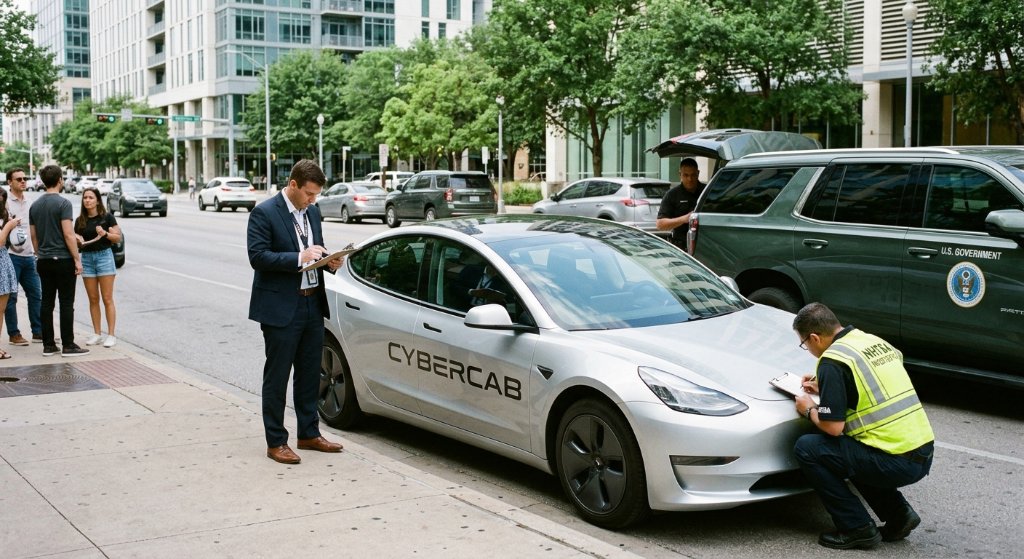
On September 3, 2026, Tesla officially launched its highly anticipated Cybercab autonomous robotaxi in Austin, Texas, immediately charging commercial fares. But the celebration was cut short. Within hours of the deployment, the National Highway Traffic Safety Administration (NHTSA) opened a formal Audit Query (AQ26002), initiating a high-stakes regulatory showdown over how a car completely stripped of manual controls—no steering wheel, no pedals, and no mirrors—can legally drive on public roads.
Tesla’s move is classic Elon Musk: bypass the bureaucracy first and ask for forgiveness later. Unlike rivals like Amazon’s Zoox or GM’s Cruise, which have spent years petitioning the government for Part 555 safety exemptions to test steering-wheel-free vehicles, Tesla chose to self-certify the Cybercab. By claiming compliance with existing Federal Motor Vehicle Safety Standards (FMVSS) under 49 CFR Part 571, Tesla is testing the absolute limits of federal safety laws, setting up a legal game of chicken that could rewrite the rules of autonomous transport—or halt Tesla's robotaxi dreams in their tracks.
The Self-Certification Gamble
Under U.S. auto-safety laws, manufacturers are permitted to self-certify that their vehicles comply with all applicable FMVSS guidelines. Once certified, the vehicles can be deployed without prior approval from NHTSA. However, the federal agency retains the power to audit these certifications.
Tesla claims the Cybercab complies with every standard that "applies" to a vehicle built without conventional manual controls. NHTSA's formal audit is now looking under the hood of that claim. The agency wants to see the technical data, the engineering paperwork, and the physical testing records Tesla relied on. Key focus areas of the audit include:
- The Missing Foot Pedal: FMVSS 135 explicitly mandates that service brakes must be activated by a "foot control". Tesla must defend how an algorithm-controlled braking system complies without physical foot controls.
- Camera-Only Visibility: FMVSS 111 requires traditional physical rearview and driver-side mirrors. The Cybercab has zero mirrors, relying entirely on side cameras and an interior screen display.
- Fleet Oversight: NHTSA is demanding technical details on Tesla’s autonomous stack, sensor suites in adverse weather, and whether human supervisors are monitoring the driverless fleet in real time.
Bypassing the Exemption Loophole
Historically, deploying a steering-wheel-free vehicle meant securing a Part 555 exemption. This route comes with severe constraints: it is capped at a strict limit of 2,500 vehicles per manufacturer annually and can take over a year to get approved.
Because Tesla's robotaxi scaling ambitions involve mass-producing tens of thousands of Cybercabs, waiting on a 2,500-unit restricted exemption was a non-starter. By self-certifying that the vehicle complies with "applicable" standards, Tesla attempted to jump-start commercial service. While NHTSA Administrator Jonathan Morrison recently signaled openness to revising the rules to better accommodate driverless tech, those bureaucratic updates are still in the proposal stage. Tesla simply did not want to wait.
Why This Matters:
- For Tesla, It's Make-or-Break: This investigation is a defining moment for Tesla's future valuation. Tesla is no longer just an EV maker; its stock price is heavily leveraged on its promise of an autonomous, high-margin robotaxi future. If NHTSA rejects Tesla’s self-certification and forces a recall or physical retrofits (like adding temporary controls), it will delay mass-production plans indefinitely.
- The Competitor Impact: If Tesla successfully defends its self-certification, it establishes a massive competitive advantage. Legacy AV players like Waymo, Zoox, and Cruise have meticulously played by the regulatory handbook, limiting their initial scale. Tesla’s shortcut, if validated, will completely disrupt the AV landscape.
- The Policy Precedent: A victory for Tesla forces the government’s hand. It would effectively render current FMVSS rules obsolete and accelerate the planned AV regulatory framework. Conversely, a strict regulatory pushback from NHTSA would signal that Silicon Valley cannot simply write its own rules when it comes to physical safety on public streets.
Looking Ahead
The Cybercab's launch in Austin was meant to be Elon Musk’s triumphant "I told you so" to the automotive world. Instead, it has triggered an immediate and aggressive regulatory response. How Tesla handles NHTSA’s Audit Query over the coming weeks will determine the trajectory of the entire autonomous vehicle sector. Whether this gamble cements Tesla’s lead in the robotaxi race or serves as a cautionary tale of regulatory hubris remains to be seen—but the stakes have never been higher.