Musk's Terafab: Tesla and SpaceX Unleash a Terawatt-Scale Assault on AI Chip Production
Elon Musk has once again unveiled an audacious vision that could fundamentally reshape the technology landscape, detailing plans for 'Terafab' – a col...
Editorial Team
World Of EV
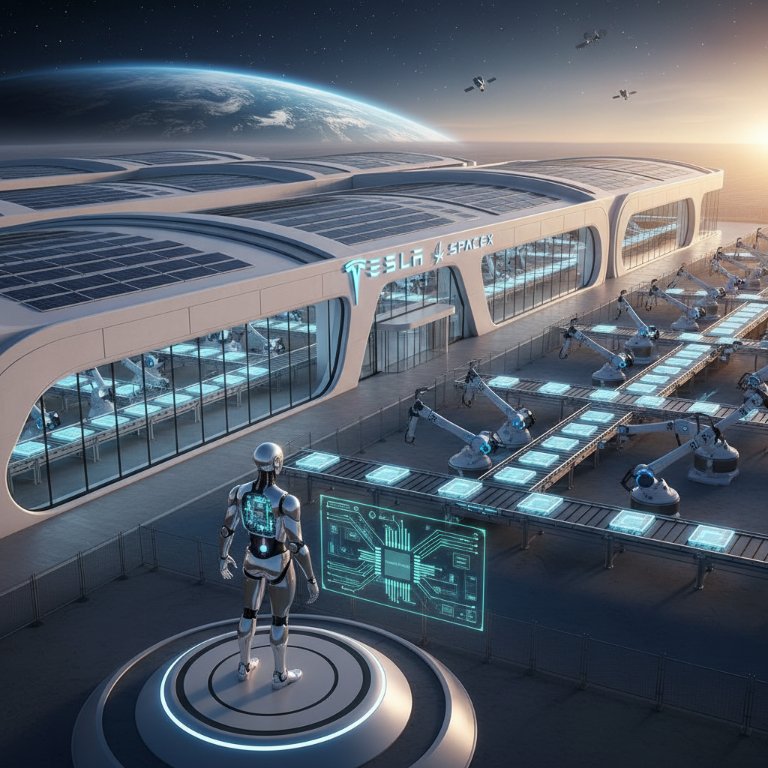
Elon Musk has once again unveiled an audacious vision that could fundamentally reshape the technology landscape, detailing plans for 'Terafab' – a colossal facility projected to be approximately ten times the size of Tesla's sprawling Giga Texas factory. This isn't just about bigger; it's about an unparalleled leap in compute hardware production, targeting a mind-boggling one terawatt (1 TW) of output per year. For an industry frequently constrained by semiconductor supply, this move isn't merely ambitious; it's a declaration of intent to control its own destiny.
A Monumental Scale for Compute Hardware
Tesla, under Musk's relentless drive, has consistently pushed the boundaries of vertical integration, famously designing its own FSD (Full Self-Driving) chips to power its autonomous vehicle ambitions, moving away from NVIDIA's processors years ago. Now, with Terafab, the company is dramatically scaling that in-house philosophy. Envisioned as a titan among manufacturing plants, Terafab's projected footprint alone dwarfs industry norms, signaling an unprecedented commitment to securing the foundational hardware for future AI development. A target output of 1 TW of compute hardware annually isn't just an upgrade; it's a seismic shift, potentially enabling the company to dictate the pace of innovation rather than being beholden to external suppliers.
The Strategic Alliance: Tesla, SpaceX, and Intel
This isn't a solo endeavor. The Terafab project involves a powerful triumvirate: Tesla, SpaceX, and chip giant Intel. This collaboration is designed to leverage collective expertise to design, build, and rapidly scale new AI microchips. For Tesla, these chips are crucial for the continued evolution and deployment of its Optimus humanoid robots – a project Musk believes will be more impactful than the automotive business – and for the advanced computing needs of its electric trucks. SpaceX, in turn, will integrate these chips into its highly anticipated orbital data centers, a bold move that could redefine satellite capabilities and space-based computing infrastructure.
Fueling AI Across Earth and Orbit
Musk's vision for Terafab transcends conventional manufacturing targets. He boldly asserts that this single plant could rival, and even surpass, the entire country's current chip consumption. This claim underscores the sheer magnitude of the project and its potential to alleviate global chip shortages for its internal needs, while simultaneously providing a dedicated, high-volume pipeline for its most critical AI applications. The synergy between Tesla's terrestrial AI applications (FSD, Optimus) and SpaceX's extraterrestrial ambitions (orbital data centers) highlights a comprehensive strategy to embed custom-designed AI hardware into every facet of Musk's interconnected enterprises.
Why This Matters:
For Tesla & Robotics: Terafab provides Tesla with unparalleled control over its AI hardware roadmap. This vertical integration is critical for Optimus robots, ensuring a dedicated supply of powerful, purpose-built chips necessary for complex real-world interactions and learning. It also further insulates Tesla's FSD development from external supply chain vulnerabilities, cementing its technological independence. The success or failure of Terafab will directly impact the speed and scale at which Optimus can evolve and be deployed.
For SpaceX & Orbital Data Centers: This venture is a game-changer for SpaceX. Orbital data centers represent a new frontier in computing, offering low-latency, geographically diverse processing capabilities. Having bespoke, high-performance AI chips manufactured at this scale by a sister company ensures that SpaceX can rapidly innovate and deploy these ambitious space-based platforms, potentially creating a new revenue stream and a significant competitive advantage in the burgeoning space economy.
Impact on the Semiconductor Industry: Musk's claim of potentially exceeding national chip consumption from a single plant is a direct challenge to established semiconductor giants like TSMC, Samsung, and even Intel itself (despite Intel's collaboration on design). While Terafab primarily aims to serve internal needs, its sheer scale suggests a significant realignment of chip manufacturing power, potentially putting pressure on pricing and lead times for other players in the long run. It signals a future where major tech companies might increasingly opt for internal, hyper-focused chip production over relying solely on general-purpose fabs.
Risk and Reward: The undertaking is monumental, fraught with engineering, logistical, and financial challenges. Building a facility ten times the size of Giga Texas, equipped for advanced chip manufacturing, demands unprecedented capital investment and technical expertise. However, if successful, Terafab would grant Tesla and SpaceX an almost unassailable lead in AI hardware integration, fostering rapid innovation and reducing reliance on a volatile global supply chain. The reward – total control over their AI future – could justify the immense risk.
Terafab is not merely another factory; it is a declaration of strategic intent, a bold bet on vertical integration at an unprecedented scale. If successful, this ambitious project will not only secure Tesla's and SpaceX's AI future but could also send ripple effects throughout the global technology and manufacturing sectors for decades to come.