Maryland Forges Ahead: A Groundbreaking Framework for EV Battery Safety and Recycling
The electrification of the automotive industry represents a monumental shift towards a sustainable future, yet it also presents complex challenges bey...
Editorial Team
World Of EV
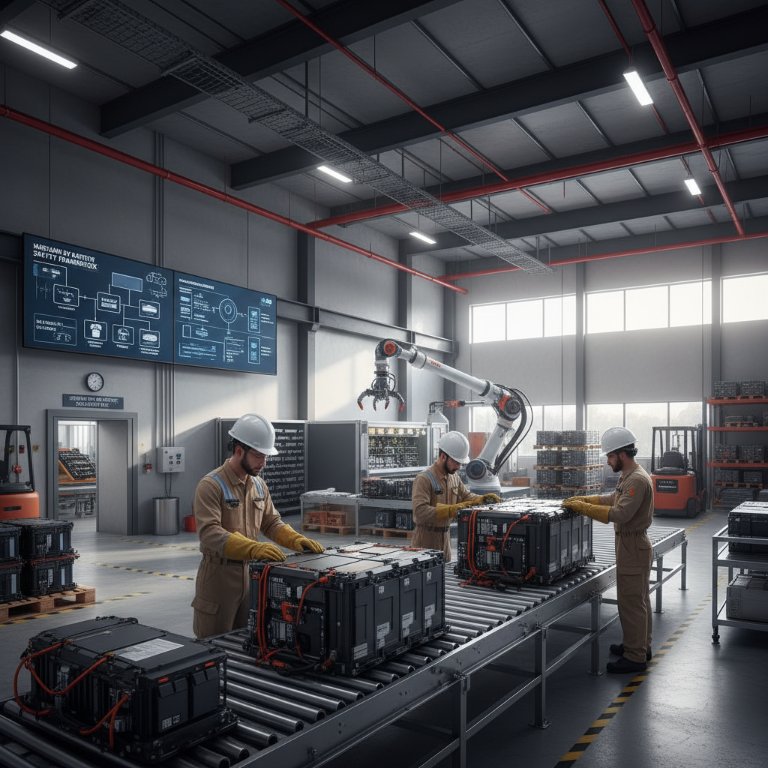
The electrification of the automotive industry represents a monumental shift towards a sustainable future, yet it also presents complex challenges beyond the initial vehicle sale. Among the most pressing is the responsible management of electric vehicle (EV) batteries throughout their entire lifecycle. Maryland has emerged as a proactive leader in the United States, introducing a comprehensive new safety framework designed to address the burgeoning complexities of managing lithium-ion batteries from deployment to eventual recycling. This crucial initiative positions Maryland at the forefront of establishing practical, scalable solutions for an increasingly electrified world.
This move by the Maryland Commission to Advance Lithium-Ion Battery Safety, culminating in a final report to the Governor and General Assembly, offers a detailed, state-level blueprint for navigating the risks and opportunities associated with these powerful energy sources. Unlike previous ad-hoc approaches, this framework prioritizes building upon existing automotive recycling infrastructure, a pragmatic decision acknowledging the decades of expertise already present in vehicle dismantlement and material recovery.
Maryland's Proactive Stance on Battery Lifecycles
The Maryland Commission's report outlines a practical, lifecycle-oriented approach to high-voltage EV battery management. Their recommendations aim to create a functioning circular system, a significant departure from the linear 'take-make-dispose' model that has long dominated industrial processes. The core tenets emphasize leveraging the established automotive recycling sector, rather than attempting to build entirely new infrastructure from the ground up. This is a critical distinction, as the automotive recycling industry already serves as the primary collection point for end-of-life vehicles, making it a natural, efficient hub for battery recovery.
Addressing Growing Risks and Economic Challenges
The framework directly confronts the escalating safety risks, economic hurdles, and market weaknesses inherent in the current EV battery landscape. As Emil Nusbaum, VP of Strategy, Government and and Regulatory Affairs at the Automotive Recyclers Association (ARA) and Chair of the Commission, highlighted, lithium-ion batteries introduce new challenges that demand adaptation to safeguard employee health and safety, mitigate fire risks, and protect the general public. The Commission's findings underscore several key areas of concern:
- Rising Safety Risks: Lithium-ion batteries, when damaged or improperly handled, pose significant fire hazards, including thermal runaway events that can be difficult to extinguish. These risks extend to recycling facility employees, first responders, and the wider public.
- High Handling and Transportation Costs: EV batteries are classified as hazardous materials, requiring specialized carriers, packaging, and handling protocols, all of which substantially increase costs for recyclers.
- Weak End Markets: A lack of robust markets for recycled battery materials, coupled with fluctuating raw material prices, can make recycling economically unviable for some operators.
- Preventing Stranded Batteries: The goal is to avoid a future where large volumes of end-of-life EV batteries are simply stockpiled or improperly disposed of due to a lack of viable recycling or repurposing options.
- Lack of Standardization and Data Transparency: The varied chemistries and designs of EV batteries across manufacturers make consistent and efficient recycling challenging. The report also suggests the need for better battery transparency, including state-of-health and state-of-charge data, to promote safe handling, reuse, and remanufacturing.
Why This Matters: Expert Analysis
Maryland's new framework isn't just a local policy update; it's a critical signaling mechanism for the entire EV ecosystem, both within the United States and globally. This isn't a 'do-or-die' moment for a single company, but rather a blueprint for how states can responsibly mature their EV adoption strategies. The state's initiative recognizes that the lifecycle of an EV extends far beyond the dealership, offering tangible solutions to looming challenges that, if ignored, could hinder the long-term sustainability and public acceptance of electric vehicles.
Who Wins? Primarily, the environment and public safety stand to gain immensely. A structured approach reduces the likelihood of hazardous waste, fires, and improper disposal. Automotive recyclers emerge as crucial beneficiaries, with the framework recognizing their existing expertise and providing clearer guidelines for adapting to new battery technologies. This legitimizes their role in the circular economy and potentially opens new revenue streams, though it also means new training and investment. Consumers also win through a safer, more sustainable EV market, knowing that the vehicle's environmental impact is considered throughout its lifespan. Finally, Maryland itself gains a reputation as a leader in sustainable EV policy, potentially attracting innovation in battery recycling and second-life applications.
Who Loses? Companies that have thus far ignored or downplayed the end-of-life battery problem may face increased compliance costs and a need to rapidly adapt their operations. Those banking on lax regulations will find the landscape shifting. The absence of a national EV battery recycling policy in the U.S. has created a patchwork of state-level efforts, with some states like New Jersey adopting Extended Producer Responsibility (EPR) laws. Maryland's approach, while distinct, adds to the growing momentum for structured battery management.
This framework signals a maturing EV market. Policymakers are looking beyond merely incentivizing EV sales to building the comprehensive infrastructure necessary for a truly sustainable transportation revolution. It acknowledges that the global rush for critical battery minerals necessitates robust recycling to reduce reliance on new mining and establish a resilient, circular supply chain.
Looking Ahead: A Sustainable Blueprint
Maryland's proactive safety framework for EV batteries represents a pivotal step towards a truly sustainable electric vehicle future. By integrating battery lifecycle management into existing recycling infrastructure and addressing critical safety and economic factors, the state provides a valuable model for other jurisdictions. This comprehensive approach is not merely about mitigating risks; it's about unlocking the full potential of a circular economy for EV batteries, ensuring that the drive towards electrification remains both innovative and responsible.