Hyundai's EV Crown Slips: Landmark Class Action Targets Twice-Recalled, Power-Sapping ICCU Defect
For the past few years, Hyundai Motor Group (HMG) has enjoyed a meteoric rise to the top tier of the electric vehicle market, establishing itself as t...
Editorial Team
World Of EV
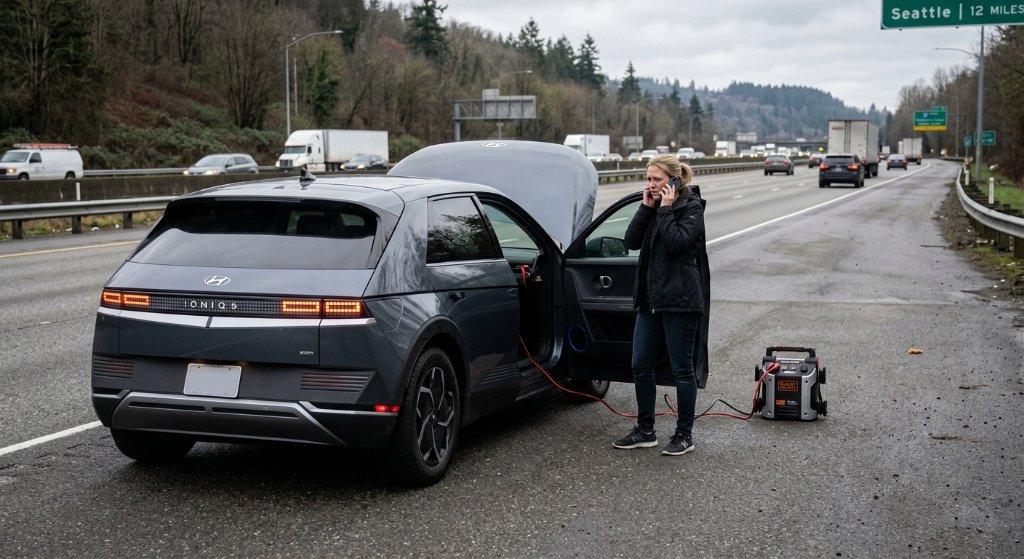
For the past few years, Hyundai Motor Group (HMG) has enjoyed a meteoric rise to the top tier of the electric vehicle market, establishing itself as the chief rival to Tesla’s dominance. Built on the revolutionary 800-volt E-GMP platform, vehicles like the Hyundai Ioniq 5, Ioniq 6, and Kia EV6 won critical acclaim and captured massive market share thanks to their ultra-fast charging capabilities and bold designs. However, that hard-won reputation is facing a critical safety and legal threat as owners of Hyundai, Kia, and Genesis EVs drag the automotive giant into federal court over an unresolved, catastrophic component failure.
A newly filed nationwide class-action lawsuit (Goldenkranz v. Hyundai Motor America), filed in the U.S. District Court for the Western District of Washington by the prominent consumer law firm Hagens Berman, targets a persistent defect in the vehicles' Integrated Charging Control Unit (ICCU). The lawsuit alleges that despite two massive safety recalls, HMG has failed to deliver a permanent fix for a dangerous hardware vulnerability that drains the 12-volt auxiliary battery, leaving drivers suddenly stranded or causing an abrupt, terrifying loss of drive power at highway speeds.
Inside the ICCU Failure: A 12-Volt Domino Effect
At the heart of the controversy is a single, highly integrated component that serves as the central nervous system for the vehicle’s electrical distribution. In traditional internal combustion engine (ICE) vehicles, an alternator keeps the 12V battery charged. In HMG's E-GMP electric vehicles, the ICCU handles this critical task, stepping down power from the massive high-voltage traction battery pack to keep the 12V auxiliary system topped up.
When the ICCU fails, the dominoes fall quickly:
- Thermal and Electrical Stress: Under high voltage or thermal stress, the ICCU's internal circuitry—specifically its pyro-fuse—is prone to blowing or burning out.
- The 12-Volt Depletion: Once the ICCU stops functioning, the vehicle can no longer charge the 12-volt battery, which powers steering, braking assists, and onboard computers.
- Sudden Loss of Power: Within minutes of the failure, the driver is bombarded with warning lights on the dashboard as the 12V battery rapidly drains, culminating in a total, immediate loss of motive power.
The lawsuit alleges that HMG's design combines on-board charging, vehicle control, and DC-to-DC converter functionalities into one integrated unit. While this integration saves space and weight, it creates a catastrophic single point of failure. Many rival EV manufacturers choose to keep these components separate, minimizing the risk of a complete vehicle shutdown.
A Repeated Failure of Safety Recalls
The legal action highlights deep consumer frustration, as this is not a new problem. The National Highway Traffic Safety Administration (NHTSA) has already overseen two separate waves of ICCU recalls for these vehicles, yet owners report that replacement units installed under these recalls are suffering the exact same failures. The lawsuit claims that Hyundai is merely replacing defective ICCUs with equally defective parts, leaving drivers in a perpetual cycle of anxiety and repeated dealership visits.
The class-action lawsuit seeks to represent owners and lessees of a wide range of affected HMG electric vehicles across the U.S., including:
- Hyundai: Ioniq 5 and Ioniq 6
- Kia: EV6 and EV9
- Genesis: GV60, Electrified GV70, and Electrified G80
Why This Matters:
This lawsuit represents a critical "do-or-die" moment for Hyundai Motor Group's EV ambitions. Up to this point, HMG has navigated the EV transition with surgical precision, capturing the number-two spot in U.S. electric sales. But building great cars is only half the battle; keeping them running reliably is where legacy automakers must prove their mettle.
The primary loser here is HMG's brand equity. Trust is the ultimate currency in the emerging EV landscape. When early adopters—the very brand ambassadors who helped fuel the Ioniq and EV6 craze—are forced to coast onto active highway shoulders with zero power, that trust evaporates. The litigation signals to the broader market that Hyundai's engineering prowess may have prioritized cutting-edge specs, like 800V fast-charging, at the expense of fundamental electrical durability.
Furthermore, this crisis exposes the financial risk of highly integrated EV architectures. Because the ICCU is a single, complex, and proprietary unit, replacing it is vastly more expensive and time-consuming than swapping out individual modular components. If the courts force HMG into a third, comprehensive hardware redesign and replacement program, the warranty liabilities could run into hundreds of millions of dollars. Meanwhile, rival brands like Tesla, General Motors, and Ford stand to win over disillusioned buyers who are looking for reliable daily drivers, not high-tech paperweights.
Conclusion
Hyundai, Kia, and Genesis proved they could build EVs that out-charge and out-style the competition, but this ICCU class-action lawsuit is a stark reminder that reliability remains the ultimate luxury. As federal courts parse the engineering defects of the E-GMP platform, the pressure is on HMG to deliver a genuine, permanent hardware fix rather than temporary software band-aids. How the automotive giant responds over the coming months will ultimately determine whether it maintains its position at the vanguard of the EV revolution, or falls victim to the engineering shortcuts of its own success.