Gravity Defied: Lucid Faces Class-Action Lawsuit After Secret Seat Defect Derails 2026 Growth Goals
Just as Lucid Group seemed poised to break into the mainstream luxury SUV segment with its highly anticipated Gravity, the automaker has been hit with...
Editorial Team
World Of EV
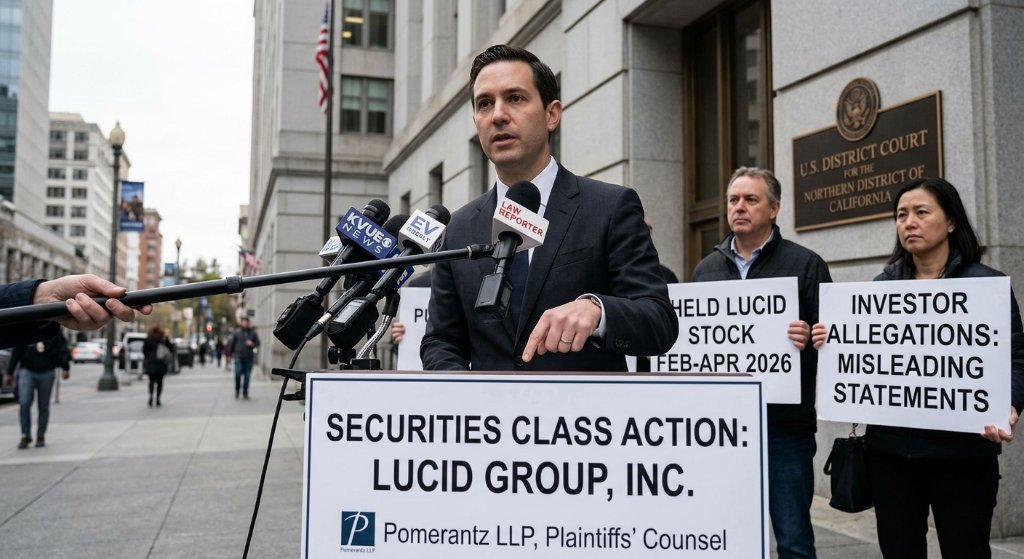
Just as Lucid Group seemed poised to break into the mainstream luxury SUV segment with its highly anticipated Gravity, the automaker has been hit with a major legal roadblock. Pomerantz LLP has filed a federal securities class-action lawsuit (Case No. 26-cv-05128) in the U.S. District Court for the Northern District of California against Lucid and several of its top executives. The lawsuit alleges that Lucid misled investors during a crucial stretch of 2026, painting a rosy picture of operational efficiency and manufacturing milestones while secretly grappling with catastrophic supply chain failures.
For Lucid, this legal crisis is a painful case of history repeating itself. Much like its early struggles to scale the Air sedan—which suffered from severe production bottlenecks, agonizing delays, and massive cash burn—the EV maker is once again finding that designing a world-class electric vehicle is infinitely easier than building one at scale. At a time when legacy automotive giants are scaling back their EV programs and startups are fighting for survival, Lucid's latest stumble threatens to alienate both its investor base and premium car buyers who are already cautious about new EV brands.
Inside the Allegations: A Manufactured Illusion of Growth
According to the lawsuit, which represents investors who purchased Lucid securities between February 25, 2026, and April 13, 2026, the automaker engaged in a pattern of false and misleading statements regarding its 2026 growth and performance outlook. Throughout this class period, Lucid's executive team repeatedly assured the market that its manufacturing processes had become repeatable, its supply chain had stabilized, and the rollout of the crucial Gravity SUV was proceeding smoothly.
Behind closed doors, however, the reality was starkly different. The lawsuit alleges that by late February 2026—the exact moment executives were boasting of sustainable operational improvements—Lucid's production line was already severely paralyzed by key supplier and delivery issues that the company failed to disclose to the public.
The Gravity Seat Defect: A 29-Day Paralysis
The root of the disruption lay not in Lucid's advanced electric powertrains, but in something far more mundane: second-row seats. An unapproved change by a supplier raised critical safety concerns regarding seatbelt anchor welds on the Gravity SUV, forcing Lucid into a grueling 29-day halt of shipments and deliveries, along with a recall of 4,476 vehicles.
The fallout from this quiet crisis was devastating to Lucid's operational and financial health:
- The Delivery Chasm: During the first quarter of 2026, Lucid managed to manufacture 5,500 vehicles but could only deliver 3,093. This massive gap left thousands of undelivered vehicles sitting in inventory and missed Wall Street’s delivery estimate of over 5,200 units.
- Catastrophic Revenue Miss: Lucid posted Q1 2026 revenue of just $282.5 million, severely missing the $433.8 million consensus expectation of analysts.
- Guidance Suspended: Under intense pressure, Lucid was forced to withdraw its full-year 2026 production guidance of 25,000 to 27,000 vehicles, leaving investors completely in the dark regarding the company's trajectory.
A C-Suite in Chaos
When the truth finally caught up with Lucid in early April, the market reacted swiftly, wiping out over 15% of the company's stock value in a matter of days. This sparked an immediate, aggressive restructuring under newly appointed CEO Silvio Napoli, who took the reins to stabilize the bleeding company.
Napoli’s "turnaround team" has moved with brutal efficiency, completely overhauling Lucid's leadership. In the span of just a few weeks, the company eliminated the COO role entirely, appointed Alexander De Bock as the new Chief Financial Officer, terminated 18% of its U.S. workforce, and cut the second production shift at its manufacturing facility in Arizona. While these moves are designed to save roughly $158 million annually, they also signal to the market that Lucid is retreating into a defensive bunker.
Why This Matters:
This lawsuit is far more than a routine legal headache; it is a symptom of a deeper, existential crisis for Lucid.
- The Consumer Confidence Crisis: Premium EV buyers are remarkably risk-averse. The Gravity was supposed to be the volume-driving vehicle that rescued Lucid from being a niche luxury player. A safety-related stop-sale and subsequent recall right out of the gate severely damages the brand's premium reputation, driving prospective buyers straight into the arms of established competitors like the Rivian R1S or Porsche Macan EV.
- The Saudi PIF Dilemma: Lucid remains alive almost entirely due to the deep pockets of Saudi Arabia's Public Investment Fund (PIF). While the PIF has consistently injected billions into Lucid, their patience is not infinite. If Napoli’s aggressive restructuring cannot stabilize production and win back investor trust, even Saudi backing might pivot toward cleaner, more reliable joint ventures.
- Winners and Losers: The clear winners here are Rivian and Tesla. Rivian is successfully scaling its R2 platform and maintaining steady R1 production, while Tesla continues to dominate the premium SUV space. The losers are Lucid’s retail investors—who have watched LCID stock plummet over 45% year-to-date—and the brand itself, which must now fight a multi-front war against angry shareholders, supply chain issues, and a cooling EV market.
- A True Do-or-Die Moment: Lucid is burning cash at an unsustainable rate. Swapping out the entire C-suite buys time, but it does not sell cars. If Lucid cannot quickly resolve its supplier quality issues, rebuild its fractured supply chain, and prove it can build the Gravity profitably, this legal battle may go down as the beginning of the end for one of the EV era's brightest technology pioneers.
In the fast-moving EV market, engineering brilliance means nothing if you cannot deliver the product. Lucid has the tech, but unless Napoli can pull off a manufacturing miracle under the shadow of this federal class-action suit, the Gravity SUV might just prove to be the anchor that pulls the company down.