GM's $3.5 Billion Battery Plant Halted: A Bellwether for Shifting EV Tides
General Motors (GM) and Samsung SDI have decisively paused construction on their ambitious $3.5 billion electric vehicle (EV) battery plant in New Car...
Editorial Team
World Of EV
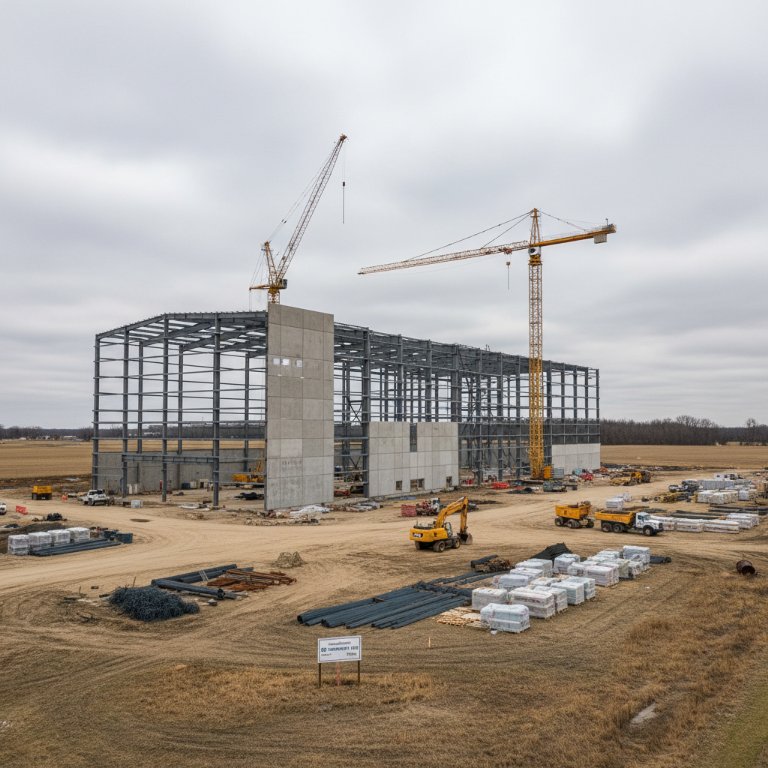
General Motors (GM) and Samsung SDI have decisively paused construction on their ambitious $3.5 billion electric vehicle (EV) battery plant in New Carlisle, Indiana. This isn't merely a delay; it represents a profound recalibration by one of the automotive industry's electrification frontrunners, signaling a significant shift in the broader EV market landscape. The move directly reflects the current headwinds of weaker-than-expected EV demand and a fluid federal policy environment, forcing automakers to fundamentally reassess their production capacities and investment timelines.
The New Carlisle Halt: A Strategic Pause
Originally conceived as a cornerstone of GM's aggressive EV expansion, the 680-acre Indiana facility was slated to produce advanced nickel-rich prismatic batteries – a critical component for the next generation of GM's Ultium-powered electric vehicles. While exterior construction will proceed to completion, the future of the plant's operational readiness and interior fit-out remains shrouded in uncertainty. Anticipated construction delays and potential layoffs looming in 2025 underscore the gravity of this decision. This project, a joint venture with battery giant Samsung SDI, was poised to significantly bolster domestic battery production, a key strategic imperative for American automakers.
Softening Demand and Policy Headwinds Reshape the Market
The pause at New Carlisle is a direct consequence of a rapidly evolving market. After a period of explosive growth, consumer demand for electric vehicles has softened considerably. A critical factor in this shift is the expiration of the $7,500 federal EV tax credit for many models, which previously provided a significant incentive for prospective buyers. Without these financial nudges, consumers are demonstrating increased price sensitivity and a more cautious approach to EV adoption. This dynamic, coupled with evolving federal policies and a still-developing charging infrastructure, creates an environment where large-scale, pre-emptive battery manufacturing investments face renewed scrutiny. Automakers are learning that simply building EVs isn't enough; the market must be ready to embrace them.
Industry-Wide Recalibration: GM Leads the Adjustment
GM's decision to halt work in Indiana is far from an isolated incident. It mirrors a broader trend across the automotive industry, where major players are scaling back ambitious EV investment plans. Companies that once announced aggressive electrification targets are now adjusting production forecasts, delaying new model introductions, and reassessing capital expenditures. This collective pause indicates a market entering a more mature, yet potentially more challenging, phase where sustainable growth takes precedence over hyper-expansion. GM, having positioned itself as a leader in the transition to an all-electric future, provides a high-profile example of this necessary, albeit painful, adjustment.
Why This Matters:
This development is a critical signal for anyone invested in the EV ecosystem – from prospective buyers to industry professionals and policymakers. It confirms that the EV market is transitioning out of its hyper-growth phase and into a more complex, demand-driven reality.
For General Motors: This isn't a retreat from electrification, but a significant tactical adjustment to its 'EVs for everyone' strategy. It suggests GM is prioritizing capital efficiency and aligning production with actual, rather than projected, consumer demand. While it could delay the full realization of their Ultium platform's potential, it also demonstrates a pragmatic flexibility. The ultimate question is whether this pause allows them to regroup for a stronger future or if it cedes ground to more aggressive competitors or those prioritizing hybrid strategies in the interim.
For Samsung SDI: This pause impacts a major North American expansion, potentially affecting their strategic positioning in the U.S. battery supply chain. While the partnership with GM remains critical, the delay introduces uncertainty into their planned capacity and revenue streams.
For Prospective EV Buyers: This signals that automakers are listening to market feedback. Expect a renewed focus on more affordable EV options, improved charging infrastructure development, and potentially more competitive pricing strategies as companies vie for a more discerning customer base. It might also mean longer waits for certain models as production recalibrates.
For the Broader EV Market: The New Carlisle halt underscores the challenges of scaling up manufacturing against a backdrop of fluctuating demand and policy. It reinforces the importance of robust charging networks, compelling value propositions, and ongoing consumer education. This period of recalibration is essential for building a truly sustainable and robust EV industry, but it will undoubtedly test the resolve of many players.
Conclusion
GM and Samsung SDI's decision to pause the Indiana battery plant is a stark reminder that the journey to an all-electric future is rarely linear. It highlights the complex interplay between technological advancement, consumer readiness, and governmental policy. While undoubtedly a setback in the short term for rapid expansion, this strategic pause could ultimately lead to a more resilient, demand-aligned EV ecosystem. The industry is not abandoning electrification, but it is certainly adjusting its pace to the rhythm of the market, emphasizing sustainability and consumer value over unbridled acceleration.