GM Guts Next-Gen Chevy Bolt Production by 75% After Tax Credit Wipeout
The highly anticipated revival of America’s most affordable electric vehicle is hitting a massive roadblock. According to a United Auto Workers (UAW) ...
Editorial Team
World Of EV
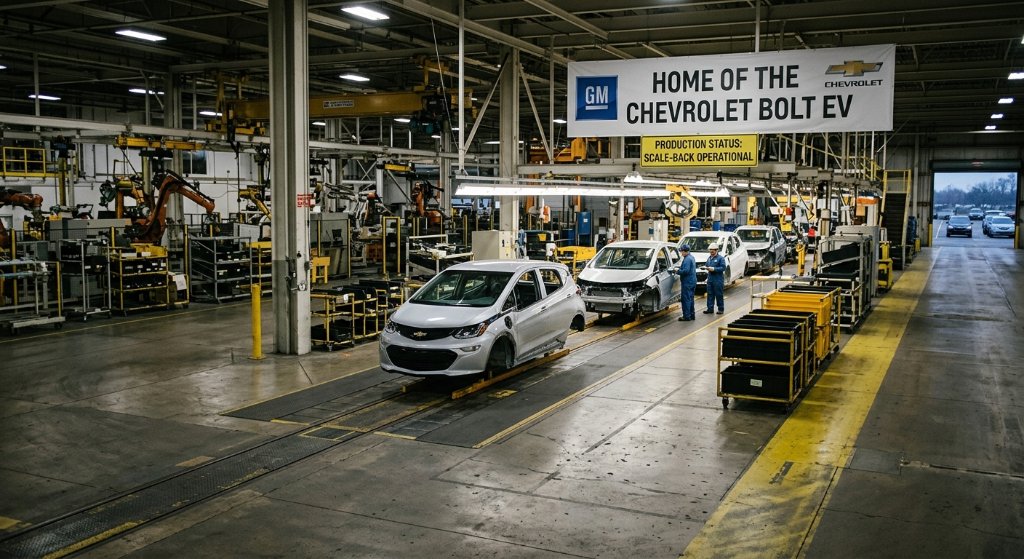
The highly anticipated revival of America’s most affordable electric vehicle is hitting a massive roadblock. According to a United Auto Workers (UAW) local official, General Motors is slashing production of the newly resurrected 2027 Chevrolet Bolt EV by approximately 75%. Built at GM’s Fairfax Assembly plant in Kansas City, the entry-level electric hatchback is now on pace to see a total run of just 35,000 units before production ends in early 2027—a staggering drop from the automaker's initial projection of 150,000 vehicles.
This drastic retrenchment comes on the heels of a massive shift in the macroeconomic and regulatory landscape. After the original, beloved Bolt EV (first introduced in 2016) was retired in 2023, GM brought it back for a highly publicized "limited run" for the 2027 model year, leveraging modernized platform tech to deliver a competitive $28,995 starting price. However, the floor dropped out when the federal $7,500 EV tax credit was axed in late 2025 under the Trump administration, cratering mass-market consumer interest in budget-conscious electric vehicles and forcing GM to fundamentally rethink its manufacturing strategy.
The Toll on the Factory Floor
The 75% production cut has sent immediate shockwaves through the Fairfax Assembly plant. According to Dontay Wilson, president of UAW Local 31, the scaled-back manufacturing plans have had a direct impact on the workforce:
- Mass Layoffs: Approximately 1,000 Fairfax workers are currently on indefinite layoff.
- Shift Delays: Plans to bring back a second work shift at the Kansas facility have been indefinitely delayed due to the low production volumes.
- The Pivot to ICE: To protect the facility's viability, GM is fast-tracking plans to transition the plant to internal combustion engine (ICE) vehicles. Production of the gas-powered Chevrolet Equinox and Buick Envision—currently built in Mexico and China, respectively—will soon take over the Fairfax lines.
The Limits of 'Winning with Simplicity'
In an effort to keep the 2027 Bolt profitable at its sub-$29,000 price point, GM had implemented a highly touted manufacturing strategy called "Winning with Simplicity". The cornerstone of this initiative was a "batch building" process, which was heavily inspired by Tesla’s ultra-streamlined assembly methods.
Key aspects of this production attempt included:
- Batching by 30s: Building the Bolt in groups of 30 identical vehicles (same trim, same color) to reduce paint shop purges and part variation.
- Supply Chain Streamlining: Relying on a fixed seven-day supplier schedule to reduce on-site warehouse requirements.
- First-Time Quality Focus: Targeting higher electrical quality out of the gate with dedicated reserve "clone" vehicle bodies to prevent assembly line stoppages.
While the manufacturing process itself reportedly yielded high quality, no amount of factory floor efficiency could outrun the chilling effect of a market without federal subsidies.
Why This Matters:
This is a watershed moment that signals a painful reality for the American EV transition.
Who Loses? Mass-Market EV Buyers and Factory Workers.
The consumer is the primary casualty here. With a starting price of $28,995, the 2027 Chevy Bolt was positioned as the vital bridge to mainstream electric car adoption in a market saturated with luxury $50,000+ EV crossovers. By gutting production to just 35,000 units, GM is essentially turning what should have been a high-volume savior into an elusive compliance car. Simultaneously, the UAW suffers a significant blow, losing promised green-energy manufacturing hours as Fairfax is forced to revert to legacy ICE assembly just to keep the lights on.
Who Wins? Legacy ICE Operations and Foreign Rivals.
GM’s retreat to gas-powered Equinox and Buick Envision crossovers highlights where the profits still lie. Legacy internal combustion engines win a temporary stay of execution as the automaker pivots to protect its bottom line. However, this is a dangerous long-term gamble. By dialing back its budget EV ambitions, GM is leaving the door wide open for foreign rivals—particularly Chinese automakers like BYD—who continue to perfect high-volume, low-cost EV production and are simply waiting for the right moment to sweep into Western markets.
What This Signals to the Market.
GM’s capitulation proves that without federal backing (like the $7,500 tax credit), the current cost structure of American-made EVs is not yet sustainable on its own merits. It exposes a stark division: while premium EVs may survive on tech appeal, the entry-level EV segment remains entirely dependent on government life support. This is a "do-or-die" realization for Detroit. If legacy automakers cannot build an affordable EV profitably without subsidies, the domestic EV transition is effectively on ice.
Conclusion
The demise of the high-volume Chevy Bolt is a sobering reality check for the automotive industry. While GM’s "batch building" showed that American factories could innovate on assembly efficiency, the sheer gravity of political and regulatory shifts proved too heavy to overcome. As Fairfax gears up to build gas-powered crossovers, the dream of a cheap, American-made EV for the masses has once again been deferred.