GM Caves: Redesigned 2027 Truck Infotainment Brings Back Apple CarPlay, Signaling Major EV Software Reversal
In a stunning tactical pivot, General Motors has unveiled a massive redesign of its in-car infotainment system starting with the 2027 Chevrolet Silver...
Editorial Team
World Of EV
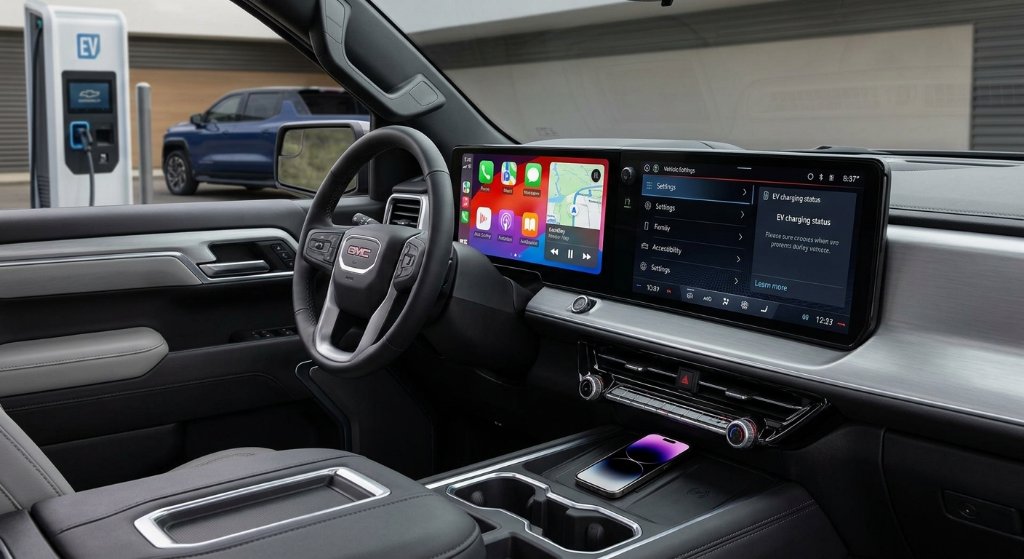
In a stunning tactical pivot, General Motors has unveiled a massive redesign of its in-car infotainment system starting with the 2027 Chevrolet Silverado and GMC Sierra. The headline? Apple CarPlay and Android Auto are back in a big way, deeply integrated into a new split-screen layout that runs the smartphone interface side-by-side with native vehicle controls. Because GM confirmed this new software architecture is a scalable foundation designed to span "electric, gas, and diesel-powered vehicles," the move has sent shockwaves through the industry, fueling intense speculation that the Detroit giant is preparing to reverse its highly criticized 2023 decision to ban phone-projection from its electric cars.
For GM, this is more than a simple product update; it is a humbling admission of consumer reality. In 2023, the automaker triggered an uproar when it announced it would phase out Apple CarPlay and Android Auto—starting with the Chevrolet Blazer EV—in favor of a proprietary, Google-built infotainment platform. GM’s software rollout was subsequently marred by severe software bugs that triggered a stop-sale on the Blazer EV, turning what was supposed to be a tech-forward transition into a public relations nightmare. By contrast, rivals like Ford capitalized on the misstep, loudly recommitting to Apple CarPlay, while EV heavyweights Tesla and Rivian maintained their highly polished, custom-built ecosystems that did not suffer the same early-stage instability.
The Split-Screen Solution: How It Works
Debuting on the massive dashboard displays of the 2027 Chevrolet Silverado and GMC Sierra, the new user interface splits the screen real estate to give drivers the best of both worlds. Key features of the new layout include:
- Side-by-Side Integration: Apple CarPlay or Android Auto runs in a dedicated, large window, while native GM applications—such as trailering apps, battery/charging status, or climate controls—remain permanently visible on the other side.
- Reduced Driver Distraction: Drivers no longer need to toggle between entirely separate menus to adjust vehicle-specific settings while using phone navigation, addressing a major safety and usability critique of early systems.
- Super Cruise 3D Visualizations: The upgraded interface integrates seamless 3D mapping for Super Cruise hands-free driving, displaying real-time traffic and lane markers in a mode-aware gauge cluster.
A Scalable Backtrack?
While GM's executive director of software product management, Michael Wahlstrom, framed the new UI as a way to blend "user-centric" phone projection with truck-specific hardware demands, the underlying engineering tells a broader story. GM built this system on a unified software foundation. By declaring this architecture scalable across internal combustion engines (ICE) and electric vehicles (EVs), GM has laid the technical groundwork to bring CarPlay back to its EV lineup.
While the official announcement does not explicitly confirm that CarPlay will return to existing EVs like the Blazer EV, Lyriq, or Equinox EV, the financial and reputational pressure to do so is mounting.
Why This Matters:
GM's retreat is a watershed moment for the automotive industry, signaling that automakers cannot simply force consumers out of established smartphone ecosystems to chase subscription revenues.
Who Wins:
- The Consumer: Car buyers have made it clear they do not want to relearn a proprietary navigation and media system when their phones already do it perfectly.
- Apple and Google: The tech giants solidify their chokehold on the modern dashboard, proving that their platforms are essentially "must-have" features for mainstream vehicle adoption.
Who Loses:
- GM’s Subscription Revenue Dreams: GM originally ditched phone projection to gatekeep features behind paid subscriptions, hoping to unlock billions in recurring revenue. This pivot suggests those ambitions have crashed into a wall of consumer resistance.
- GM’s Pride: After years of defending their proprietary software decision as superior and necessary for advanced EV battery pre-conditioning, GM has had to swallow a bitter pill of compromise.
Ultimately, this is a "do-or-die" course correction. In an increasingly competitive EV market where demand has faced speed bumps, GM cannot afford to lose buyers over a software dispute. While Tesla and Rivian can get away with proprietary software because they built highly functional, fast, and vertically integrated systems from the ground up, legacy carmakers do not have that luxury. GM's pivot shows that in the battle for the dashboard, the customer still reigns supreme.
Conclusion
General Motors' new infotainment strategy is a pragmatic surrender to consumer demand that could save its ambitious EV rollout from self-inflicted wounds. By creating a scalable, split-screen interface that harmonizes phone projection with native vehicle tech, GM has found a graceful way to walk back from a highly unpopular cliff. If this system successfully transitions to its EV fleet, GM may finally remove the biggest roadblock holding back its next-generation electric vehicles.