FSD v14.6.6 Hits a Roadblock: Tesla's Latest Beta Plagued by Critical Regressions, Jeopardizing Trust
Tesla's ambitious Full Self-Driving (FSD) initiative, long heralded as a cornerstone of its autonomous future, has once again hit a significant snag. ...
Editorial Team
World Of EV
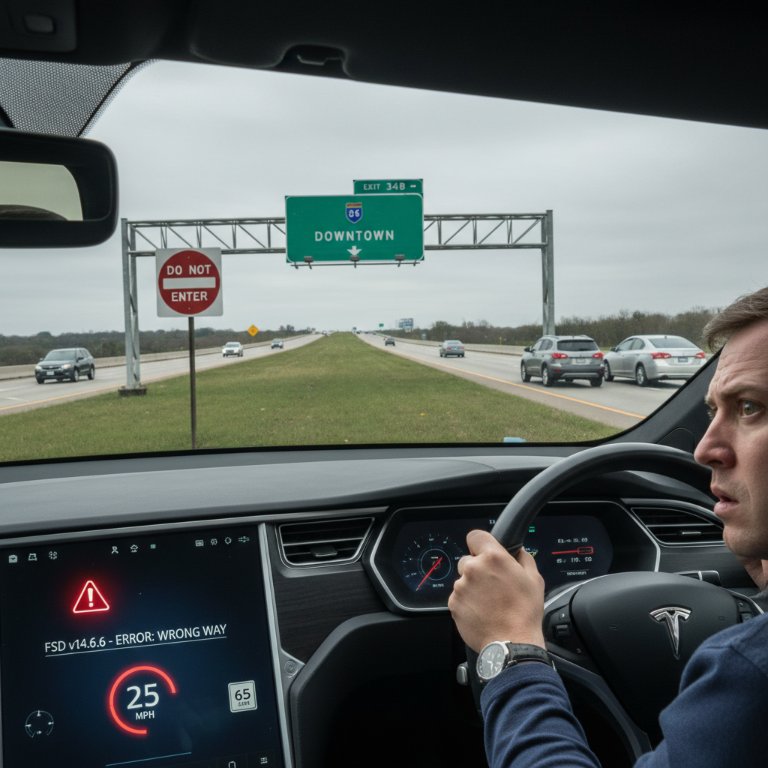
Tesla's ambitious Full Self-Driving (FSD) initiative, long heralded as a cornerstone of its autonomous future, has once again hit a significant snag. Following the rollout of version 14.6.6, a highly anticipated update, users are reporting alarming regressions that call into question the immediate reliability and maturity of the software. This isn't just a minor bug; it’s a direct challenge to the safety and functionality Tesla promises its most dedicated customers.
For years, Tesla has captivated the automotive world with its aggressive pursuit of Level 4 and Level 5 autonomous driving, often framing FSD as an imminent reality. While the system, currently a Level 2 advanced driver-assistance system, has seen iterative improvements and occasional 'leaps' in capability, its journey has been marked by a rollercoaster of promises, public beta tests, and, at times, significant controversy. Each update is scrutinized by a fervent community of early adopters, and when core functionalities degrade, it sends ripples of concern through the entire EV landscape.
Alarming Reports Emerge from v14.6.6
The issues reported by a user after updating to FSD version 14.6.6 are not merely inconvenient; they point to fundamental breakdowns in critical driving functions. The user detailed instances where the vehicle:
- Moved in the wrong direction: A severe misinterpretation of navigational instructions or environmental data, directly impacting safety.
- Missed an exit despite active navigation: This indicates a failure in route execution and spatial awareness, forcing manual intervention.
- Failed to match speed limit signs: A basic but crucial ADAS function, essential for safe and legal operation, appears compromised.
These are not edge cases involving complex, novel scenarios. These are core competencies expected of any advanced driver-assistance system, let alone one branded 'Full Self-Driving' and costing thousands of dollars or a recurring subscription. The sudden appearance of such issues suggests potential software regressions, where previous, stable functionalities are inadvertently broken by new code. This highlights the immense complexity of developing and validating highly interconnected autonomous driving systems, where changes in one module can have unforeseen cascading effects across the entire stack.
Why This Matters:
These reported regressions in FSD v14.6.6 carry significant weight, impacting not only Tesla's immediate reputation but also the broader trajectory of autonomous vehicle development.
- Eroding User Trust: For existing FSD subscribers and prospective buyers, these reports are a major blow to confidence. Trust, once lost, is incredibly difficult to regain, especially when dealing with safety-critical features. Each public setback makes it harder for Tesla to convince skeptical consumers and regulators of FSD's readiness. Who wins? Competitors offering more reliable, albeit less ambitious, ADAS suites may see a boost in perception. Tesla, on the other hand, risks alienating its most loyal early adopters.
- Regulatory Scrutiny Intensifies: Regulators globally are closely monitoring the development and deployment of autonomous driving technologies. Incidents like these fuel skepticism and could lead to increased governmental oversight, stricter testing protocols, or even limitations on FSD's public availability. This is far from a 'do-or-die' moment based on a single report, but it’s another chip in the foundation of regulatory confidence that Tesla needs to build.
- Industry-Wide Implications: Tesla often sets the pace and tone for innovation in the EV space. When FSD stumbles, it casts a shadow over the entire autonomous driving industry. It reinforces the perception that true Level 4/5 autonomy is further away than many optimistic projections suggest, potentially slowing investment and public acceptance across the board. Companies like Cruise and Waymo, which deploy highly geofenced, fully autonomous services, subtly benefit as the complexity of achieving widespread FSD becomes clearer.
- Development Philosophy Under Scrutiny: The iterative, 'beta-to-the-public' approach, while accelerating development, inherently carries risks. While regressions are a known challenge in complex software development, their appearance in such critical functions demands a rigorous re-evaluation of testing and validation procedures before public release.
The v14.6.6 regressions serve as a stark reminder that the road to true autonomous driving is fraught with challenges. While Tesla's ambition is undeniable, consistency and unwavering reliability are paramount when human lives are at stake. The company must address these issues swiftly and transparently to maintain its leadership position and prevent further erosion of trust in its groundbreaking, yet still developing, FSD system. The future of autonomous mobility depends not just on groundbreaking features, but on rock-solid, predictable performance every single time.