FSD Under Fire: Fatal Texas Tesla Crash and 'Timid' Google Searches Put Autonomy Misuse Under the Microscope
A tragic, high-speed crash in Katy, Texas, has reignited the high-stakes battle over Tesla’s driver-assist branding and driver liability. Harris Count...
Editorial Team
World Of EV
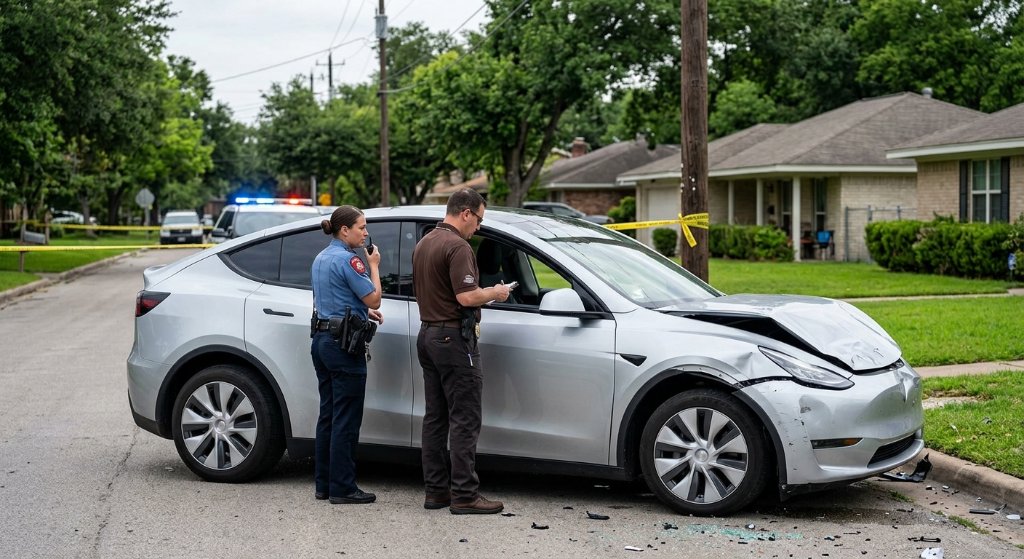
A tragic, high-speed crash in Katy, Texas, has reignited the high-stakes battle over Tesla’s driver-assist branding and driver liability. Harris County prosecutors have charged 44-year-old DoorDash driver Michael David Butler with felony manslaughter after his 2025 Tesla Model 3 plowed through a brick home, killing 76-year-old grandmother Martha Avila. While Butler initially claimed the vehicle was operating on Autopilot or Full Self-Driving (FSD) when he "passed out," newly released vehicle telemetry and forensic data paint a far more damning picture of manual driver override driven by severe frustration with the software.
This tragedy strikes at the heart of the ongoing, volatile debate surrounding Level 2 autonomy. For years, critics have warned that calling a system "Full Self-Driving" breeds dangerous overconfidence or, in this case, a deadly desire to "help" the system along by overriding its cautious programming. As the National Highway Traffic Safety Administration (NHTSA) opens a fresh probe and the Avila family files a wrongful death lawsuit, the industry faces a reckoning on how driver-monitoring systems must adapt when human impatience overrides machine safety.
The 'Pedal to the Metal' Override
According to the arrest affidavit, investigators dismantled Butler’s defense by extracting the Model 3’s Event Data Recorder (EDR). The telemetry revealed that Butler repeatedly used the accelerator pedal to override FSD’s default speeds within the residential subdivision. The fatal sequence occurred as the car attempted a cautious left turn:
- The Intentional Surge: Rather than allowing FSD to negotiate the turn, Butler depressed the accelerator to 100% ("pedal to the metal") for approximately six seconds.
- Double the Limit: This action propelled the electric sedan straight into a cul-de-sac, reaching 73 mph in a residential zone—more than double the posted speed limit.
- No Braking: EDR data confirmed there was absolutely zero brake pedal input in the final minute leading up to the impact.
- Catastrophic Impact: The Model 3 jumped the curb and smashed through the brick walls of the Avila home, pinning the victim inside.
'Too Timid': The Digital Trail of Frustration
Perhaps the most telling element of the prosecution's case is the digital footprint recovered from Butler’s phone. Investigators discovered that in the weeks leading up to the June 19 crash, Butler had repeatedly searched Google for terms criticizing the EV’s autonomous behavior:
- "Tesla fsd not aggressive enough 2026"
- "FSD is not aggressive enough for city driving"
- "Tesla fsd too timid"
This detail points to a growing, unaddressed phenomenon in the EV community: "FSD fatigue." When Tesla’s software behaves with legally mandated caution—such as performing complete, slow stops forced by previous NHTSA recalls—some drivers resort to constant manual intervention to force the car to drive more aggressively.
Tesla Pushes Back
Tesla’s executive leadership, including CEO Elon Musk and Head of AI Ashok Elluswamy, quickly went on the offensive on social media to distance the company from the tragedy. Elluswamy clarified that FSD was manually overridden, stating that the vehicle’s automated systems require constant driver attention and can always be overridden by physical inputs. This response aligns with Tesla’s long-standing legal strategy: FSD is classified as a Level 2 "supervised" driver-assist system, leaving ultimate liability squarely on the human behind the wheel.
Why This Matters:
This fatal incident represents a watershed moment for the marketing, regulation, and legal liability of semi-autonomous driving.
First, Tesla "wins" the immediate telemetry battle, but "loses" the safety-by-design narrative. By proving Butler floored the accelerator, Tesla legally insulates itself from direct blame for the crash itself. However, the revelation that Butler was highly frustrated by FSD's "timid" behavior shines a harsh light on Tesla's human-machine interface (HMI). If the software’s cautious programming routinely goads impatient drivers into dangerous manual overrides, regulators like NHTSA may demand that Tesla restrict a driver's ability to easily override and exceed speed limits while FSD is active.
Second, this case establishes a terrifying legal precedent for EV drivers. Manslaughter charges in driver-assist crashes have historically been rare, but prosecutors are clearly no longer treating "autopilot confusion" with leniency. The digital forensics showing Butler’s pre-crash search history directly demonstrate intent and reckless behavior, drawing a clear line: if you override the machine to drive aggressively, you face hard prison time.
Third, this signals a "do-or-die" moment for Level 2 driver-monitoring systems. Legacy automakers like Ford (with BlueCruise) and GM (with Super Cruise) utilize robust infrared camera systems to strictly monitor driver attentiveness. If Tesla’s cabin cameras and software fail to anticipate and mitigate the kind of frustration-induced erratic driving displayed here, the entire industry may face stifling federal mandates that restrict how and where these automated features can be deployed.
As the wrongful death lawsuit and NHTSA investigation proceed, the industry will watch closely. This tragedy in Katy, Texas, is a grim reminder that as long as cars remain "semi-autonomous," the dangerous gap between what a machine wants to do and what an impatient human forces it to do will remain a lethal liability.