Ford's Electric Ambitions Hit a Wall: May 2026 Sales Report Reveals Sharp EV Decline
Ford's aggressive push into the electric vehicle market has encountered a significant roadblock, as the automaker reported a substantial 13.6% decreas...
Editorial Team
World Of EV
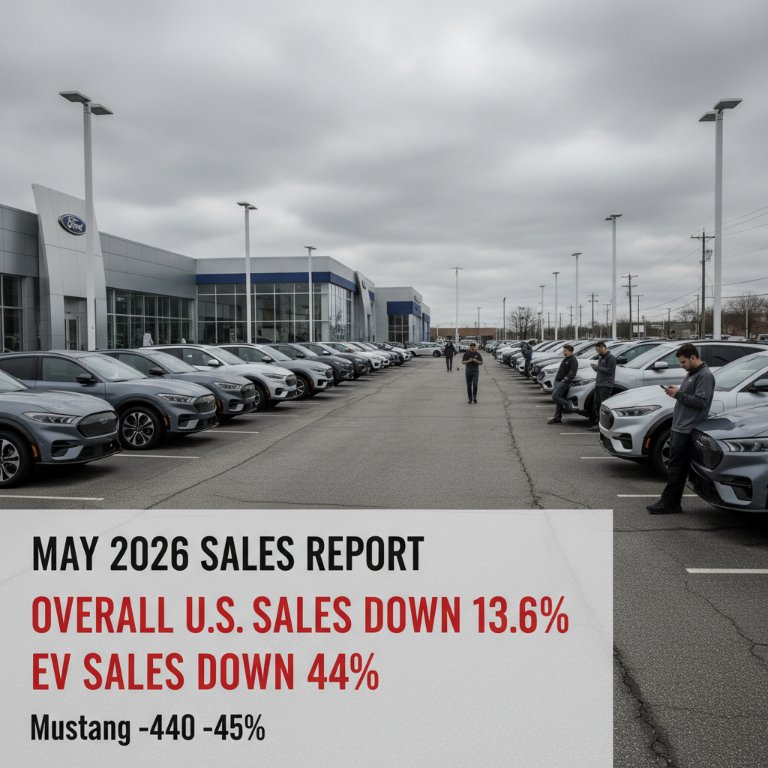
Ford's aggressive push into the electric vehicle market has encountered a significant roadblock, as the automaker reported a substantial 13.6% decrease in its overall U.S. sales for May 2026, delivering 190,828 vehicles compared to 220,959 units a year earlier. While the broader market slowdown played a role, the particularly stark plummet in EV sales — nearly 44% year-over-year — signals deeper challenges for the Blue Oval's electric future. This isn't merely a blip; it's a flashing indicator that Ford's current EV strategy may need a serious recalibration, especially given its significant investments in electrification.
The Alarming Numbers: EV Sales Collapse
The headline figures are undeniable: Ford's electric vehicle segment suffered a dramatic contraction in May. Sales for its flagship EV models saw precipitous drops:
- Mustang Mach-E: Sales fell by 44% year-over-year.
- F-150 Lightning: The all-electric pickup, a cornerstone of Ford’s EV strategy, saw its sales plunge by 45%.
This severe downturn in electric vehicle demand, coupled with a decrease in Ford's traditionally strong core truck and SUV segments, collectively contributed to the overall sales slump. For a company that has bet big on an electrified future, these numbers represent a considerable setback, contrasting sharply with the earlier exuberance surrounding models like the Lightning.
Beyond the Blue Oval: A Wider Market Correction or Ford-Specific Headwinds?
While Ford's May performance is certainly concerning, it raises questions about whether this is an isolated incident for the company or indicative of a broader softening in the nascent EV market. We've observed growing pains across the industry, with some early adopters already in the market and a more hesitant mainstream consumer base weighing factors like price, charging infrastructure, and range anxiety. However, the magnitude of Ford's EV decline suggests that internal factors, such as product positioning, pricing strategy, or competitive pressure, may be exacerbating these market-wide trends. Unlike some competitors who have offered significant price cuts or diversified their EV offerings, Ford has largely maintained its course, which may now be proving unsustainable in a rapidly evolving landscape.
Why This Matters:
- Strategic Reassessment for Ford: The precipitous decline in Mach-E and Lightning sales demands an urgent re-evaluation of Ford's EV strategy. Is the pricing right? Are the features compelling enough against intensifying competition? This isn't just about selling EVs; it's about validating a multi-billion-dollar investment. Failure to adapt swiftly could jeopardize Ford’s competitive standing for years to come.
- Impact on the Broader EV Narrative: While one month's data doesn't define a decade, Ford’s struggles could fuel the narrative among skeptics that EV adoption is slowing. This might embolden traditional ICE manufacturers who have been more cautious about their EV transitions, and it could put pressure on policymakers to re-evaluate incentives.
- Competitive Landscape Shift: Who wins? Competitors like Tesla, with its aggressive pricing and mature Supercharger network, stand to gain as mainstream buyers look for proven EV options. Newer, nimbler players or legacy automakers with more compelling new releases (or deeper price cuts) could also capitalize on Ford's current stumble. General Motors, with its Ultium platform, will be watching closely to see if Ford's challenges are unique or systemic.
- A 'Do-or-Die' Moment? For Ford, which has consistently positioned itself as a leader in the EV transition among legacy automakers, this period could indeed be a 'do-or-die' moment. The F-150 Lightning, in particular, was meant to be an unassailable advantage. A prolonged slump could severely undermine investor confidence and force significant, painful adjustments to production plans and future product pipelines.
Ford faces an undeniable challenge. To regain momentum, the company must confront these sobering sales figures head-on, potentially through strategic pricing adjustments, accelerated technological innovation, or a refreshed marketing approach that better addresses current consumer anxieties. The road to an all-electric future was always going to have bumps, but Ford has just hit a significant pothole that requires immediate and decisive action to navigate successfully.