Ford Embraces Built-In Apple Maps for 2027 UEV Platform, Delivering a Direct Blow to GM's Software Strategy
In a move that will reshape the automotive infotainment wars, Ford Motor Company and Apple have announced a groundbreaking partnership to natively int...
Editorial Team
World Of EV
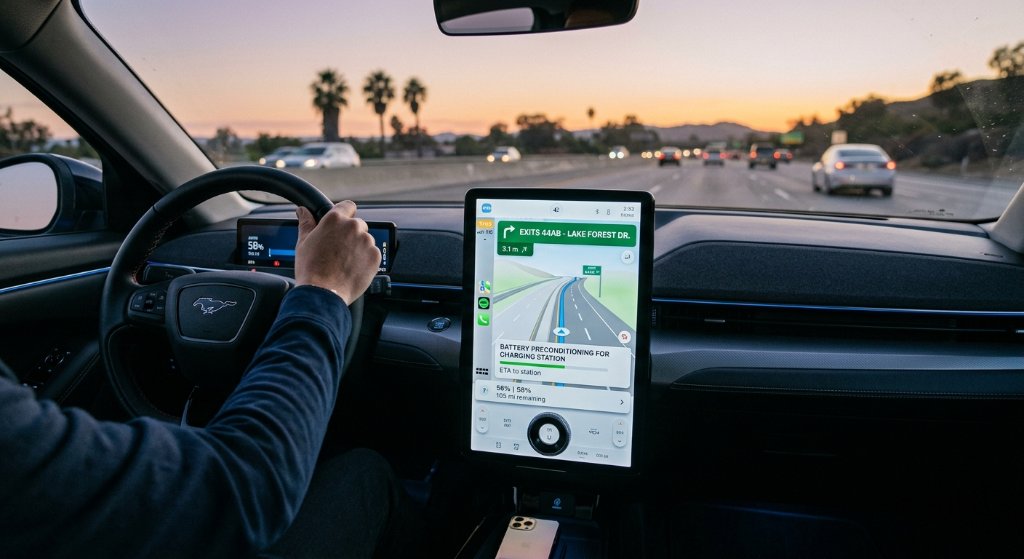
In a move that will reshape the automotive infotainment wars, Ford Motor Company and Apple have announced a groundbreaking partnership to natively integrate Apple Maps into Ford's highly anticipated Universal Electric Vehicle (UEV) platform, set to debut in 2027. Leveraging Apple's newly introduced MapKit for Automotive SDK, upcoming Ford EVs will run Apple's navigation system directly on their built-in displays—no iPhone or CarPlay connection required.
This represents a massive strategic pivot for Ford, which has historically struggled with sluggish, proprietary SYNC infotainment systems before adopting Google Built-in for its current vehicle lineup. By embedding Apple's map engine natively, Ford is taking a fundamentally different path from crosstown rival General Motors, which famously alienated buyers by banning Apple CarPlay and Android Auto in favor of its own proprietary software. Instead, Ford is doubling down on consumer choice and ecosystem integration to win the mass-market EV transition.
A Next-Gen Platform Built for the Masses
The first vehicle to benefit from this native Apple integration will be Ford's highly anticipated midsize electric pickup truck, scheduled for a 2027 launch with an aggressive starting price of 'around $30,000'. Designed to go head-to-head with low-cost global competitors, the Universal Electric Vehicle (UEV) platform is a highly streamlined, low-cost platform optimized to deliver premium tech at mass-market prices.
Under this new partnership, Apple Maps will act as the native brain of the vehicle's infotainment system, bringing several key features directly into the dashboard:
- Native EV Routing & Battery Preconditioning: The system will dynamically calculate routes based on the vehicle's real-time state of charge, automatically preconditioning the battery as the driver approaches a fast charger to maximize charging speeds.
- Natural-Language Navigation: Drivers can control navigation using intuitive natural language, eliminating the stiff, robotic voice commands of yesterday.
- Real-Time Traffic and Search: Advanced routing options will utilize real-time incident reporting and Apple's detailed, visually rich place cards for seamless local searches.
- No iPhone Required: Because this runs on Apple's MapKit for Automotive SDK, the navigation functions seamlessly even if the driver doesn't own an iPhone or have CarPlay active.
Powering the Future of BlueCruise
This partnership goes far deeper than just showing clean maps on a screen. Ford's in-house autonomous driving division, Latitude AI, will use high-fidelity, road-level data from Apple Maps to refine its next-generation hands-free driving systems.
Specifically, this deep data integration will help Ford's BlueCruise system master on-ramp-to-off-ramp highway driving. By feeding Apple's highly accurate, lane-level mapping telemetry directly into Ford's machine learning and robotics stack, Ford aims to bridge the gap toward eyes-off, hands-free automation that can rival Tesla's Full Self-Driving (FSD) or GM's Super Cruise.
Why This Matters:
This alliance is a watershed moment for the auto industry, signaling a massive win-win for both Ford and Apple, while putting GM and Google on notice.
- Apple Wins the Software Consolidation War: Apple's ambitious 'Project Titan' electric car may be dead, but this native SDK integration proves Apple has found an even better way to dominate the automotive space. By embedding its software directly into the vehicle's native OS, Apple secures its ecosystem in our vehicles for the next decade without ever building a physical factory.
- Ford Smartly Outmaneuvers GM: While GM continues to face backlash for locking customers out of Apple CarPlay, Ford is leaning in. By integrating Apple Maps natively, Ford delivers a premium, highly requested user experience on an affordable $30,000 EV, bypassing its past software engineering struggles and immediately boosting buyer confidence.
- Google Loses Ground: Ford's current high-end EVs rely heavily on Google Maps and Android Automotive services. By opting for Apple Maps on its next-generation mass-market UEV platform, Ford is actively diversifying its dependency away from Mountain View, creating a direct competitive ecosystem on the dashboard.
- A New Blueprint for EV Tech: This proves that the future of EV navigation isn't just about static point-A-to-point-B directions; it is about active, real-time energy management (preconditioning) and feeding high-definition mapping data directly to advanced driver-assistance systems (ADAS).
Ultimately, this is a 'do-or-die' era for legacy automakers trying to master software. By letting Apple do what it does best—design beautiful, highly intuitive user interfaces—Ford can focus its engineering muscle on what it does best: building robust, affordable electric vehicles for the masses.
By the time Ford's $30,000 electric truck rolls off the assembly line in 2027, the software disparity between legacy automakers and tech-first EV disruptors will be narrower than ever. For prospective EV buyers who have grown tired of clunky, half-baked native navigation screens, this native Apple Maps integration is a breath of fresh air. Ford is proving that you don't need to alienate your customers to build a modern, software-defined electric vehicle.