Fluke's FEV500 Declares War on Unreliable DC Fast Chargers, Promising a Revolution in EV Uptime
The promise of electric vehicle ownership often hits a frustrating snag: unreliable public charging infrastructure. With a staggering one in five char...
Editorial Team
World Of EV
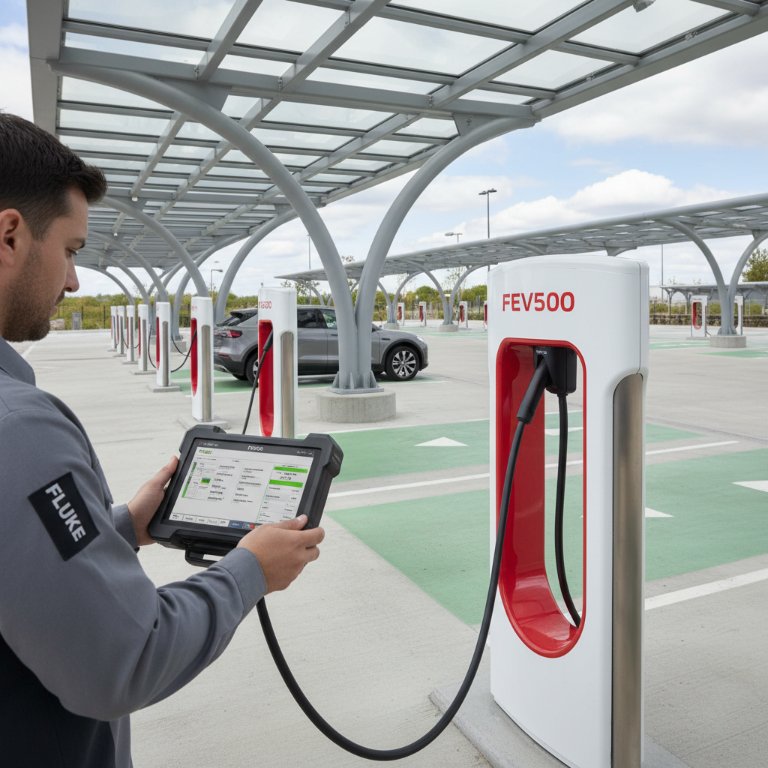
The promise of electric vehicle ownership often hits a frustrating snag: unreliable public charging infrastructure. With a staggering one in five charging stations in the U.S. reportedly out of commission, the industry desperately needs a robust solution to this pervasive problem. Enter Fluke Corporation, a name synonymous with industrial testing, which has just unleashed its FEV500 – an all-in-one testing solution specifically engineered to bring robust reliability to the critical DC Level 3 fast charging ecosystem. This isn't just another gadget; it's a direct assault on the downtime plaguing EV drivers, aiming to transform a significant pain point into a seamless experience.
The EV revolution's Achilles' heel has long been the inconsistent performance of its charging infrastructure. Tales of broken chargers, failed payment systems, and frustratingly slow speeds are all too common among EV owners, undermining confidence and hindering broader adoption. This isn't just an inconvenience; it represents a significant economic drain for charging network operators and a major barrier to the seamless integration of EVs into daily life. The industry has grappled with a lack of standardized, efficient diagnostic tools, often leading to prolonged downtimes as technicians struggle to identify and rectify complex issues on-site.
Introducing the FEV500: A Virtual EV for Technicians
Fluke's FEV500 directly addresses this critical gap. Designed as a comprehensive, all-in-one testing solution, the FEV500 essentially acts as a "virtual electric vehicle" for technicians. This innovative approach allows on-site personnel to perform extensive diagnostics without needing an actual EV, simulating the charging process to uncover potential faults. The FEV500 consolidates what would typically require multiple specialized tools – including a digital multimeter, insulation tester, and oscilloscope – into a single, portable unit, streamlining the diagnostic process and significantly reducing the time spent troubleshooting.
Key Features for Unprecedented Efficiency
- Comprehensive Safety Testing: Ensures charging stations meet critical electrical safety standards, protecting both users and equipment by performing checks like insulation resistance, earth continuity, and residual voltage testing.
- Interoperability Verification: Confirms seamless communication between the charger and various EV models, supporting international standards like ISO 15118 and DIN SPEC 70121, eliminating compatibility headaches that often plague drivers.
- Performance Benchmarking: Assesses the actual power delivery and efficiency of the station, ensuring it delivers the promised charging speeds through load testing and real-time pass-fail indicators.
- Guided Workflows: Technicians receive step-by-step instructions on a user-friendly interface, simplifying complex diagnostic procedures and reducing the learning curve for new personnel.
- Consolidated Toolset: Replaces multiple discrete testing devices, reducing equipment costs and logistical challenges for service teams, and allowing testing from a single connection point without opening the charging station.
- Automated Documentation: Integrates with Fluke TruTest™ software for seamless data transfer, reporting, and compliance tracking, simplifying asset management and reducing compliance risk.
Why This Matters:
This isn't merely an incremental product launch; it's a foundational shift in how the EV charging industry approaches maintenance and reliability. The pervasive "one in five" statistic has been a scarlet letter for the EV charging sector, eroding consumer trust and adding friction to the EV transition. The FEV500 offers a tangible, proactive solution to this systemic problem.
Who Wins?
- EV Drivers: The most significant beneficiaries are current and prospective EV owners, who can anticipate a far more reliable and stress-free charging experience. Reduced downtime means less "charger anxiety" and more confidence in long-distance travel.
- Charging Network Operators: Companies like Electrify America, ChargePoint, and EVgo stand to gain immensely. By enabling faster, more accurate diagnostics and repairs, the FEV500 will drastically cut costly operational downtime, improve customer satisfaction scores, and ultimately increase revenue through higher station utilization. It signals a move from reactive repairs to proactive maintenance.
- Fluke Corporation: This positions Fluke at the forefront of a burgeoning and critical segment of the EV market, leveraging its established reputation for industrial testing into a rapidly expanding new sector.
Who Loses?
The biggest losers are potentially companies that fail to adopt such comprehensive testing solutions, remaining stuck in a reactive maintenance paradigm. In an increasingly competitive landscape, reliability will be a key differentiator, and those unable to deliver consistent uptime will quickly fall behind. Fragmented solutions or reliance on general-purpose electrical testers will no longer suffice.
Market Signal:
The FEV500's introduction signals a maturation of the EV charging infrastructure industry. It underscores a growing recognition that robust, specialized tools are essential for scaling and maintaining a high-performance network. This move towards standardized, efficient maintenance protocols is crucial for accelerating EV adoption, as a reliable charging experience is as vital as the vehicles themselves. It suggests a future where "non-operational" chargers become a rare anomaly, not a frustrating norm.
Conclusion:
Fluke's FEV500 represents a crucial leap forward in addressing the Achilles' heel of the EV revolution: charging station reliability. By providing a sophisticated, all-in-one diagnostic tool, Fluke empowers technicians to swiftly identify and rectify issues, ushering in an era of more dependable DC fast charging. This is more than just a new product; it's a vital step towards building the robust, trustworthy infrastructure essential for the widespread success of electric mobility, transforming the current frustration into a seamless future for EV drivers everywhere.