Federal EV Road Fees Proposed: A Bipartisan Bill Threatens to Dampen Adoption Momentum
The landscape for electric vehicle ownership in the United States could soon shift dramatically as House lawmakers on May 18, 2026, introduced biparti...
Editorial Team
World Of EV
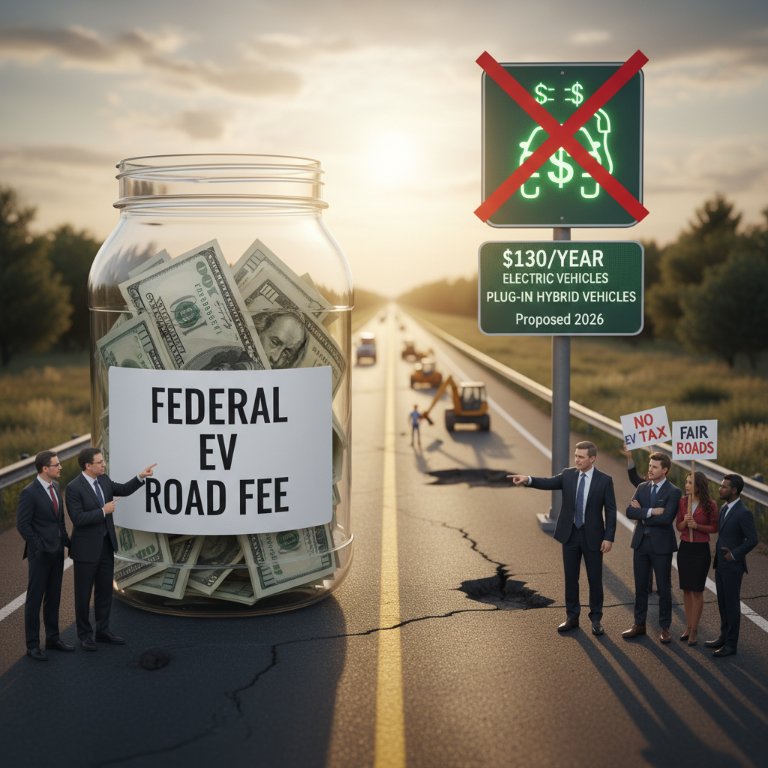
The landscape for electric vehicle ownership in the United States could soon shift dramatically as House lawmakers on May 18, 2026, introduced bipartisan legislation proposing significant new federal fees for EVs and plug-in hybrids. This move signals a pivotal moment in the ongoing debate over how to fund crucial federal road repairs in an era of declining gasoline tax revenue, but it arrives with a palpable tension, threatening to undermine the very adoption rates the nation has worked to accelerate.
The Proposed Fees: A Closer Look
Under the proposed bill, owners of battery-electric vehicles would face an annual federal fee of $130. Plug-in hybrid electric vehicle (PHEV) owners, who still rely on gasoline for extended ranges, would see a $35 annual charge. These initial figures are not static; the legislation includes provisions for these fees to gradually increase, reaching $150 for EVs and $50 for PHEVs. The stated rationale behind these charges is clear: to create a sustainable funding stream for federal road and infrastructure projects, directly addressing the shortfall caused by decreased gasoline tax collections as more drivers switch to electric power. For years, states have grappled with this issue, with many already implementing their own version of EV registration fees, but a federal mandate would mark a universal shift across the nation.
Bipartisan Support Meets Industry Pushback
While introduced with bipartisan backing in the House, the proposed legislation is already facing significant headwinds. Notable opposition is emerging from some Senate Democrats, who, along with prominent EV advocacy groups, argue that such fees could actively hinder the pace of EV adoption. Their contention is multi-faceted: that EVs are already effectively overtaxed compared to their gasoline counterparts when considering factors like higher upfront purchase prices, state-level registration fees, and sales taxes. The fear is that adding a substantial federal fee could serve as a disincentive for prospective buyers, particularly those on the fence about making the transition to electric, thereby slowing down the critical move towards decarbonization in the transportation sector.
Why This Matters:
This proposed federal fee is more than just another tax; it represents a significant inflection point for the burgeoning EV market. For years, federal policy, primarily through tax credits, has been geared towards incentivizing EV purchases to kickstart adoption and achieve ambitious climate goals. This new legislation, if passed, would mark a decisive shift towards taxing EV ownership, fundamentally altering the economic calculus for millions of Americans.
Impact on Adoption Curves: A $130-$150 annual fee, while seemingly modest to some, could be a meaningful deterrent for budget-conscious buyers, particularly in segments where upfront costs are already a barrier. This could slow the critical mainstreaming of EVs and disproportionately affect lower and middle-income consumers.
Perception Shift: It risks changing the public perception of EVs from a championed technology with environmental benefits to a new source of tax revenue. This psychological shift could make the transition feel less like a societal good and more like a financial burden.
Industry Response: Automakers, already navigating complex supply chain issues and intense competition, might find their sales targets challenged if consumer demand cools due to added federal costs. This could force a re-evaluation of product pipelines and pricing strategies.
The 'Double Taxation' Argument: Advocacy groups have a strong point: EVs often already incur higher sales taxes due to their greater average purchase price, and many states have specific EV registration fees. Adding a federal layer could be seen as an unfair burden, especially for vehicles that demonstrably produce zero tailpipe emissions and contribute to cleaner air.
This legislation forces a critical question: How do we balance the undeniable need to fund infrastructure with the equally vital imperative to accelerate the transition to sustainable transportation? The outcome of this bill will not just determine how our roads are paid for, but also the speed and equity of our nation's electric future.
The proposed federal EV and PHEV fees represent a crucial crossroads for the American automotive market and national infrastructure funding. As the debate moves forward, the industry, policymakers, and consumers alike will be watching closely to see whether this bipartisan effort ultimately paves the way for better roads or erects new barriers to a fully electric future.