Cracking the Summer EV Code: 3 Essential Hacks to Outsmart Thermal Drain and Charging Bottlenecks
As millions of drivers transition from internal combustion engines to electric vehicles, the summer road trip has become the ultimate litmus test for ...
Editorial Team
World Of EV
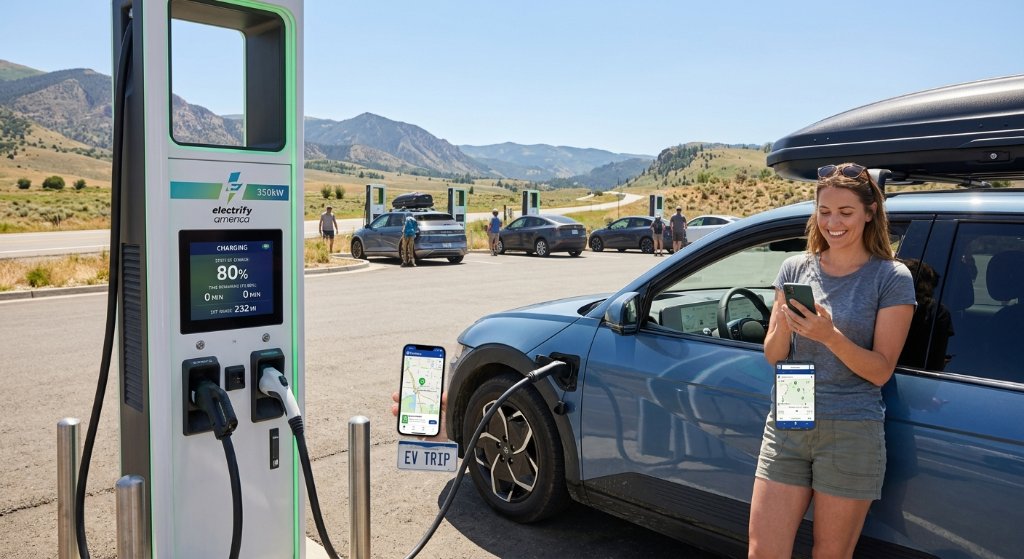
As millions of drivers transition from internal combustion engines to electric vehicles, the summer road trip has become the ultimate litmus test for modern EV ownership. While automakers have successfully scaled up battery capacities, the reality of hot-weather road-tripping still catches many mainstream buyers off guard. High ambient temperatures don't just stress the driver; they force the vehicle's thermal management systems to work double-time, chipping away at real-world range before you even hit the highway.
To survive the peak travel season without falling victim to range anxiety or agonizing queue times, drivers must shift from passive vehicle operation to active, strategic management. Adapting to the unique physics of electric powertrains isn't just about saving minutes—it's about maximizing battery health and reclaiming control of your journey.
The 80% Rule: Why Chasing a Full Charge is a Rookie Mistake
Many new EV owners treat their vehicles like gasoline cars, waiting at DC fast chargers until the battery reads 100%. This is a massive mistake that wastes valuable travel time. Because of the lithium-ion charging curve—engineered to protect cells from overheating and degradation—charging speed plummets dramatically after the battery hits 80%. Even on ultra-fast 800V architectures like Hyundai's E-GMP platform or Porsche's Taycan, the final 20% can take just as long to charge as the first 80%.
- Efficiency Gains: Unplugging at 80% frees you from the slowest portion of the charging curve, getting you back on the road faster.
- Battery Preservation: Avoid exposing the battery cells to high voltage and high heat simultaneously, which accelerates long-term degradation.
- Stall Turnover: Leaving the charger at 80% helps mitigate the chronic queueing issues plaguing major charging corridors during peak travel seasons.
Thermal Management: Let the Grid Bear the Cooling Load
Blasting the air conditioning on a hot afternoon draws substantial power directly from the high-voltage traction battery. If you start your trip with an EV that has been baking in the sun, the climate control system will burn through precious kilowatt-hours just to bring the cabin down to a comfortable temperature, immediately slashing your projected highway range.
- Grid-Powered Cooling: Use your vehicle's companion app to pre-cool the cabin while the car is still plugged into your Level 2 home charger. This draws power from the grid rather than the battery.
- Battery Pack Conditioning: Pre-conditioning also helps bring the battery pack itself to its optimal operating temperature, improving initial driving efficiency.
- Immediate Range Preservation: Starting your trip with a pre-cooled cabin and conditioned battery can preserve up to 10% to 15% of your initial driving range.
Crowdsourced Navigation: Looking Beyond OEM Maps
While built-in navigation systems have improved, they often lack real-time context regarding broken stalls, long queues, or localized network outages. To prevent arriving at a dead charging hub, savvy road-trippers rely on community platforms like PlugShare and A Better Routeplanner (ABRP) to cross-reference their routes.
- Real-Time Driver Check-Ins: Community-driven updates provide instant feedback on whether a charger is actually delivering its rated speed or is currently offline.
- Queue Management: Crowdsourced data alerts you to high-traffic choke points, allowing you to bypass congested hubs in favor of quieter, alternative chargers.
- Cross-Network Visibility: Unlike proprietary brand maps, third-party platforms aggregate data across all networks (including Electrify America, EVgo, and Tesla Superchargers), giving you the complete infrastructure picture.
Why This Matters:
The necessity of these 'life hacks' highlights a glaring challenge for the EV transition: the education gap. As EVs move from early-adopter novelties to mainstream family haulers, automakers and charging networks are failing to adequately prepare buyers for the realities of battery physics.
Who Wins: Drivers who treat EV road-tripping as a strategic game. By understanding charging curves and thermal management, they minimize downtime and protect their vehicle's residual value. Crowdsourced platforms like PlugShare also win, solidifying their status as indispensable tools in the EV ecosystem.
Who Loses: Legacy OEMs who sell EVs without educating customers. When a buyer experiences agonizingly slow charge times above 80% or unexpected range loss due to cabin cooling, they blame the brand, driving up negative sentiment and hurting resale values.
The Market Signal: This friction is a clear sign that the current public charging infrastructure remains fragile. Until next-generation battery chemistries (such as solid-state batteries) or ultra-efficient heat pumps eliminate the steep charging curve and high thermal sensitivity, EV adoption will rely heavily on consumer education and community-driven workarounds rather than seamless, gas-like convenience.
Ultimately, summer EV travel doesn't have to be a stressful exercise in compromise. By executing smart charging habits, leveraging home electricity for pre-conditioning, and utilizing crowdsourced data, drivers can unlock the true potential of their electric vehicles. As the industry matures, we can expect automakers to integrate these behaviors directly into automated vehicle software, but until then, the power to optimize your road trip remains squarely in the palms of your hands.