California Decimates EV Charger Red Tape: Governor Newsom Signs Landmark Bills to Slash Fees, Fast-Track Permitting, and Demystify Battery Health
California is doubling down on its position as the undisputed powerhouse of the American electric vehicle market. In a sweeping move aimed at dissolvi...
Editorial Team
World Of EV
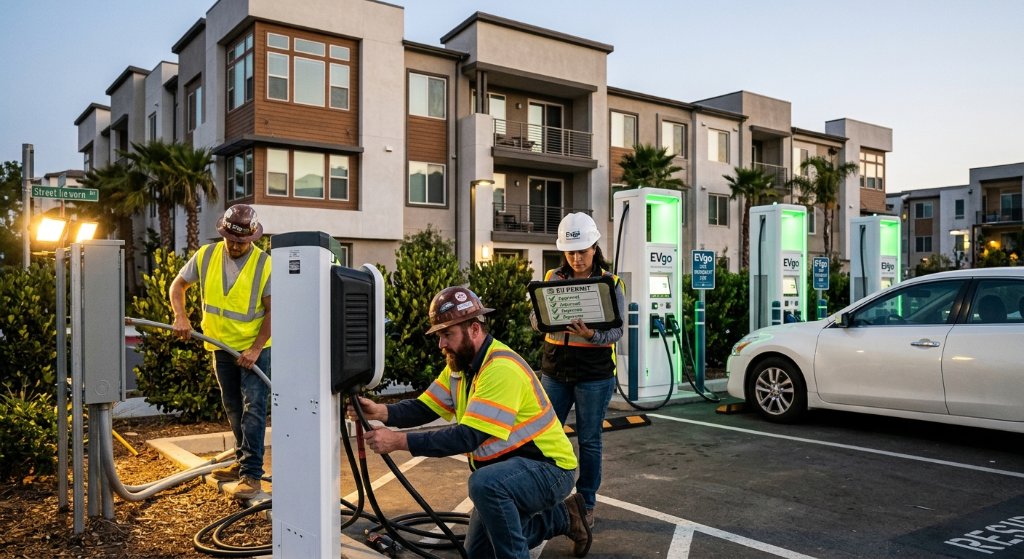
California is doubling down on its position as the undisputed powerhouse of the American electric vehicle market. In a sweeping move aimed at dissolving the bureaucratic roadblocks that have long stifled charging infrastructure, Governor Gavin Newsom has signed a comprehensive package of EV legislation. Crucially containing SB 969, SB 1283, AB 1820, and SB 615, these laws target the real-world hurdles preventing everyday drivers—especially renters and apartment dwellers—from making the seamless transition to electric.
The stakes couldn't be higher. While California surpassed its initial goal of 1.5 million zero-emission vehicle sales and recorded a stellar 19.1% market share in the second quarter of 2026, the state’s charging grid has struggled to keep pace. For years, EV advocacy has hit a wall of local bureaucracy, leaving public chargers wrapped in red tape and multi-family complexes without viable access. This new legislative assault aims to change that, shifting the narrative from "EVs are coming" to "the infrastructure is ready".
Streamlining Public and Private Charging Deployment
To truly accelerate the rollout of public charging, California is targeting the localized and often outdated municipal check-off systems that keep chargers dark for months after they are physically installed:
- SB 969 (Fast-Tracked Inspections): This bill modernizes the testing loop. Instead of forcing fully certified, manufacturer-tested chargers to languish in queue for redundant local field-measurement inspections, SB 969 fast-tracks them directly into service. This significantly shortens the gap between physical installation and actual utility.
- SB 1283 (Holistic Permitting Streamlining): Previously, getting a permit for a charger was relatively straightforward, but the supportive infrastructure—utility trenches, concrete pads, electrical upgrades, solar canopies, and battery storage—could tie developers up in zoning hell for months. This law ensures that expedited, streamlined permitting rules explicitly cover all related site work to get stations online faster.
Tearing Down Barriers for Multi-Family Housing and Demystifying Batteries
The biggest obstacle to mainstream EV adoption remains multi-family housing. If you can't charge at home, buying an EV is a hard sell. These new laws directly attack this "garage orphan" problem while offering buyers greater technical clarity:
- AB 1820 (The EV Charger Affordability Act): This bill caps local permit fees for Level 2 charging stations at multifamily and mixed-use developments, generally limiting them to $500. This eliminates the predatory municipal fees that have historically deterred apartment owners from installing chargers.
- SB 615 (Clear Battery Transparency and Stewardship): Unlike standard tech benchmarks, comparing the degradation of a Tesla 4680 structural pack to a BYD Blade battery has historically been an apples-to-oranges guessing game for used-car buyers. SB 615 mandates clear battery state-of-health information for consumers at the point of sale. Furthermore, it establishes a circular-economy requirement, holding automakers responsible for the end-of-life recovery, reuse, and recycling of heavy vehicle traction batteries.
Why This Matters:
The Winners: Renters, secondary-market buyers, and clean-energy developers. Historically, the EV transition has been an exclusive club for suburban homeowners with private garages. By forcing cities to cap multifamily permit fees to a mere $500, AB 1820 finally unlocks the massive renter demographic. Similarly, SB 1283 is a massive win for solar and battery storage integrators, allowing them to package clean energy generation with EV charging under one streamlined approval banner. Additionally, SB 615 is a watershed moment for the used-car market. For years, used EV buyers have suffered from extreme range anxiety, fearing they are buying a depleted battery with an astronomical replacement cost. Mandating clear battery health disclosures at sale will build immense trust in pre-owned EVs.
The Losers: Local municipalities and legacy dealer networks accustomed to slow-rolling approvals or charging excessive administrative fees. This package is a clear signal that the state is prepared to override local municipal control to protect the broader climate agenda. For automakers, the circular battery recycling mandates of SB 615 represent a "do-or-die" operational pivot, forcing them to treat batteries not as disposable parts, but as permanent assets they must eventually claw back, repurpose, and recycle.
With these legislative strokes, California isn't just buying more EVs; it is actively constructing the legal highway for a fully electrified future. By removing redundant inspections, lowering cost barriers for renters, and forcing transparency into battery health, the state is demonstrating how to transition from early-adopter enthusiasm to mass-market reality. Expect other progressive states to copy California’s homework—and quickly.